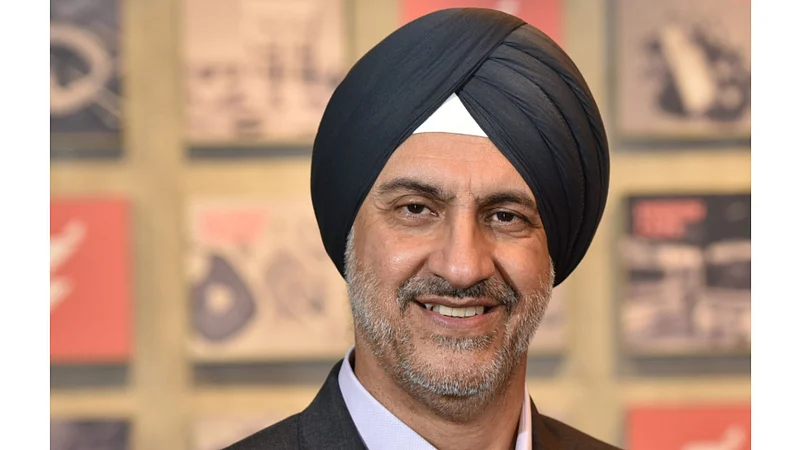

Singh says Indian brands invest less in R&D because young companies operate with limited capital and a bootstrapped mindset
On the absence of global consumer brands, he points to the depth and attractiveness of the Indian market
On IPOs, he calls them a key milestone, not merely an investor exit
A decade ago, when Kanwaljit Singh approached investors with the idea of a fund dedicated to consumer brands, the response was largely confusion. The concept of early-stage consumer venture capital was virtually non-existent in India—digital-first brands were unheard of, and the notion of building ₹100-crore businesses through e-commerce seemed far-fetched.
Today, with the closure of Fireside Ventures' fourth fund at $253 million (₹2,265 crore), that scepticism feels like ancient history. The firm has quietly built one of India's most distinctive investment portfolios, backing brands like Mamaearth, boAt, Yoga Bar, The Sleep Company, and Vahdam, while defying the rules of VC investing with success rates of 70%-80%.

1 September 2026
Get the latest issue of Outlook Business

In this conversation, the founder & managing partner of Fireside Ventures offers a glimpse into the consumption-focused VC’s approach—from the deliberate fund sizing to the strategic 20% ownership stakes. In an interaction with Outlook Business, he offers perspectives on why Indian consumer brands haven't gone global yet, the importance of quick commerce in brand discovery, and why nearly 50% of Fireside's founders are women.
Can you talk about your fourth fund, which closed at $253 million (Rs 2,265 crore) on December 5?
The strategy behind Fund IV mirrors what we have followed from the start. The ₹2,250 crore fund size was carefully chosen based on how we wanted the portfolio to shape up. Our core strength lies in entering early and building conviction through deep consumer understanding. We publish consumer insights, work hands-on with founders, and support them across HR, marketing and partnerships with platforms like Meta, Amazon and Flipkart, backed by strong internal playbooks.
Our model is to write the first cheque early and a second cheque as the company scales. Only about 35 percent of the fund is used to build the initial portfolio, while the remaining capital is deployed through follow-on investments. This helps us concentrate capital in companies that are breaking out and improves capital allocation.
Over time, what has evolved is fund size and ownership. Fund I was $50 million with about 10 percent ownership, which we found suboptimal. Fund II moved to 20 percent ownership, but at $100 million, limited us to too few investments. Fund III, at $220 million, emerged as our sweet spot. Fund IV at $250 million stays in that range.
The strategy remains unchanged: invest early, take around 20 percent ownership, write an initial cheque of $1–2 million, and deploy $8–10 million over a company's life. Each fund backs 30–35 companies, with a new fund raised every three to four years.
Advertisement

We always talk about Fireside as a consumer-focused investment fund. But you have also invested in sectors like agritech and gaming companies as well?
We are completely focused on consumer brands, with consumption as our core strength. We began with FMCG, including food, personal care and beauty, and expanded into lifestyle categories like fashion and home as the market evolved. From Fund II onward, we also moved into consumer health, driven by rising post-Covid awareness around wellness and self-care. Gaming was tested but dropped, as it did not fit our consumption thesis. A small portion of each fund is reserved for new themes, such as sports training, which we see as an emerging consumption category.
Our growth lens has three layers. The first is the sector, anchored in consumption. The second is consumer cohorts. While millennials were the focus earlier, Gen Z is now the most important segment, and is expected to account for nearly 40 percent of consumption in the next five to six years. We are also backing themes like longevity and women's health.
The third lens is geography, defined by India 1, India 2 and India 3. India 1 broadly represents urban, tier-1 consumers. India 2 spans lower-income urban pockets and tier-2 to tier-4 cities, where aspirations are rising, but products need to be designed differently. India 3 refers to rural India, where aspirations are growing but access remains limited, requiring new business models, such as rural commerce platforms like Rozana.
Advertisement
Many founders say early-stage funding, especially for consumer brands, remains tough compared to later stages, once scale is visible. Are you seeing any shift here, or does caution still dominate early-stage investing?
I think there are two or three fundamental factors at play. One is that early-stage investing in consumer brands is still a relatively new space. When we started about ten years ago, and I was investing my own personal money, it was almost unheard of.
When I began speaking to investors about building a fund, the response was largely one of confusion. It was not that they questioned the opportunity itself, but there was very little clarity on whether this could even be a structured investment thesis. The fundamental difference between an early-stage tech VC and an early-stage consumer VC lies in the model.
In our case, success, which we have now demonstrated fund after fund, is built on a robust portfolio approach. We see 70–80%, sometimes even 90% success, because we understand the playbook and can replicate it across companies.
In classic tech venture capital, the model typically follows a power-law approach. You invest in ten companies, two or three become outliers, and their outsized returns compensate for the ones that do not succeed. That creates a fundamental difference between a tech investment thesis and a consumer investment thesis at the early stage. In many ways, it is a structural dichotomy in how the models work.
Initially, there was a lack of understanding. Then, when we spoke about building digital-first brands, there was no precedent. This was a decade ago, when the idea was still nascent. When you said a company could build a ₹100 crore business using e-commerce or D2C as a primary channel, people would ask how that was even possible. That made the idea less appealing for many investors at the time.
As a result, when I raised the first fund, most of our limited partners came from Indian consumer families such as Premji Invest, the Maribala family, Sunil Munjal and Sanjeev Goenka. These were families deeply rooted in consumer businesses.

Was it hard to convince LPs at that point?
Absolutely. Many people simply did not understand what we were trying to do. However, the positive aspect was that they had the faith that something meaningful could emerge. They liked the fact that someone with a consumer background and investing experience was attempting to build something new.
In many ways, they were backing the hypothesis as much as the individual, without fully knowing what the outcome would be. As we began to demonstrate success, the space started to institutionalise. Today, we have several large global institutions investing with us.
So, to answer your question, the maturity of the space is now beginning to take shape. No one is questioning the existence of an opportunity in the consumption space anymore. It is only getting larger as the economy grows. By 2030, consumption alone is expected to touch around $4 trillion, irrespective of overall GDP growth. More importantly, capital is now starting to flow in, which is a strong directional positive.
The second positive is the rise of family offices, HNIs, angel investors and new seed funds that are specifically targeting consumer businesses. That said, this is still a large industry with long lead times. It will continue to grow, but if the tech industry attracts 100 units of capital, consumer investing would still be in the range of 10–15 or maybe 20 units.
How do you view AI in the context of consumer brands? Is it something you see as a sector or more as an enabler?
AI, for us, is an application and a tool. It helps our brands build stronger businesses, create deeper consumer connections, and in some cases even drive business model disruption. We do not see it as a standalone sector in isolation, but as a capability that can significantly enhance how consumer companies operate. Take Traya, for example. They operate in the hair-loss solutions space. For their products to actually deliver results, consumer compliance is critical for at least five to six months. That is not easy to ensure. Traya uses AI extensively to personalise conversations with consumers, track their journeys, and ensure they stay committed to the regimen over time.

How do you view IPOs from an investor's point of view? Are they primarily exit routes?
An IPO is a very important milestone, not just an exit. It is a powerful way to build a long-term brand and a sustainable business. Our strong belief is that brands are built over decades, not years.
If the founder is aligned with that thinking and is operating in a deep market with significant long-term opportunity, then an IPO becomes a very viable route for both the business and the brand. As investors, we do have a time horizon. Typically, that ranges from five to eight years. Within that framework, an IPO gives us flexibility. We can choose to stay invested, exit partially, or exit in stages, depending on what makes sense for the company and for us.
Mamaearth under Honasa is a great example. During the journey of building the company, we sold some of our stake to an incoming investor. Then we sold a portion during the OFS.
After the IPO happened, we were still investors and continued selling our stake gradually. So, it was a multi-stage exit strategy. It is not like there is one specific point in time where we have to sell everything we own just because the company has gone public.

How is this different in the case of strategic acquisitions?
In the strategic context, it becomes very different. When a strategic buyer wants to acquire a company, there is usually a very clear path and intent. That then becomes a more immediate kind of decision. Ultimately, it is the founder's choice that matters. If they want to sell to a strategic, that is their call. Yoga Bar is a good example. ITC acquired a majority stake in the company a few years ago, and there was a structured exit plan that had been thought through. We continued to remain in the company and continued to work with them, but we also knew that we had a defined time horizon for our exit.
You've been closely tracking the Indian consumer story for many years now. Yet, when it comes to consumer brands, India has produced very few, truly global names.
I think there are two reasons for this. The shorter-term factor is that the Indian market itself is extremely deep and attractive. Even in terms of valuations, you can see this clearly in the stock markets. For instance, Hindustan Unilever often commands a stronger valuation in India than Unilever does globally.
Because of this depth, companies see enormous headroom to grow within India itself. Founders understand the Indian consumer far better because they are based here, so the natural instinct is to keep building and scaling in the domestic market. For most companies, the priority therefore becomes to continue expanding in India, where the opportunity still feels far from saturated.
The second factor is that the understanding and infrastructure required to scale internationally are still evolving for Indian brands. That said, the demand clearly exists. If you look at Amazon Global, Indian products have crossed around $10 billion in sales, largely in the US. This shows that there is a real appetite for Indian products overseas.
The question then becomes whether brands can be built strongly in those markets. We are starting to see early successes. Companies like The Ayurveda Experience and Vahdam have built global brands successfully. We also have Inito, which operates in the medical devices space and sells in the US, offering diagnostic products focused on women's hormonal health.
Beyond these newer brands, you also have established players like Haldiram's and Marico, which have built sizable global businesses over time. So it is happening. But ultimately, it comes down to prioritisation: where companies choose to deploy capital and resources. Given how deep the Indian market still is, a large share of effort continues to be focused on building and scaling within India.
Indian consumer brands do not invest enough in R&D and manufacturing. How do you see this issue?
I think it largely comes down to the fact that young companies operate with limited capital and therefore have a more bootstrapped mindset. Even after raising funding, they simply do not have the kind of resources that companies like Unilever, L'Oréal or Procter & Gamble can deploy towards R&D and manufacturing.
Start-ups can create real impact by deeply understanding niche consumers. Take Moxie, the curly-hair brand we backed. Nearly 80% of Indians have curly or wavy hair, yet the market long pushed straight-hair solutions shaped by Western standards. While start-ups may lack big R&D budgets, their edge is spotting overlooked needs and building focused, relevant products around them.
What has changed in India over the last 10–15 years is the ease of access to high-quality products, advanced manufacturing, strong R&D capabilities, and even global R&D partners. This has become significantly easier because everyone now recognises the sheer size and potential of the Indian market.
Today, manufacturers who produce for large companies like Unilever, Procter & Gamble or ITC are also willing to work with much smaller companies. They do this because they see the potential for these young brands to scale over time and become large businesses themselves.
Just as investors evaluate a company before backing it, manufacturers also assess whether a brand has the conviction, insight and growth potential to justify a partnership. The first point of focus, therefore, is whether a founder has identified a genuine consumer insight: Can they clearly articulate what the consumer is missing today? The next step is identifying the right R&D and manufacturing partnerships. I would argue that the products being built by Indian start-ups today are not inferior or lacking in quality. The difference is that most of this R&D is not done in-house, but in collaboration with specialised third-party partners.

Do you think omnichannel is the way out for brands?
It is a way out in the long term. The starting point is very topical. For instance, we have a company called Aukera, which operates in lab-grown diamond jewellery. They started with retail stores because a jewellery brand needs to demonstrate touch and feel, strong design aesthetics, and an overall premium experience. The average order value is over ₹1 lakh. While online sales are possible, some level of physical presence is still important.
On the other hand, a company like Moxie does not need to go offline for a significant period of time. Factors such as ticket size and consumer comfort play a big role. Quick commerce is now enabling this shift for categories like food and even luggage. We have companies like Baker's Dozen and Sweet Karam Coffee that have built large businesses through quick commerce channels.
Omnichannel, however, has become a catch-all term. Everyone talks about it, but the real question is timing and what you actually mean by omnichannel. If omnichannel simply means being present across a website, e-commerce marketplaces and quick commerce, then almost everyone is already omnichannel. But if it means building offline retail, then companies will adopt that at very different stages depending on their category and consumer behaviour.
One concern that brands often raise is the rising cost of quick commerce. Commission rates are increasing, advertising spends are going up, and that is pushing brands to think about diversification.
That is a real challenge. However, what we find interesting about quick commerce is that it is far more brand-first than product-first. On platforms like Amazon or Flipkart, consumers typically search for products. They look for a solution, compare multiple options, and then decide. In quick commerce, a large proportion of searches are branded. I have seen data suggesting that nearly 70% of searches are brand-led. Consumers are actively looking for specific brands. For example, if I want Baker's Sabato bread, I search for the brand directly. I do not search generically for bread.
So, in that way, you have to strike a balance between what the cost of doing it is. Now, initially yes, you are marketing. But if the marketing starts delivering those kinds of brand searches and if the brand becomes stronger, then by definition, it should start showing in your overall top line growth as well as in your bottom line.
You have mentioned earlier that 45% of your founders are women.
It has become 50 now.
Around 50% of your founders are women, at a time when funding for women-led start-ups has fallen sharply, from about $3 billion in 2020 to roughly $807 million in 2024, as per Tracxn. What explains this contrast, and what is different about your approach?
We are very proud of this. We genuinely believe women make strong entrepreneurs. Our approach is simple: we back good founders. We focus on purpose, conviction and clarity of intent. The near 50–50 split between men and women founders in our portfolio is not the result of any quota, but a natural outcome of how we evaluate founders and the kinds of businesses we choose to support.
This skew is also influenced by the sectors we invest in. Consumer businesses are deeply connected to everyday consumption, where women play a decisive role in purchase decisions. As a result, we often see more women in leadership roles and on boards within our portfolio companies. Categories such as branding, consumption and better-for-you products also tend to attract more women founders. The broader decline in funding for women-led start-ups reflects the wider ecosystem, which remains heavily technology-focused. Consumer investing, however, operates differently, and that has worked in favour of women founders.
One notable trend we have observed is the rise of founder couples. We have over 15, and possibly close to 20, such teams across a portfolio of around 60 companies. This reflects a broader shift in mindset. Increasingly, both partners come from well-educated backgrounds and bring complementary skills, rather than one person pursuing entrepreneurship while the other remains in a conventional job.
What is particularly striking is that in many of these ventures, the woman is the primary driving force. That would have been rare a decade ago. Today, some of our most exciting consumer businesses are being built by founder couples. The Sleep Company is a good example. When we analysed this internally, we were surprised by how prominent this pattern had become.
Another trend that often comes up in consumer discussions is the idea of a "house of brands" model, where companies acquire smaller brands and streamline operations. We do not yet see this trend accelerating meaningfully in India.
It is still very early. There was a big global wave around this model during the Thrasio phase, but in India, the model has been difficult to sustain and scale. It remains very much in a learning phase. We do not yet have enough evidence to say that it has worked at scale.
What Honasa has done is very different. Over an eight-to-ten-year journey, they launched brands organically, learned from early successes, refined their propositions, and built thoughtfully over time.
Their house-of-brands strategy evolved gradually rather than being acquisition-led from day one. That model has worked. Today, Honasa is valued at around ₹750 crore, with multiple successful brands beyond Mamaearth. The idea of acquiring multiple brands upfront and integrating them is still unproven in India; it is too early to call it a success. Perhaps in a few years, we will have clarity.
That brings me to a more personal question. What made you believe in the Indian consumer story at a time when very few did?
I think the conviction came partly from my early experience in the consumer market during my years at Unilever. That background gives you a certain intuitive sense of how consumption and brand-building work.
Once you have gone through nearly ten years of Unilever training, you are always tuned into what is happening in the consumer space. That mindset stays with you. I also tried a few experiments in this direction during my Helion days. I built a beauty salon chain, invested in ID Fresh, and later Paper Boat, which was my personal investment, but all from the same vintage.
In a way, I can say that I saw some early signals that disruption was starting to happen. Honestly, it was not so much hard data on the ground that convinced me. It was more a forward-looking hypothesis. The belief was that there was a consumer looking for more choice. India is a young economy, disposable incomes were rising, and demand was clearly growing.
What was missing was supply. There was very little entrepreneurial activity addressing this demand. At the same time, digital infrastructure was beginning to show early signs of disruption. When you spoke to people in companies like Amazon and Flipkart back then, you could sense that something was changing.
So, this was really a hypothesis-driven, forward-looking thesis rather than something based on past performance. But I was strongly convinced that something significant could be built here. That is why, for the first two years, I invested only my own money.
Over time, I realised that this required the discipline and institutional structure of a proper fund. Digital-first brands were still very new, and founders needed a lot of support and guidance on how to build businesses on digital platforms. This was not something a single individual could do alone. It required an institutional platform. That is when Vinay joined me, Kanan joined, and we started building a team.
Any concluding observations or trends you are seeing in the consumer space today?
Our team has done some outstanding work on consumer research, going deep into consumer homes across different parts of the country to truly understand behaviour.
One anecdote that really surprised me came from visits to Tier-2 and Tier-3 cities. The team found that a typical 30-35-year-old millennial man often owns around ten pairs of jeans. That was astonishing to me. I do not think I own that many even today.
These are insights you cannot get sitting behind a desk. Based on such observations, we are now building new theses. There is a thesis around longevity and older women. There is a thesis around gender-neutral consumption, which itself breaks down into fashion, beauty and several other categories.
We are extremely excited about the opportunity in health and wellness. With every fund, we are doubling down on this space.

Are you also seeing more traction around weight-loss drugs and fitness?
Yes, we are seeing that, and it is not surprising. It is still early to say how GLP-1 drugs will play out in India, but weight loss has always been an evergreen category. GLP-1 is simply a new way of addressing a long-standing problem.
Over the next 12 to 18 months, several global drugs are expected to go off-patent. There have already been regulatory developments allowing Indian manufacturers to produce some of these drugs. Once affordability improves, adoption will increase.
There will be controversies, as there always are, and early adoption may be driven by celebrities. But fundamentally, weight loss is a $50-billion global market. Demand is not going away.