Budget outlines growth, spending, and finances amid stable economic indicators.
Finance Minister Sitharaman to present FY 2026-27 Budget February 1.
India enters budget season with strong growth, low inflation and near-record foreign exchange reserves.
As 2025 comes to a close, attention is turning to the Union Budget 2026, the most important economic event on the government’s calendar.
The budget will explain how the government plans to handle the country’s economic growth, how it will spend money and how it will manage its finances in the next year, at a time when the main economic numbers (like growth, inflation and forex reserves) are steady.
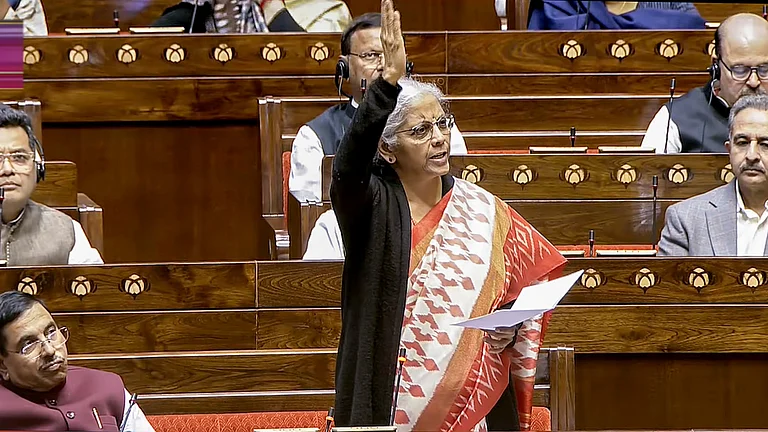
Union Finance Minister Nirmala Sitharaman will present the Budget for the financial year 2026-27 (FY27) on Sunday, February 1, government sources told PTI.

1 September 2026
Get the latest issue of Outlook Business

India goes into the budget season with the economy performing better than expected. Growth has surprised on the upside, inflation has stayed unusually low and foreign exchange reserves remain near record levels.
Economic data from the first half of FY26 point to strong activity. the government estimates show real gross domestic product (GDP) growth at 8.2% in the July–September quarter. For the April–September period, the economy expanded by 8.0% compared with a year earlier.
Advertisement
The growth was not limited to a single pocket. Services and industry drove expansion in the first two quarters, while agriculture continued to add steadily to output. Taking this into account, the Reserve Bank of India (RBI) raised its growth forecast for the full year to 7.3%. The central bank attributed the revision to steady domestic demand, consumption growth and policy support.
Inflation Stays Low
Inflation has remained one of the more reassuring aspects of the current cycle. Retail inflation stayed low through most of FY26. In November 2025, Consumer Price Index (CPI) inflation edged up to 0.71%, slightly higher than earlier months but still far below the RBI’s 4% target.
Advertisement
The RBI now expects average inflation to remain around 2.0% for the full financial year. Lower food prices and changes in goods and services tax (GST) rates have played a major role in keeping prices in check, even as underlying inflation shows some firmness.
Managing the fiscal deficit remains a central issue for the government. For FY26, the deficit has been set at 4.4% of GDP. Based on Budget 2025 estimates, this works out to about ₹15.69 lakh crore.
Figures from the Controller General of Accounts (CGA) show that the gap widened during the year as capital spending increased. By October 2025, the fiscal deficit had reached ₹8.25 lakh crore, or 52.6% of the annual target. Earlier data showed the deficit at ₹5.73 lakh crore in September and ₹5.98 lakh crore in August.
Finance Minister Nirmala Sitharaman has said the government remains confident of meeting the 4.4% target by March 2026, pointing to ongoing revenue collections and spending control.
Trade, revenue Overview
On the external front, India’s trade deficit widened sharply between April and October 2025, touching $196.82bn. Exports in October fell by nearly 12% year-on-year, while imports rose by over 16%.
Even so, foreign exchange reserves remain strong. Reserves rose by $4.36bn to $693.32bn in the week ending December 19, 2025.
Tax collections have continued to support the government’s finances. Gross GST collections in November stood at ₹1.70 lakh crore, up 0.7% from a year earlier. Net direct tax collections rose 8% to ₹17.05 lakh crore so far this financial year.
Monetary policy has also remained supportive. The RBI cut the repo rate by 125 basis points during 2025, taking it to 5.25%. With inflation low, the central bank has noted that the key interest rate may stay supportive for an extended period, while liquidity measures are expected to help credit growth into early 2026.