India’s carbon market could become a major channel for financing its low-carbon transition, but predictable regulations, credible carbon-crediting systems and investor confidence will be crucial to unlocking private capital at scale
India’s carbon market could become a major channel for financing its low-carbon transition, but predictable regulations, credible carbon-crediting systems and investor confidence will be crucial to unlocking private capital at scale

India's real advantage in agriculture is not choosing between tradition and technology. It is the ability to combine them

The trust people place in the system every time they approach a garbage bin may well decide the success of the waste management rules

A post-event analysis of Nepal's flood catastrophe highlights why pre-emptive mitigation has become critical

A transition sustained by evidence and openness earns public trust

India’s clean air challenge is also an economic opportunity, with CSR capital offering a potential route to fund targeted and measurable solutions

Rising heat is emerging as a financial risk for Indian banks, threatening borrower incomes, loan repayments and asset quality across climate-sensitive sectors

The EU’s CBAM seeks to put a carbon price on certain emissions-intensive goods including iron and steel, aluminium and cement.

The work for the study was carried out by a research team spanning the University of Sheffield, University of Sussex, Edinburgh Business School, and SOAS University of London

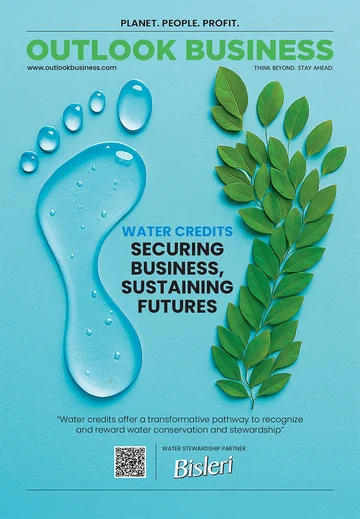
India stands at a defining moment in its water journey. Rising industrial demand, climate variability, and growing stress on freshwater ecosystems are reshaping how water is valued and managed. As businesses confront increasing operational and regulatory risks, the need for innovative, scalable solutions has never been greater. Water credits offer a transformative pathway—recognizing, quantifying, and rewarding water conservation and stewardship. This special supplement, developed by TERI in collaboration with Bisleri, brings together research, practice, and policy perspectives to explore how water credits can support resilient businesses and sustainable ecosystems.

Water Credits offer a market-based offset mechanism that allocates economic value to verified water-saving, restoration, or replenishment actions. They have emerged as a promising mechanism to align economic activity with sustainable water use. Carbon markets provide valuable insights for the water credit mechanism. There is an increasing recognition of water risks in operations and supply chains, which can drive demand for credible water-related investments