Interview
Alex Tabarrok, a Canadian-American economist, explains how air pollution affects India’s economy, arguing that a country's growth need not come at the cost of environmental protection and public health
Alex Tabarrok, a Canadian-American economist, explains how air pollution affects India’s economy, arguing that a country's growth need not come at the cost of environmental protection and public health

Anumita Roychowdhury, executive director of research and advocacy at the Centre for Science and Environment, explains how mounting evidence points to the significant economic and health costs of air pollution in India

Policymakers have been shockingly apathetic to India's pollution crisis. A country cannot aspire to become a global technology and innovation powerhouse while treating the conditions in which its workforce lives as an afterthought

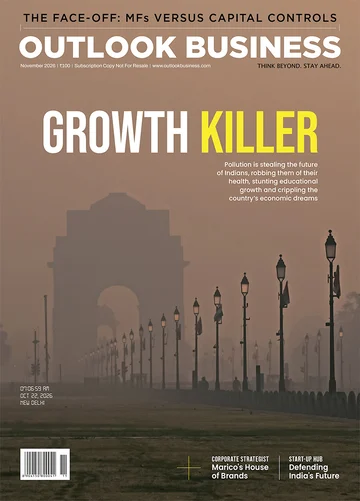
Pollution is stealing the future of Indians, robbing them of their health, stunting educational growth and crippling the country’s economic dreams
Sachchida Nand Tripathi, Dean of the Kotak School of Sustainability at IIT Kanpur, talks about the growing economic and health costs of air pollution in India, highlighting persistent gaps in governance and enforcement


The Act does exclude certain personal data made publicly available by the data principal or someone legally obliged to make it public but this is not a blanket exemption for all information

India’s spacetech start-ups are making big breakthroughs and taking off after a long lull. Can they become world beaters?

A new study examines how foreign capital enters India and how Indian investment moves abroad

How Ambanis, Adanis and Tatas are pursuing different strategies to dominate India’s new-energy landscape

Policymakers have been shockingly apathetic to India's pollution crisis. A country cannot aspire to become a global technology and innovation powerhouse while treating the conditions in which its workforce lives as an afterthought

Pollution is stealing the future of Indians, robbing them of their health, stunting educational growth and crippling the country’s economic dreams

Alex Tabarrok, a Canadian-American economist, explains how air pollution affects India’s economy, arguing that a country's growth need not come at the cost of environmental protection and public health

Anumita Roychowdhury, executive director of research and advocacy at the Centre for Science and Environment, explains how mounting evidence points to the significant economic and health costs of air pollution in India

Sachchida Nand Tripathi, Dean of the Kotak School of Sustainability at IIT Kanpur, talks about the growing economic and health costs of air pollution in India, highlighting persistent gaps in governance and enforcement

Higher transaction revenue and a sharp decline in expenses, aided by the absence of last year's SEBI settlement provision, lifted NSE's consolidated profit in its first quarterly results announcement since listing
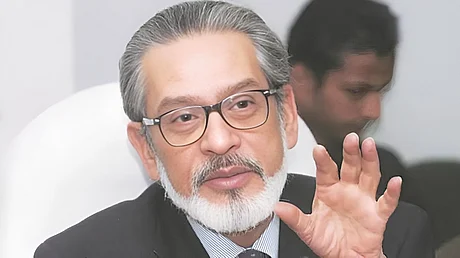
Pronab Sen, in an interview with Outlook Business, says the bigger concern with the new GDP series is not just the sharp downward revision to past growth estimates but the lack of transparency over the data and methodology behind it

The government’s gradual and selective approach to capital-account liberalisation has been consistent with the need to preserve reserves and financial stability amid recurrent external shocks