
The US and Iran are expected to hold a second round of negotiations this week after Islamabad talks failed to secure a longer-term ceasefire before the April 21 deadline.
Washington’s demand for a 20-year freeze on uranium enrichment remains a key sticking point, while Tehran has proposed a shorter timeline under international monitoring.
Oil markets remain volatile as tensions around the Strait of Hormuz — a route for nearly 25% of global energy trade — raise fears of supply disruptions and price spikes.
Following failed negotiations over the weekend in Islamabad, the US and Iran are now looking to hold another round of talks before the two-week temporary ceasefire expires on April 21. According to reports by The New York Times and the Associated Press (AP), the next round of peace talks is expected to take place this week, likely on April 16.
However, the venue remains unclear. While Islamabad is pushing to host the next round, AP reported that Geneva, Switzerland, is also being considered as an alternate location.

1 October 2026
Get the latest issue of Outlook Business

“No firm date has been set, with the delegations keeping Friday through Sunday open,” Reuters reported on Tuesday, citing a senior Iranian source.
The first round, led by US Vice President JD Vance, failed to secure a longer-term ceasefire as Tehran refused to accept US demands, including surrendering enriched uranium and halting its nuclear programme entirely.
Iranian state media described the demands as “excessive” and reiterated that the country is not building a nuclear bomb. Following the unsuccessful talks, which lasted over 20 hours, US President Donald Trump announced that the US Navy would blockade the Strait of Hormuz, escalating tensions and deepening uncertainty in West Asia. The White House, however, has indicated that it remains open to further negotiations if Tehran shows willingness to compromise.
Advertisement
What Did the US Demand?
According to media reports citing Axios, Washington sought a 20-year freeze on uranium enrichment, a condition Tehran rejected. The proposal also included broader restrictions, such as transferring Iran’s highly enriched uranium out of the country.
Iran instead offered to dilute the material under international monitoring, but the differences remained unresolved. Iranian parliament member and delegation participant Seyyed Mahmoud Nabavin reportedly said the two American nuclear demands were “what killed the deal.”
Reports also suggested the Iranian delegation believed a preliminary understanding had been reached, but Vance’s press conference indicated no agreement and placed responsibility for the impasse on Tehran.
Advertisement
How Did Iran Respond?
Iran’s Islamic Revolutionary Guard Corps (IRGC) strongly rejected reports suggesting Tehran would scale back its nuclear programme. IRGC spokesperson Ebrahim Zolfaghari said on X that such claims were “false,” adding: “We will never give up our rights, sovereignty, or strength — in war or nuclear power.”
Tehran also countered the proposed 20-year moratorium with a significantly shorter timeline, reportedly suggesting a single-digit number of years.
What Are International Responses?
Apart from Pakistan, major economies including Egypt, Turkey, and China have called for an immediate and durable ceasefire. Islamabad, Cairo, and Ankara are working to bring both parties back to the negotiating table, with Egypt’s foreign minister expected to visit Washington this week to meet US Secretary of State Marco Rubio.
Turkish Foreign Minister Hakan Fidan and intelligence chief Ibrahim Kalin are also involved in mediation efforts.
China has urged global peace and stability while cautioning against “external interference” in West Asia. Beijing also denied accusations from Washington that it was providing military assistance to Iran, calling them “baseless.”
An analysis by the Los Angeles Times suggested the blockade could be a strategic attempt to pressure China into persuading Tehran toward concessions. As the world’s largest oil importer, China relies heavily on the Strait of Hormuz, with more than half of its energy supplies passing through the route. A prolonged disruption could pose risks to China’s already slowing economic growth.

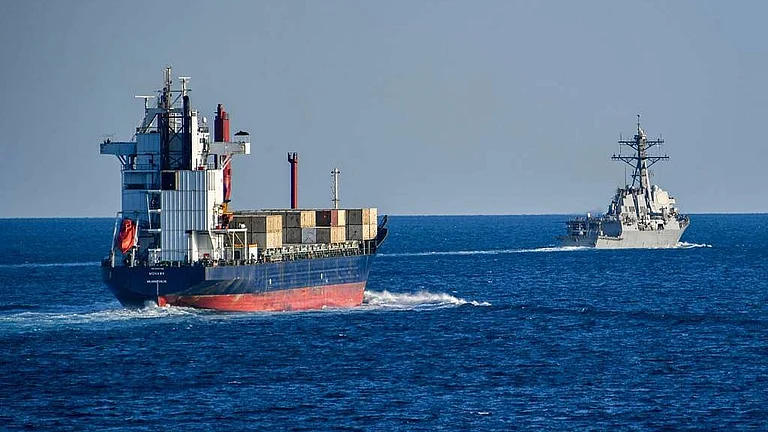
NATO allies, including the UK and France, have signalled reluctance to support military escalation, emphasising the need to keep the strategic waterway open and avoid a broader conflict.
Does the Temporary Ceasefire Still Hold?
Despite the failed first round of negotiations, the fragile two-week truce announced on April 7 has largely held. Trump paused the US-Israeli bombing campaign last week after earlier threats of escalating strikes in Iran.
However, Tehran has accused Washington of breaching the spirit of the agreement by failing to restrain Israeli attacks on Iran-backed Hezbollah targets in Lebanon. While Israel acknowledged the ceasefire, it maintained that Lebanon was not part of the deal.
Where Is the Oil Market Headed?
Since the conflict began on February 28, oil markets have remained volatile, with Brent crude briefly touching a four-year high of $119 per barrel. Analysts warn that if tensions persist beyond May, crude prices could breach the psychologically significant $150 per barrel level, potentially triggering a global economic slowdown or recession.
With nearly 25% of global energy trade passing through the Strait of Hormuz, disruptions have kept prices elevated, prompting the US to ease sanctions on Iranian and Russian oil supplies.
OPEC+ producers have also increased output, while the International Energy Agency has released emergency reserves to prevent prices from surging further.
According to the IEA’s latest projections, global oil supply forecasts have been revised downward alongside weaker demand expectations, reflecting continued uncertainty stemming from tensions in West Asia.
Supply will fall by 1.5 million barrels per day this year, the IEA said in its monthly oil market report.
The IEA called the war in the West Asia the ‘largest ever oil supply disruption’. The Iran war has "thoroughly upended the global outlook for oil consumption", it said, now predicting an 80,000 bpd drop in demand growth this year, from a 640,000 bpd rise in March.