The US and Iran are likely to hold a second round of talks after 20-hour negotiations in Islamabad failed to secure a longer-term ceasefire.
The temporary ceasefire announced on April 7 is set to expire next week, increasing urgency for a diplomatic breakthrough.
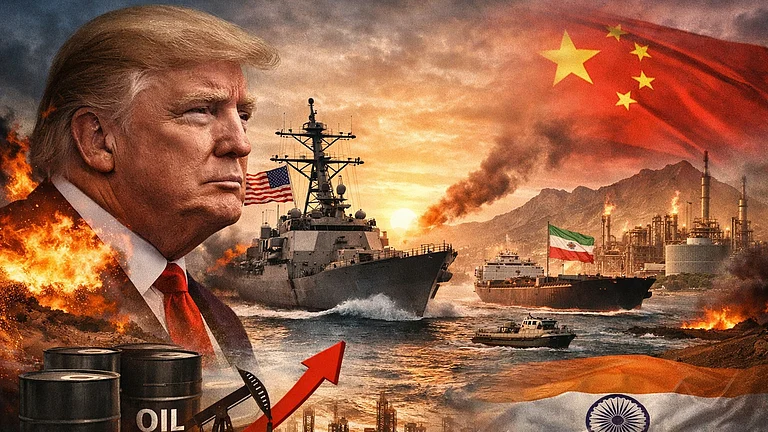
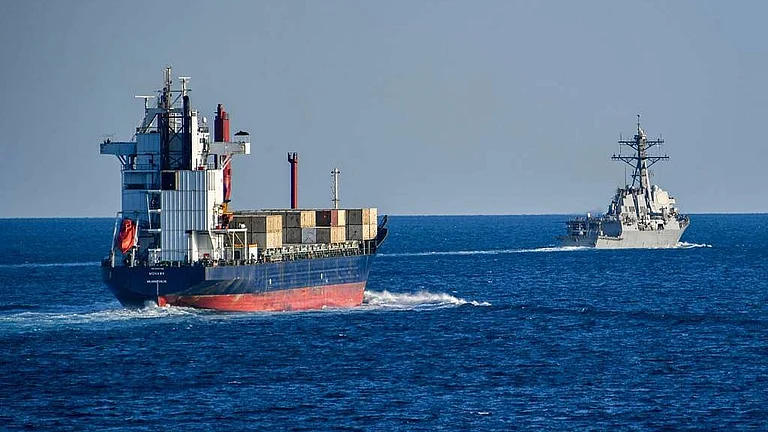
Trump’s blockade of the Strait of Hormuz is seen as strategic pressure on Tehran, while China has urged efforts to preserve the fragile truce.
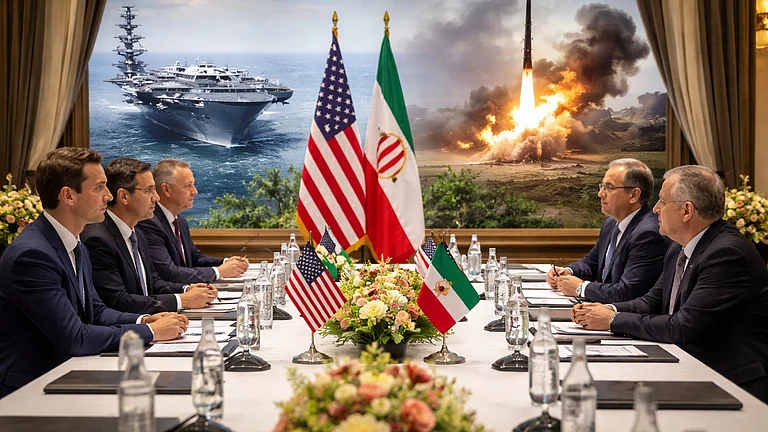
Washington and Tehran are in talks to hold another round of negotiations for a ceasefire following failed peace talks in Islamabad over the weekend, according to a Bloomberg report. The negotiations in Islamabad, which lasted more than 20 hours, were led by US Vice President JD Vance but did not yield a breakthrough, prolonging uncertainty amid escalating tensions in West Asia.
According to sources cited in the report, the objective of the next round of face-to-face talks is to reach a longer-term ceasefire before the temporary truce announced on April 7 expires next week. While Islamabad is the likely venue, other locations are also being considered.

1 October 2026
Get the latest issue of Outlook Business

On Monday, CNN reported that White House officials were discussing the possibility of another meeting, with Pakistani Prime Minister Shehbaz Sharif pushing to resolve outstanding issues between the US and Iran. Both Vance and US President Donald Trump have signalled Washington’s willingness to continue negotiations.
Analysts view Trump’s move to blockade the vital waterway — through which nearly 25% of global energy trade passes — as a strategic chokepoint aimed at pressuring Tehran into concessions. “We’ve been called this morning by the right people, the appropriate people, and they want to work a deal,” Trump said at the White House.
Advertisement
Failed Negotiations in Islamabad
Vance returned empty-handed after Tehran refused to give up its nuclear ambitions or surrender enriched uranium. Iran has denied allegations that it is building a nuclear bomb, maintaining that it has the right to enrich uranium for civilian purposes. Iranian state media described the US demands as “excessive.”
Iran’s foreign ministry said that “differences wouldn’t be resolved in a single round,” signalling openness to further negotiations.
China Calls for Peace Talks
In a separate report, Bloomberg said China’s Foreign Minister Wang Yi urged the international community to step up efforts to promote peace talks between the US and Iran, warning that the current ceasefire remains fragile and must be preserved.


Advertisement
China has a vested interest in reopening the Strait of Hormuz, as more than half of its oil imports pass through the route. China is the world’s largest crude oil consumer, followed by the US and India. According to an analysis by the Los Angeles Times, the US blockade is being seen as a political move to push China to intervene and persuade Iran to make further concessions.