

US and Iran agree to conditional two-week ceasefire after Tehran proposed a 10-point plan following rejection of Washington’s 15-point proposal.
Strait of Hormuz transit to resume, easing concerns over disruption to nearly 25% of global energy trade.
US signals non-aggression commitments and sanctions relief discussions, while Israel says truce does not extend to Lebanon operations against Hezbollah.
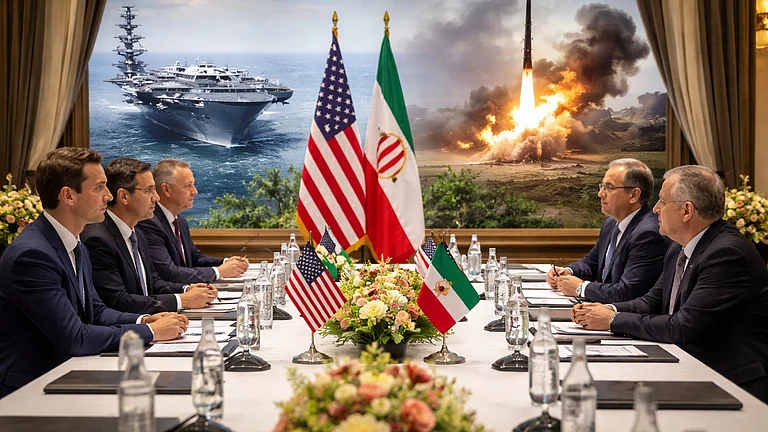
As a sign of de-escalation, the US and Iran have agreed to a conditional two-week ceasefire, during which transit via the Strait of Hormuz will be allowed. Following the rejection of the US’ 15-point resolution plan, Iran proposed a 10-point ceasefire plan, which was confirmed by the White House late Monday.
US President Donald Trump continued to launch fresh threats against Iran on Tuesday while acknowledging that the proposal was a ‘significant step.’

1 October 2026
Get the latest issue of Outlook Business

Trump had given Tehran a deadline till Tuesday (5:30 AM IST, Wednesday) to reach a meaningful deal, otherwise threatening to ‘blow everything up’ in Iran, including critical infrastructure and power plants. The 10-point plan was conveyed to the US via mediator Pakistan. Pakistani Prime Minister Shehbaz Sharif said early Wednesday that the ceasefire was effective immediately.
According to a post on X, Iran said that the US has accepted conditions raised by Tehran as ‘workable.’ Washington has committed to non-aggression, acceptance of enrichment, lifting of economic sanctions against Iran, termination of all United Nations Security Council resolutions and IAEA Board of Governors resolutions.
Advertisement
The US has also agreed to payment of compensation to Iran, which will be used for reconstruction of damaged infrastructure during the conflict. The statement also added that the US agreed to withdraw combat forces from the region and cease war on all fronts. Iran also continues to hold control over the Strait of Hormuz, the tweet said.

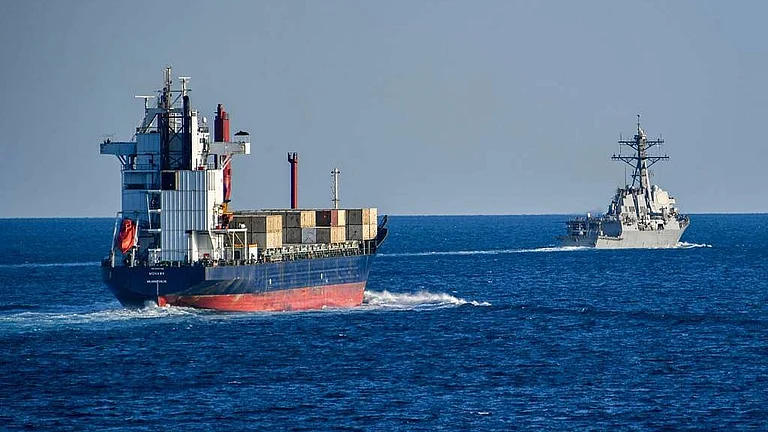
As per a report by BBC, Trump said he would agree to ‘suspend the bombing and attack of Iran for a period of two weeks’ if Tehran agrees to reopen the Strait, a vital waterway through which nearly 25% of global energy trade passes.
Advertisement
In a post on social media platform Truth Social, Trump said he agreed to the provisional ceasefire as “we have already met and exceeded all Military objectives.” Iran has agreed to allow vessels to pass through the Strait, with their passage coordinated by the Iranian military. "Iran fully commits to not seeking possession of any nuclear weapons."
Tehran's Supreme National Security Council said in a statement that "Iran's victory in the field would also be consolidated in political negotiations." According to the report citing Sharif, the ceasefire will also take effect in Lebanon, where Israel has been fighting the Iran-backed militant group Hezbollah.

However, Tel Aviv’s administration has stated that it will not leave Lebanon until the threat from Hezbollah has been removed.
"Israel supports President Trump's decision to suspend strikes against Iran for two weeks, subject to Iran immediately opening the straits and stopping all attacks on the US, Israel, and countries in the region," Israeli Prime Minister Benjamin Netanyahu said. The statement added that the "ceasefire does not include Lebanon", where Israel has ground troops, according to BBC.