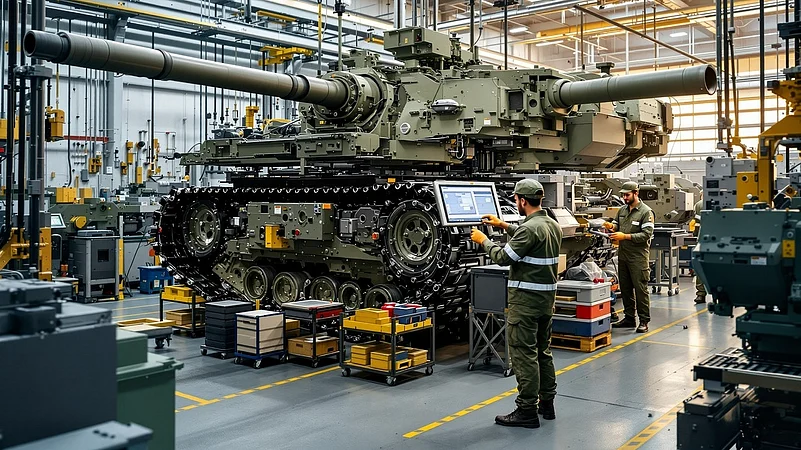

FICCI has urged the government to raise defence spending by around 10% in the upcoming Budget, after an allocation of ₹6.81 lakh crore in FY26.
The industry body has also sought an additional ₹10,000 crore for DRDO to accelerate defence research and next-generation technologies.
PHDCCI has called for tax relief, higher homeland security spending and export financing support to strengthen domestic defence manufacturing.
Ahead of the Union Budget for the financial year 2026-27 (FY27), industry bodies FICCI and the PHD Chamber of Commerce and Industry (PHDCCI) have called for stronger financial and policy support for India’s defence and homeland security sectors. The demand comes amid rising security challenges and a push to scale up domestic defence manufacturing.
According to FICCI, defence spending must remain a top priority in the upcoming Budget as India faces increasing geopolitical risks and rapid advances in military technology globally.

1 September 2026
Get the latest issue of Outlook Business

In the previous Budget, the government had allocated ₹6.81 lakh crore to the Ministry of Defence for FY26, marking a 9.5% increase over the year before. FICCI has now urged the government to maintain around 10% growth in defence allocations this year, while increasing the share of capital expenditure to 30% from the earlier 26% to support modernisation.





Higher capital spending, FICCI said, would help fund advanced military equipment such as drones, air defence systems, electronic warfare tools and border infrastructure. The industry body has also sought a stronger push for defence research and innovation.
Advertisement
It noted that the Defence Research and Development Organisation (DRDO) received ₹26,816.82 crore in FY26, and has recommended an additional ₹10,000 crore in the coming Budget to accelerate work on next-generation technologies in partnership with private players and startups.
Meanwhile, PHDCCI has recommended to focus on homeland security and defence manufacturing. The chamber has recommended higher capital allocation for modernising homeland security forces to upgrade equipment, technology and infrastructure across law-enforcement agencies.
To make domestic defence production more competitive, PHDCCI has asked for time-bound tax incentives and rationalisation of customs and excise duties for defence and homeland security manufacturing and R&D. According to the chamber, these steps would reduce costs, improve cash flows and make locally made equipment more affordable for government procurement, while supporting the Atmanirbhar Bharat goal.
Advertisement

Both FICCI and PHDCCI have stressed the need to boost defence exports. PHDCCI has proposed targeted budgetary support for export financing and global market access, noting that Indian defence firms, especially MSMEs, often struggle due to limited access to overseas funding and promotion.
It has also suggested faster payment mechanisms through a unified digital platform for contractor bills and allowing insurance surety bonds instead of bank guarantees for projects up to ₹300 crore to ease liquidity pressures on smaller firms.
The industry bodies said stronger budgetary support for defence would not only enhance national security but also generate jobs, boost innovation and position India as a global defence manufacturing and export hub.