

FICCI proposes One Nation, One License to streamline state-wise approvals for agri-inputs such as seeds, fertilisers and pesticides.
Industry calls for digital and skill-led reforms, including ₹12,000 crore for AI-driven agriculture and training three million farm technicians.
Experts urge higher farmer support, recommending enhanced PM-KISAN payouts, stronger seed certification and improved rural infrastructure.
As the Union Budget for FY27 approaches, with a large share of India’s workforce dependent on agriculture and allied activities, experts are calling for reforms to simplify regulation and boost productivity across the sector.
In its pre-Budget memorandum, the Federation of Indian Chambers of Commerce and Industry (FICCI) proposed a One Nation, One License system to standardise and simplify licensing requirements for agricultural inputs across states. The move aims to ease regulatory burdens, improve ease of doing business and address long-standing challenges faced by agri-input companies.

1 September 2026
Get the latest issue of Outlook Business

“The current regulatory framework governing the marketing and licensing of agricultural inputs—such as seeds, fertilisers and pesticides—is fragmented, forcing companies to navigate complex, state-specific processes,” FICCI said. Firms operating across multiple districts or states are required to obtain multiple licences in different regions, adding to compliance costs and delays.
FICCI has also recommended launching a national programme to develop three million farm technicians over five years, with a focus on specialisations such as soil testing, micro-irrigation, drones, sensors, farm machinery and post-harvest technologies.
For FY26, the Centre allocated ₹1,714.3 billion for agriculture and allied activities, representing a 21.7% increase over the previous fiscal year's revised estimates. This constituted 3.4% of the total government spending.
Advertisement
Separately, the PHD Chamber of Commerce and Industry (PHDCCI) has called for a ₹12,000 crore budgetary allocation for the Digital Agriculture Mission and AgricStack to promote AI-driven farming. Investments in predictive analytics, disease forecasting, IoT sensors, drones and blockchain-based traceability, it said, would improve yield quality, reduce input costs and wastage, and help agricultural exports meet global standards.
PHDCCI experts have also suggested enhancing PM-KISAN by increasing targeted support for small and marginal farmers to ₹12,000 per year, up from the current ₹6,000. Dedicated budgetary allocations have been proposed to strengthen seed certification systems, upgrade testing infrastructure, tighten enforcement and enable digital tracking of certified seeds. “The rising circulation of spurious and sub-standard seeds is hurting farm productivity and farmer incomes,” the chamber said.
Advertisement
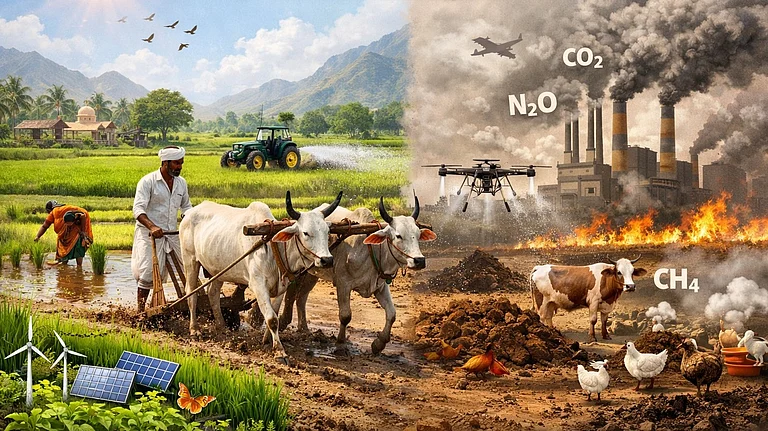
Other broader recommendations include improving rural logistics and market access, scaling up micro-irrigation, promoting climate-resilient crops, expanding renewable energy solutions such as solar pumps and biogas, rationalising fertiliser subsidies through Direct Benefit Transfer, and promoting nano-urea to lower costs and reduce import dependence.