
The telecom sector has urged the central government to sharply cut licence fees on spectrum to ease financial stress on operators.
Industry body COAI has sought a reduction in the licence fee from 3% to 0.5%–1% of adjusted gross revenue (AGR).
COAI said the move would lower the sector’s burden and support faster rollout of next-generation connectivity.
The telecommunications sector has asked the central government to ease its financial burden by sharply reducing the licence fee companies pay for spectrum. The Cellular Operators Association of India (COAI), the industry body which represents players such as Reliance Jio, Bharti Airtel and Vodafone Idea, has sought a reduction in the licence fee from 3% to 0.5%–1% of their adjusted gross revenue (AGR).
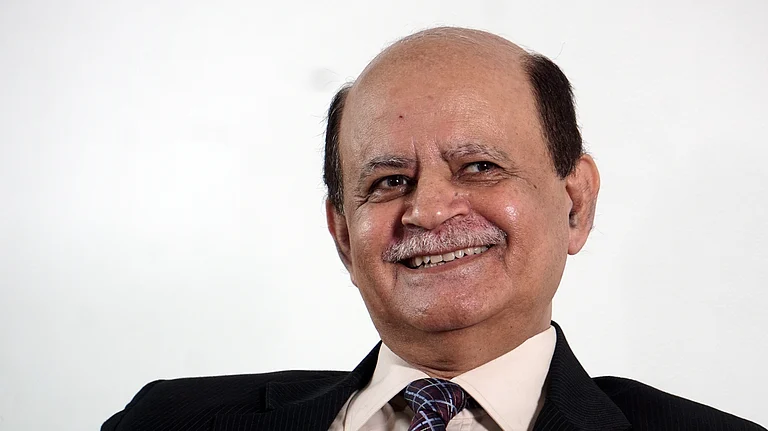
“COAI, as the industry body for telecom operators, has been advocating measures that would reduce the sector’s financial burden, thereby enabling further expansion and rollout of next-generation connectivity to achieve the goal of a Viksit Bharat,” said Lt. Gen. Dr S.P. Kochhar, Director General, COAI.

1 September 2026
Get the latest issue of Outlook Business

He noted that COAI has submitted to the government that the licence fee, which is a combination of the licence component (3% of AGR) and the Digital Bharat Nidhi contribution (5% of AGR), is a huge financial burden for licensed telcos. COAI has requested that the licence fee be reduced from 3% to 0.5%–1% to cover only administrative costs.



Advertisement
The industry body has also asked the Centre to pause contributions to the Digital Bharat Nidhi “for the time till the unused corpus has been completely utilised by the Department of Telecommunications”.
As per information provided by the Department of Telecommunications to the Lok Sabha last year, ₹90,813 crore had been disbursed or utilised under various Digital Bharat Nidhi (erstwhile Universal Service Obligation Fund) schemes as of June 30, 2025.
The Digital Bharat Nidhi was introduced to bridge the digital divide by funding telecom infrastructure in rural, remote and underserved areas where commercial viability is low. The scheme supports projects such as rural mobile connectivity, BharatNet broadband rollout, 4G saturation in uncovered villages and connectivity in aspirational districts, with the objective of ensuring affordable and reliable digital access across the country and promoting inclusive economic growth.
Advertisement
The recommendation comes in the backdrop of massive debt that industry players have built up during their 5G spectrum rollout over the past few years. According to an ICRA report, total debt is estimated to increase to around ₹6.6 lakh crore as on March 31, 2025, before witnessing a steady moderation.
Industry capex is expected to be around ₹3 lakh crore over the next 4–5 years, keeping total debt elevated. The industry’s debt/OPBIDTA is likely to remain at 3.9–4.0x and interest coverage at 3.3x for FY2025, with hopes of further improvement going forward, the credit rating agency said in a report in May 2025.

GST Bottlenecks
The telecom industry is also facing challenges due to a large build-up of unused input tax credit (ITC) under the GST regime, which is increasing financial pressure on operators, according to the industry body.
To ease this burden, COAI has suggested a few measures. It has proposed exempting key regulatory payments such as licence fees (LF), spectrum usage charges (SUC) and auctioned spectrum from GST.
Alternatively, COAI has recommended cutting the GST rate under the reverse charge mechanism on spectrum payments, licence fees and SUC from the current 18% to 5%, which it says would be revenue-neutral for the government while reducing ITC accumulation.
It has also suggested allowing telecom companies to use their existing ITC balances to pay GST under the reverse charge mechanism, helping lower cash outflows and put accumulated credits to use.
“COAI believes that since telecom today is no longer just a vertical, but a ‘horizontal value-added enabler’ for all other verticals, a recalibration of spectrum pricing and assignment models is also necessary,” said Lt. Gen. Kochhar.