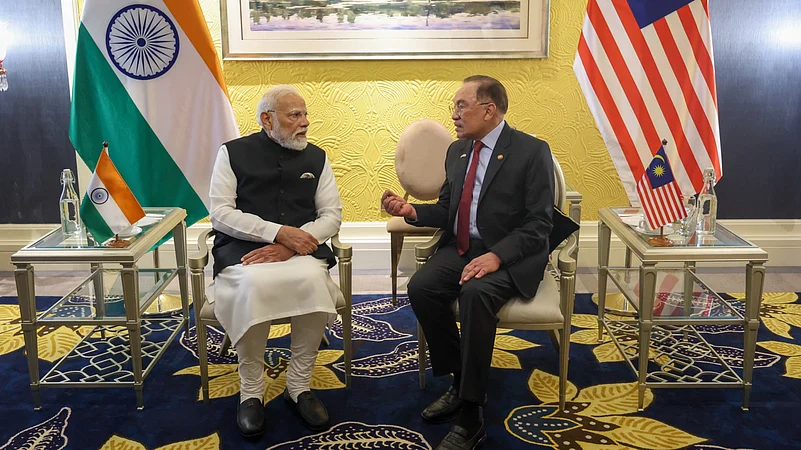

PM Modi and Malaysian PM Ibrahim announced a collaboration between NPCI International and PayNet Malaysia.
The integration is expected to improve ease of doing business and enable seamless, low-cost remittances and payments.
The move will benefit tourists, students and small businesses, while strengthening economic and people-to-people ties.
Prime Minister Narendra Modi, in a joint statement with his Malaysian counterpart Dato’ Seri Anwar Ibrahim, said collaboration between NPCI International Limited (NIPL) and PayNet Malaysia will establish bilateral payment linkages between the two countries. PM Modi is on a two-day official visit to Malaysia from February 7 to 8, 2026.
“They (the leaders) noted that this integration will significantly enhance the ease of doing business and provide seamless, low-cost remittance and payment solutions for tourists, students and small businesses, thereby enabling closer economic and people-to-people connectivity between Malaysia and India,” the statement released by the Ministry of External Affairs said.

1 September 2026
Get the latest issue of Outlook Business

The leaders also applauded the formalisation of the Malaysia–India Digital Council (MIDC), recognising its potential as a key platform to advance digital cooperation, foster innovation and explore collaborative projects in areas such as fintech, e-governance, cybersecurity, artificial intelligence, digital public infrastructure (DPI) and emerging technologies.
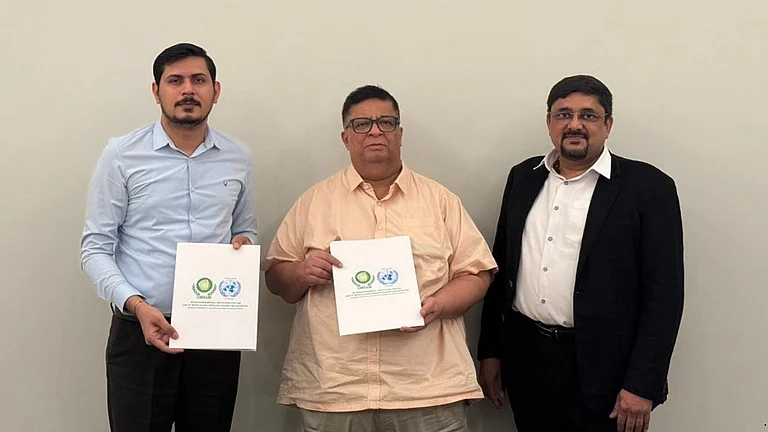



The MIDC was set up in 2024 during a meeting of the leaders of both nations in New Delhi.
On February 7, both leaders emphasised that the MIDC will serve as a strategic mechanism to strengthen bilateral digital engagement and support the digital transformation agendas of both countries.
Both governments also encouraged greater use of local currency settlement in bilateral trade, including invoicing and payments in the Indian rupee and Malaysian ringgit. This builds on ongoing cooperation between the Reserve Bank of India and Bank Negara Malaysia. The leaders also underscored the importance of air and maritime connectivity as a key enabler of trade and investment.
Advertisement

Plans for Deeper Economic Ties
The joint statement highlighted plans to deepen economic cooperation in semiconductors and advanced manufacturing. The sector was described as strategically important, with emphasis on strengthening value-chain linkages, technological innovation, workforce development and supply-chain resilience, supported by institutional and academic collaboration.
Both leaders agreed to enhance trade facilitation and explore opportunities across sectors such as the digital economy, semiconductors and industrial collaboration, stressing the partnership’s mutual and strategic value.
The leaders reaffirmed the importance of the Malaysia–India Comprehensive Economic Cooperation Agreement (MICECA) and the ASEAN–India Trade in Goods Agreement (AITIGA). They welcomed the ongoing review of AITIGA to make it more trade-facilitative and relevant to current global practices, while encouraging greater utilisation of MICECA to deepen economic ties.
Advertisement
Both Prime Ministers welcomed rising bilateral investments and called for stronger cooperation across priority sectors including infrastructure, energy and renewables, advanced manufacturing, healthcare, fintech, artificial intelligence, start-ups, green technologies and hospitality. Prime Minister Modi highlighted India’s appeal as an investment destination, while Prime Minister Anwar Ibrahim noted the contribution of Indian firms to high-skilled job creation in Malaysia.
The leaders welcomed the 10th meeting of the India–Malaysia CEO Forum held in Kuala Lumpur on February 7, 2026, and expressed hope that its outcomes would further strengthen trade and investment engagement between the two countries.
In the energy sector, the leaders noted progress made by PETRONAS and Gentari in India’s renewable energy and green hydrogen initiatives. They highlighted the scope for expanded collaboration in large-scale solar projects and clean energy solutions, aligned with shared net-zero ambitions, and acknowledged India’s leadership through the International Solar Alliance.
The Prime Ministers also emphasised the strategic importance of the semiconductor industry and welcomed ongoing cooperation initiatives, including partnerships between IIT Madras Global and the Advanced Semiconductor Academy of Malaysia, as well as between the Indian Electronics and Semiconductor Association and the Malaysia Semiconductor Industry Association.