

On November 14, 2026, SpaceX's Starship successfully recovered its upper stage and the world celebrated the achievement. This was the first time in the company's history that it had successfully recovered the upper stage of an orbital rocket. Despite being known for its reusable rockets, SpaceX had so far recovered and reused the first-stage boosters of its Falcon 9 rockets.
This time, with Starship, the booster wasn't recovered; only the upper stage was. But the milestone demonstrated that an orbital upper stage could be recovered for potential reuse, bringing SpaceX a step closer to its ambition of making both stages of Starship reusable. This, in turn, could reduce the cost per kg of payload through economies of scale, higher payload capacity and frequent reuse of rockets.
The achievement also came as SpaceX was preparing for a longer-term transition from its workhorse Falcon 9 rocket to the much larger Starship. This shift could potentially create opportunities for other launch providers offering vehicles with payload capacities closer to Falcon 9's.

1 November 2026
Get the latest issue of Outlook Business

Interestingly, Bengaluru-based EtherealX is developing a fully reusable medium-lift rocket designed to recover both stages, though it is yet to demonstrate it in flight. Unlike smaller launch vehicles developed by Skyroot Aerospace and Agnikul Cosmos, EtherealX aims to carry multiple satellites and deploy them into different orbits in a single mission.
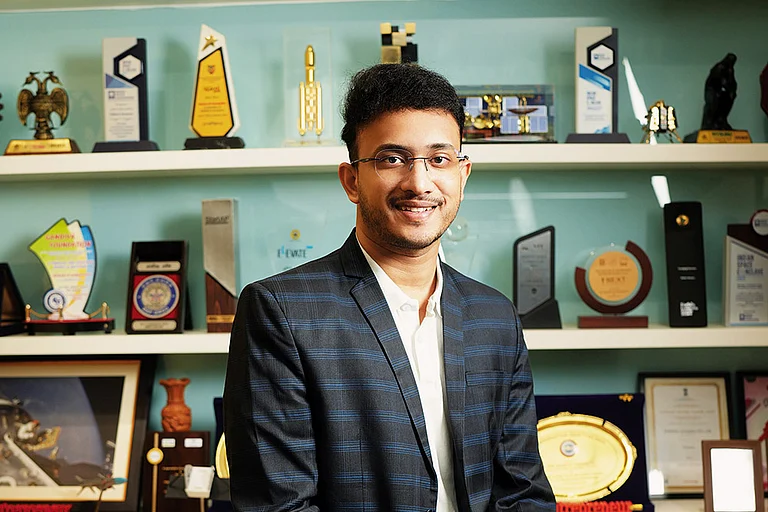
In an interview, EtherealX co-founder and CEO Manu J. Nair speaks about the commercial viability of India’s small-launch-vehicle market as larger rockets bring down costs per kilogram. He also explains the company’s approach to full reusability, its proposed cost advantages and the milestones it must meet before entering the commercial launch market.



Advertisement

Q. With reusable medium-lift rockets emerging globally, how much of a market will be left for small-rocket companies like Skyroot and Agnikul?
The advantage small rockets had was launch on demand or frequency. That advantage was relevant when companies like Skyroot and Agnikul as started around 2017–18.
Back then, SpaceX was still developing its Falcon 9 Block 5. In 2018, they finalised Block 5, which became the final commercial version. The single advantage small rockets had, which was launch on demand, went out of the window the moment reusability came into the picture.
Advertisement
SpaceX demonstrated that combining big rockets and reusability solved for economies of scale: lower cost per kilogram and higher frequency. You were no longer depending on manufacturing lead times but on refurbishment timelines.
But my question is, what happens when there are three or four medium-lift reusable rockets globally? What happens to the small-satellite rocket market?
Because now frequency is not a problem, nor is cost per kilogram. And if it's about last-mile delivery, you have orbital transfer vehicles (OTVs) and satellite buses that take care of that.
Let's say I am a satellite operator with a constellation of 100 satellites, and the average satellite mass is 400–500 kg. A smaller rocket with 1.5 tonnes of capacity could carry three satellites in one launch.
Now compare that with a medium-lift rocket with 20 tonnes of capacity. You can launch a much larger number of satellites in one shot at a significantly lower cost per kilogram.
For narrative setting, it's very easy to say that small rockets can strategically place satellites exactly where customers want them. But if you look at SpaceX, they already do five to six orbital injections in a single launch. They can deliver to five different orbital planes if they want.
Our vehicle (EtherealX) is designed to do roughly 11–16 orbital injections. And for last-mile delivery, you have third-party satellite buses and OTVs.
If I ask a customer whether they want to pay 15 times the cost per kilogram and launch ten times just because they want the rocket itself to deliver their satellite to the exact point, or whether they want ten times lower cost per kilogram in a single launch, with last-mile delivery taken care of, what would they choose?
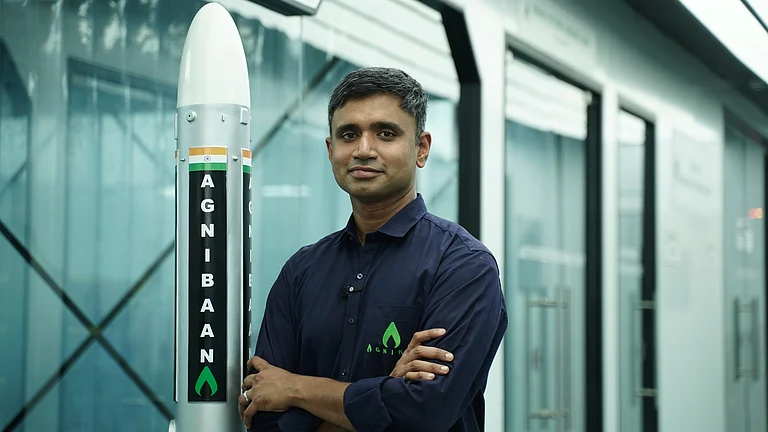
If you look globally, how many small-satellite rocket companies are successful? Even Pawan Chandana of Skyroot is now saying they will eventually move to larger rockets.
It's a matter of narrative. You have to make something work. It was all relevant when they started. I have respect for what they started with, but markets change, and that is never in their control.
Q. SpaceX has demonstrated the economics of partial reusability. Why has EtherealX opted for full reusability, and how does recovering the upper stage change the cost equation?
We realised very early that you can't replicate SpaceX's business model.
Partial reusability, where you recover the booster but expend the upper stage, can significantly reduce the cost per kilogram. However, as launch frequency increases, the cost of manufacturing new upper stages becomes an important part of the equation.
Even with a decent manufacturing setup, it takes at least four to five weeks to build an upper stage. The upper stage accounts for roughly 25–30% of the vehicle's cost.
SpaceX has to manufacture a new upper stage for every Falcon 9 launch. At its current launch cadence, that means producing several upper stages every week. Think about the capital expenditure required to set up a factory capable of sustaining that rate of production. Those costs also have to be recovered.
If you're doing five or six launches a year, partial reusability can work well. But as you scale to tens of launches annually, you need manufacturing infrastructure capable of producing a new upper stage for every flight. The cost of that infrastructure gets factored into the cost per kilogram.
SpaceX's ability to operate at this scale is also linked to its vertically integrated business. It has Starlink, which provides a large internal demand for launches, alongside commercial and government customers. Its launch business is therefore part of a much larger ecosystem.
For a launch company, however, launch operations need to make economic sense on their own. You should be able to fly your vehicle profitably even when it is not full. If you are launching frequently, you may not have a full payload every time.
The minimum payload needed to fly profitably should therefore be as low as possible. That is the only way to balance launch frequency and cost per kilogram.
And that is what pushes us towards reusing the upper stage as well.
Q. When do you expect the first launch, and how much more capital will EtherealX need before full-scale commercialisation?
We are targeting our first orbital demonstration launch in Q1 2028.
We have raised roughly $25.5 million so far and will need another $35–40 million for the first launch, bringing the total to around $60 million, including supporting infrastructure.
You cannot look at the demonstration vehicle's cost in isolation. We need parallel development and manufacturing infrastructure to make corrections if something fails during testing. The vehicle itself would be relatively inexpensive from a rocketry perspective, but the supporting infrastructure adds to the cost.
For full-scale commercialisation, we will need another $130 million or so. But we don't need that entire amount before the first launch. Right now, our focus is on the hot-fire campaign.
Once we demonstrate successful hot firing, it will be easier to build investor confidence in the technology.
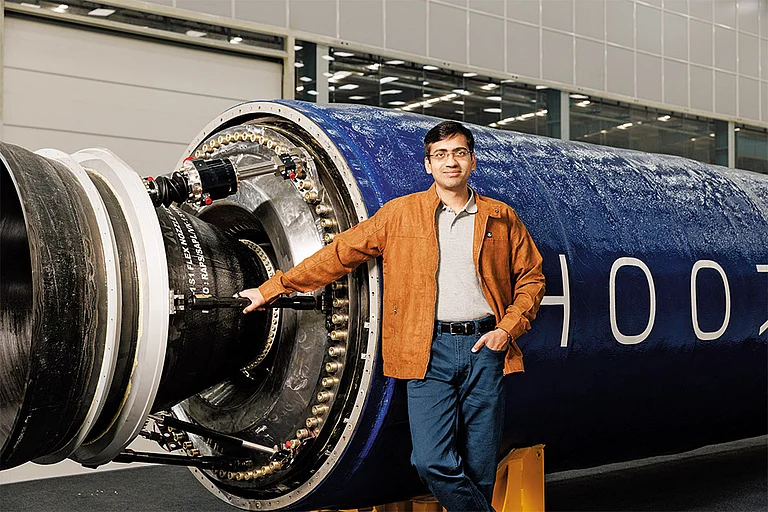
Q. You have worked with ISRO and participated in a spaceflight programme in the US. How did your interest in space begin, and what brought you, Shubhayu and Prashant together to start EtherealX?
Four and a half years ago, this idea was probably not even in our thoughts.
I grew up spending summers with my grandparents and having conversations with my father. One of my grandfather's brothers was a professor of aerospace at an IIT and spent the last 30 years of his life transcribing the Rig Veda. So space was an integral part of my life growing up, and I always wanted to become an astronaut.
I eventually took up mechanical engineering. Around 2019, during my third year, I applied for a programme formerly known as the NASA Space Flight Opportunity Programme. I was selected as one of 12 people globally and graduated as a scientist-astronaut candidate.
During COVID, I also worked on commercial spaceflight planning for a couple of operators in the US through the programme.
Around that time, I met Shubhayu while working as a research associate at ISRO's Human Space Flight Centre. He had spent around nine years at ISRO, including six and a half years at Sriharikota, before being selected as one of 23 people to kick-start the Human Space Flight Programme.
I met Prashant later at Manastu Space, where he was working in propulsion. I joined the executive team there and brought in a multimillion-dollar deal.
At that point, I was considering an opportunity with a company in the US, while Prashant also had another offer. But one dinner changed everything.
We were looking for payloads for Manastu and found that rideshare costs were around $15,000–20,000, while dedicated launches involved waiting six or seven months.
Shubhayu was also disheartened by how often mass budgets for the Gaganyaan programme had to be revised because of limited launch-vehicle capacity. In engineering terms, mass budgeting refers to the weight a vehicle can carry. Mission requirements had to be reduced to fit the available capacity.
We realised there was a clear lack of launch capacity.
We also knew that building a successful launch company required more than a technological advantage. You needed geographical and geopolitical advantages, and India had both.
We knew that larger rockets and reusability were the direction to go. India offered the geographical advantage and geopolitical neutrality, while our full-reusability system offered the technological advantage.
So we felt it was worth taking that leap.
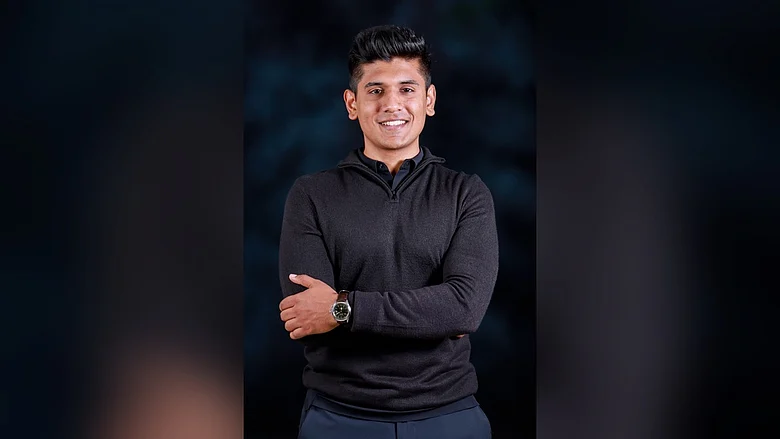
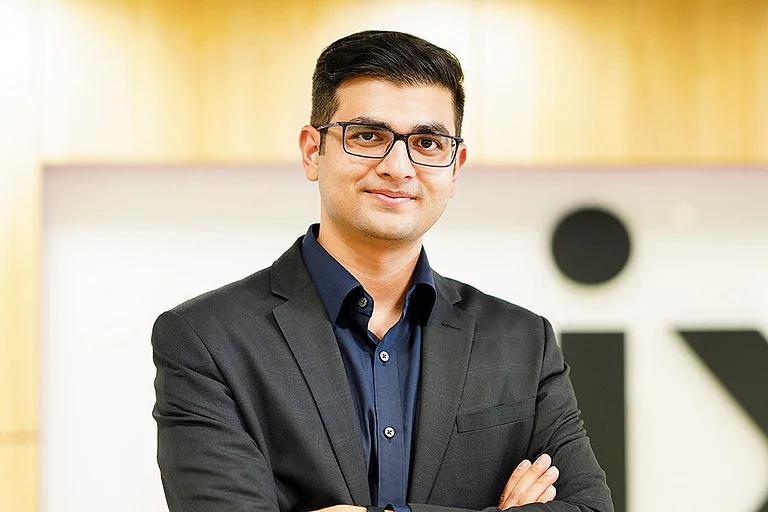
At EtherealX, Prashant drives technology with a calm approach, Shubhayu pushes operations with aggressive execution, while Manu balances the two and oversees business development and investor relations.