

India's unique problems create opportunities we shouldn't overlook while chasing global trends.
US and Chinese VC models cannot be replicated in India, given differences in consumer behaviour, business dynamics and spending.
We track receivables, payables and inventory because they shape cash needs and founders' returns. We make money when founders make money.
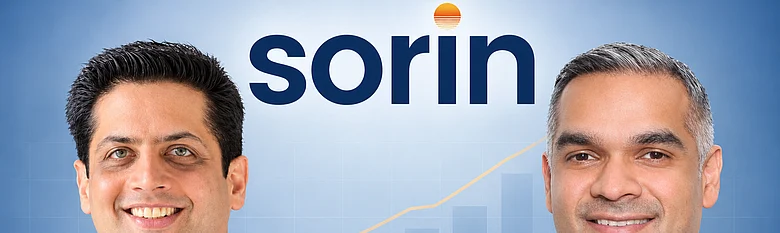
In May 2024, Sorin Investments closed its first fund at ₹1,350 crore. The early-stage venture firm, co-founded by former KKR India head Sanjay Nayar, had a clear aim. It would spot businesses solving real problems and back them before the wider market recognised their potential for outsized returns.
Today, Sorin’s public portfolio lists 13 companies and the firm is expected to make another five to seven investments over the following few months. Sorin partner Subeer Monga told Outlook Business, “The firm keeps each fund to about 18–20 companies so it can spend more time with the founders it backs.”
The maiden fund, which was among the largest micro VC funds raised in 2024, writes cheques of $2 million to $8 million and has 36 limited partners.

1 November 2026
Get the latest issue of Outlook Business

About 90% of its capital came from India. Its backers include the Nayar, Banga and Munjal family offices, Henry Kravis’s family office and other senior KKR partners. SIDBI and the Self Reliant India Fund also came on board, as did the UP Startup Fund, which made its first investment through Sorin.
Founded during the funding winter in 2022, Sorin invests across sectors, from enterprise AI and industrial procurement to consumer brands, healthcare and financial services.
Advertisement
Its enterprise AI bets include Aivar, Enmovil, Kily AI, Spike AI and Beacon.li. The Pant Project is its bet on direct-to-consumer apparel, HomeRun on construction materials commerce and LiteStore on retail enablement.
In a conversation with Outlook Business, Sorin partners Mandar Dandekar and Subeer Monga, explain how they set the fund apart, what makes them back a founder and how they decide which businesses to invest in. They draw on lessons from their years at Kalaari Capital and Mayfield, respectively.

Q. Sorin has backed several enterprise AI companies. Are you also exploring capital-intensive sectors like robotics and semiconductors, where businesses take longer to mature?
Advertisement
Mandar Dandekar: We've evaluated several opportunities in robotics and semiconductors. But these businesses take longer to scale, and our funds have finite lives. We assess whether a company can reach meaningful scale within our fund's timeline. So far, the businesses we've evaluated would have taken longer than our investment horizon allows. We remain interested in deep tech, but the company's maturity has to align with our fund's timeline.
Q. With so much attention on deep tech, are investors overlooking consumer businesses, where market size and potential returns are easier to assess?
Subeer Monga: Venture capital is inherently contrarian. You want to invest before an opportunity becomes obvious to everyone else and valuations rise.
Between 2016 and 2020, almost every pitch deck mentioned AI. Today, we're seeing real applications. What's important is the discipline to evaluate opportunities independently.
India also has its own problems to solve, which create opportunities that may not exist elsewhere. We shouldn't overlook these while chasing global trends. At the same time, we need to build globally competitive businesses in areas like biotech and infrastructure. Ultimately, an opportunity must also fit our fund's investment strategy.
Mandar Dandekar: We don't invest based on market buzz. We build our own conviction in founders and markets, even if we're the first to back a particular business model. Several companies in our portfolio were first-of-their-kind investments that attracted other investors later.
We continue to invest across sectors, including AI services and consumer healthcare. Take The Pant Project, a men's fashion brand in our portfolio. It has scaled well, is focused on profitability and recently raised ₹109 crore. We haven't seen a shortage of investor interest in strong consumer businesses.
At Sorin, we believe the US and Chinese venture capital models cannot simply be replicated in India. Consumer behaviour, business dynamics and willingness to pay are different. Our portfolio has to reflect those realities.

Q. You look for outliers and have had the mentorship approach towards portfolio companies too. From your time at Kalaari Capital and Mayfield, what companies did you back before the size of the market was clear? For example, early investors in quick commerce, for example, didn’t know how consumer behaviour would evolve. How do those experiences inform the way you work with founders today?
Subeer Monga: We look at companies in two broad categories. One is AI and deep tech, where market potential is difficult to predict because technology evolves every six months. The other is businesses with the potential to become profitable on their own.
Take FREED, a debt-resolution platform. Borrowers who default often face pressure from collection agents but lack the means to negotiate settlements. FREED identifies these borrowers, assesses their cash flows and helps them set aside affordable monthly amounts in escrow.
Once sufficient funds accumulate, FREED negotiates with lenders on their behalf. Individually, a borrower may struggle to reach someone authorised to approve a settlement. But when FREED brings ₹2–3 crore worth of loans to a lender in a month, it has greater bargaining power.
For loans overdue by 90 days, lenders typically recover no more than 5% of the outstanding amount, whereas FREED helps them recover around 40–50% on loans it successfully settles. That is nearly ten times the recovery, without lenders paying a fee. The borrower pays FREED, demonstrating their willingness to resolve the debt.
Mandar Dandekar: At Kalaari, I was involved in investments that went on to become large businesses. Dream11 was one of them. It began as a real-money gaming platform and expanded into sports content, experiences, merchandise and ticketing. Kalaari led its Series A and eventually made about 30 times its investment.
Two other investments, ElasticRun, a logistics technology company, and Jumbotail, a B2B platform supplying goods to kirana stores, went on to achieve billion-dollar valuations.
We apply those lessons at Sorin, although our portfolio is still young, with investments averaging less than two years.
Take Aivar, a Coimbatore-based AI services company. Businesses increasingly want to integrate AI into their operations but often don't know how. Aivar helps them implement it. The company grew roughly sixfold in less than a year while remaining highly capital-efficient.
Another example is LiteStore, which is introducing highway outlet retail in India, a model already established in the US and China. It plans retail spaces of 1–1.5 lakh sq ft near petrol pumps and EV charging stations, allowing travellers to shop while stopping for fuel or food. These outlets will offer merchandise across categories, including current and older inventory.
We look for such opportunities early, with the potential for outsized returns. Beyond capital, we help founders refine their business models and act as a sounding board, drawing on lessons from investments that succeeded and those that didn't.
Q. With companies that have thinner margins, how patient do you have to be as an investor? Do you have to trust that reaching a certain scale will make the economics work?
Subeer Monga: It depends on the industry. A tech-enabled services business can have a high gross margin, but you have to look at what happens after the cost of delivery and at the expenses below the gross-margin line.A high gross margin alone doesn’t make a business profitable.
In India, one thing we spend a lot of time on is the balance sheet. We want teams to keep track of receivables, payables and how much inventory the company is carrying. Those things affect how much cash the business needs and what the founders ultimately make. We make money when the founders make money.

Q. Dream11 was a big success, and then the regulatory changes hit. I read that the founder wanted to avoid layoffs and pivot the business even if it didn’t win the regulatory fight. What does an experience like that teach you about when to exit?
Mandar Dandekar: Kalaari took money out at the right time. Sometimes the valuation is right. Sometimes it’s already ahead of the business. You have to be aware of when to take capital off the table. Regulation can change. A strong or well-funded competitor can come in, including a business from overseas. The competitive landscape and the cost structure can change. As an existing investor, you have to monitor all of that and decide when to exit.
There’s raising capital, investing it and helping the company grow. The fourth part is exiting at the right time. During COVID, valuations rose sharply for a lot of companies. Some investors didn’t take money out, and those valuations haven’t come back. I’m sure some of them now ask themselves what would have happened if they’d sold then. Timing the exit matters because you have to get the capital back and return a multiple of it.
Q. Foreign institutional investors are pulling money out of the public markets, and some startups have postponed their IPOs. Even if Sorin has no company about to list, how do VCs and other stakeholders adjust when they’ve planned around a particular year, market level or set of listing valuations and then have to defer?

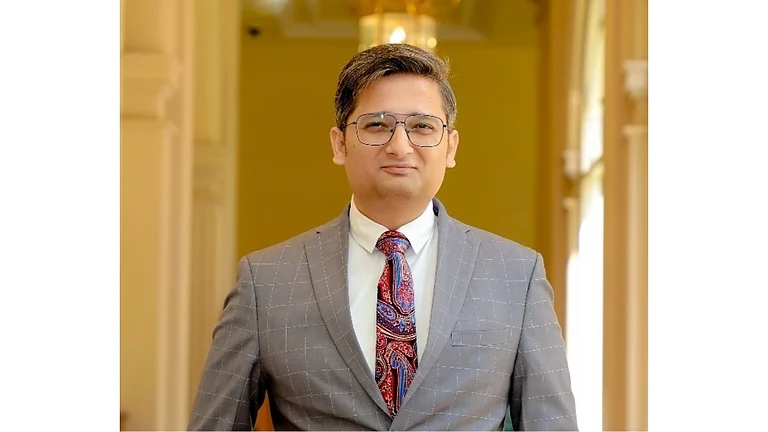


Subeer Monga: The business strategy we spoke about earlier puts you in control of the timing. People sometimes think about companies as if they were static. A company is a living thing. It’s constantly evolving, for better or worse. Control what you can control. Keep the balance sheet healthy and the cash flow positive. If the business keeps growing, you can decide whether to go this quarter or two quarters from now.
Mandar Dandekar: Even in the last two quarters, fundamentally sound businesses have been able to come to market in challenging conditions. They were market leaders, growing well, with high gross margins, profitability, strong balance sheets, very little debt and positive cash flow. If more things are in your favour, investors want to invest and you can still get demand in a challenging market.