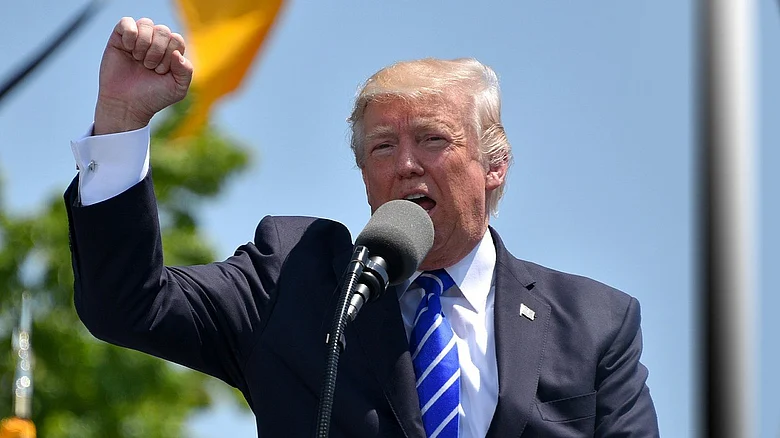

The US House approved a resolution aimed at limiting President Trump's ability to continue military operations against Iran without congressional authorisation.
The measure still faces major hurdles, including Senate approval and a likely presidential veto, making immediate policy changes unlikely.
Lawmakers opposing the conflict cite concerns over economic fallout, rising energy prices, inflation, and the risk of a prolonged US military engagement in West Asia.
In a rare setback for US President Donald Trump, the House of Representatives voted on Wednesday to approve a resolution aimed at limiting his ability to continue military operations against Iran without congressional approval.
The resolution passed by a narrow 215-208 margin, with four Republican lawmakers joining Democrats in support of the measure. Not a single Democrat voted against it.

1 October 2026
Get the latest issue of Outlook Business

While the vote reflects growing concern in Washington over the ongoing conflict, it does not mean that US military operations against Iran will stop immediately. The resolution faces several political and legal hurdles before it can have any real impact.
What Did the House Actually Approve?
The House resolution essentially states that President Trump should withdraw US forces from military operations against Iran unless Congress formally authorises continued action or declares war.
Under the US Constitution, Congress has the power to declare war, while the president serves as commander-in-chief of the armed forces.
The resolution is an attempt by lawmakers to reassert Congress's role in decisions involving military conflict.
Advertisement
However, passing the House is only the first step.
The measure must still be approved by the Senate before it can move forward. While a similar resolution has advanced through an initial procedural stage in the Senate, a final vote has not yet been scheduled. Even if the Senate eventually approves the measure, Trump is widely expected to veto it.
Overriding a presidential veto requires a two-thirds majority in both the House and Senate—a threshold that supporters of the resolution are currently nowhere near achieving.
In short, the vote sends a political message, but it is unlikely to immediately change US military policy.
Advertisement
Why Are Lawmakers Challenging Trump?
The main concern among opponents of the war is that the conflict could drag the United States into another long and costly military engagement in West Asia.
Many lawmakers argue that military operations have expanded without sufficient debate in Congress and without a clearly defined long-term strategy.
Democrats, in particular, have repeatedly argued that decisions involving war should not be made by the president alone.
The issue has also become increasingly economic rather than purely military. As the conflict has continued, Americans have felt the impact through higher fuel prices, rising transportation costs, and broader inflationary pressures.
For many lawmakers, the question is no longer just about military strategy but also about how the conflict is affecting everyday consumers.

How Has the War Affected the Economy?
One of the biggest economic consequences of the conflict has been its impact on global energy markets, with soaring crude prices analysts are warning recession territory for global economy.
Iran sits near the Strait of Hormuz, one of the world's most important shipping routes. A significant portion of global oil and natural gas supplies pass through this narrow waterway every day.
Since the conflict escalated, disruptions and security concerns around the strait have pushed energy prices higher.


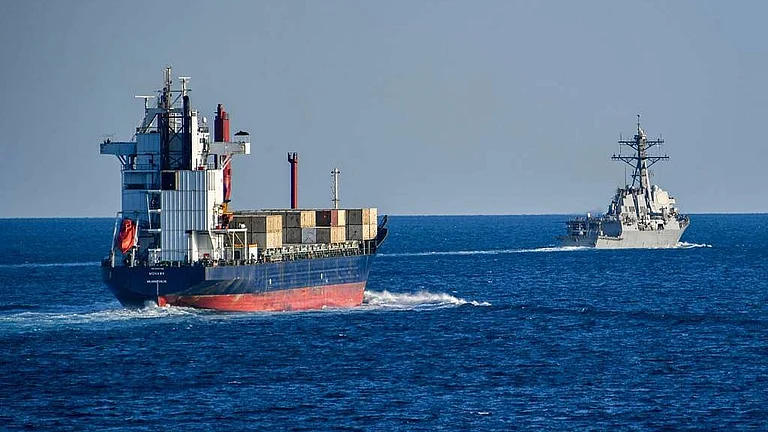
When oil prices rise, the effects are felt throughout the economy. Fuel becomes more expensive, transportation costs increase, businesses pay more to move goods, and consumers ultimately face higher prices at the pump and in stores.
The conflict has also affected supplies of products linked to energy and shipping routes, including fertilisers and industrial commodities.
Many lawmakers opposing the war argue that these economic consequences are placing an unnecessary burden on American households.
Why Is This Becoming a Political Problem for Trump?
The vote is significant because it reveals cracks within Trump's own Republican Party. For months, Republicans largely stood behind the president on major policy decisions.
However, the Iran conflict appears to be creating growing unease among some lawmakers.
The fact that four Republicans joined Democrats to support the resolution may not seem like a large number, but it represents one of the clearest examples of Republican lawmakers publicly breaking with Trump on a major national security issue.
This comes at a sensitive political moment. The US is heading toward crucial midterm elections in November, where control of Congress will be at stake.
Democrats are increasingly highlighting the economic fallout from the war as they seek to persuade voters that the administration's foreign policy is hurting Americans financially.
Higher crude oil prices, rising inflation, and growing uncertainty in global markets are becoming key talking points in the political debate.
What Is Trump Trying to Achieve?
The Trump administration argues that military pressure is necessary to prevent Iran from developing a nuclear weapon.
According to the White House, the campaign is intended to weaken Iran's nuclear capabilities and force Tehran back to the negotiating table.
The administration believes that sustained military and economic pressure is essential to achieving that goal.
Iran, however, has strongly rejected US demands.
Following the escalation of the conflict, Tehran responded with missile and drone attacks targeting US facilities, Israel, and allied countries in the Gulf region.
The conflict also disrupted shipping through the Strait of Hormuz, adding to concerns about global energy supplies and inflation.
Although Pakistan helped broker a fragile ceasefire earlier this year, efforts to secure a lasting agreement have struggled.
Why Are Peace Talks Stuck?
The biggest obstacle remains Iran's nuclear programme. Washington wants Iran to stop enriching uranium and significantly scale back its nuclear activities.
Iran argues that uranium enrichment is part of its sovereign right and refuses to completely abandon the programme.
At the same time, Tehran wants any broader agreement to include an immediate ceasefire across multiple conflict zones in the Middle East, including Lebanon.
These competing demands have created a diplomatic deadlock.
As a result, negotiations remain stalled, military tensions remain high, and the conflict continues to weigh on both global markets and domestic politics in the United States.
For now, the House vote does not end the war. But it does signal growing frustration within Congress and increasing pressure on the Trump administration to explain how the conflict will end—and what the long-term costs may be.