India is steadily transitioning from one of the world's largest defence importers to an emerging global exporter, with defence production touching a record ₹1.78 lakh crore and exports surging to ₹38,424 crore in FY26.
Homegrown platforms such as the BrahMos supersonic cruise missile, Akash air defence system and Pinaka rocket launcher are finding buyers overseas.
Despite export gains, India continues to import advanced military technologies such as fighter jet engines and submarine systems.
For decades, India was known as one of the world's largest importers of military hardware, relying heavily on overseas suppliers to modernise its armed forces.
Driven by a combination of policy reforms, rising geopolitical demand and growing indigenous manufacturing capabilities, India is steadily transforming itself from a defence importer into an emerging exporter of sophisticated military platforms.

1 September 2026
Get the latest issue of Outlook Business

The shift is reflected in record production and export figures, expanding overseas orders and a growing portfolio of indigenous systems finding buyers across Asia, Europe and Africa.
While India continues to import certain high-end defence platforms, its long-term strategy is increasingly centred on building a globally competitive defence manufacturing ecosystem under the broader goal of self-reliance.
Record Production Signals Structural Shift
India's domestic defence industry recorded its strongest year yet in FY26. According to the Ministry of Defence, the value of domestic defence production reached a record ₹1.78 lakh crore, marking a 15.6% year-on-year increase and more than doubling compared with FY21.
Advertisement
Defence exports also climbed to an all-time high of ₹38,424 crore, registering a 62.66% annual increase.
India now exports defence equipment to more than 80 countries, reflecting a significant expansion in its global footprint.
The export basket has also evolved. Instead of merely supplying components and sub-assemblies, India is increasingly exporting complete defence platforms such as the BrahMos supersonic cruise missile, Akash surface-to-air missile system, Dornier-228 aircraft, artillery systems and other advanced military equipment.
Policy Push Behind the Growth
The transformation has been driven by a series of policy interventions aimed at reducing import dependence while encouraging domestic manufacturing.
The Ministry of Defence has issued multiple Positive Indigenisation Lists, progressively banning imports of over 5,000 defence items that must now be sourced from Indian manufacturers.
Advertisement
Simultaneously, the government has earmarked 75% of the defence capital acquisition budget for domestic procurement, providing long-term demand visibility for local companies.
Procurement reforms under the Defence Acquisition Procedure (DAP) 2020 raised indigenous content requirements for key procurement categories, while the Defence Procurement Manual (DPM) 2025 streamlined acquisition processes and reduced procedural delays.
Initiatives such as Innovations for Defence Excellence (iDEX) have also brought more than 670 startups and MSMEs into the defence ecosystem, supported by industrial corridors in Uttar Pradesh and Tamil Nadu.
BrahMos, Akash and Pinaka Drive Export Momentum
One of the biggest symbols of India's changing defence profile is the growing global demand for indigenous missile systems.
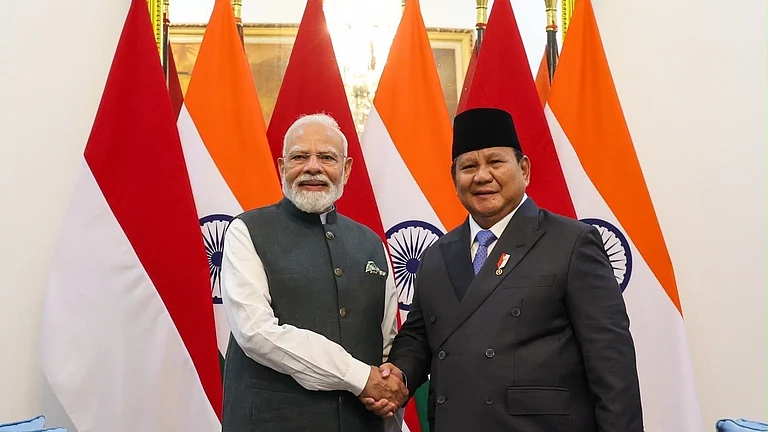
Earlier this month, Indonesia joined the Philippines and Vietnam as an international customer for the BrahMos supersonic cruise missile following a strategic defence agreement.
The missile, jointly developed by DRDO and Russia's NPO Mashinostroyenia, has attracted international attention for its speed and anti-ship capabilities, particularly after its operational performance during Operation Sindoor.
The Pinaka multi-barrel rocket launcher has emerged as another export success story. Armenia signed a ₹2,000 crore deal for Pinaka systems in 2022, with deliveries progressing steadily.
More recently, DRDO successfully tested the Pinaka Long Range Guided Rocket, while reports suggest France is evaluating the system for its own artillery modernisation programme.
Similarly, the Akash air defence system became India's first indigenously developed surface-to-air missile platform to secure an overseas buyer after Armenia signed a $720 million agreement in 2022.
Deliveries began in 2024, further strengthening India's credentials as an exporter of advanced defence systems.
Still an Importer, But the Gap Is Narrowing
Despite the export success, India's defence transition remains a work in progress. According to the Stockholm International Peace Research Institute (SIPRI), India remained the world's second-largest arms importer during 2021-25, accounting for 8.2% of global arms imports.
The country's armed forces continue to rely on foreign suppliers for complex technologies such as advanced fighter aircraft engines, aircraft carrier components and nuclear submarine systems.
However, the composition of imports is changing. Russia's share of India's defence imports has declined significantly—from 70% during 2011-15 to around 40% in recent years—as India diversifies procurement towards France, the United States and domestic manufacturers.
Challenges on the Road Ahead
However, several structural challenges remain, including continued dependence on foreign original equipment manufacturers for critical subsystems, including fighter aircraft engines and advanced propulsion technologies.
Delays in imported components can directly affect indigenous production schedules.
Defence research and development spending also remains relatively modest compared with major military powers, although the government has opened a larger share of R&D funding to private companies and academic institutions.


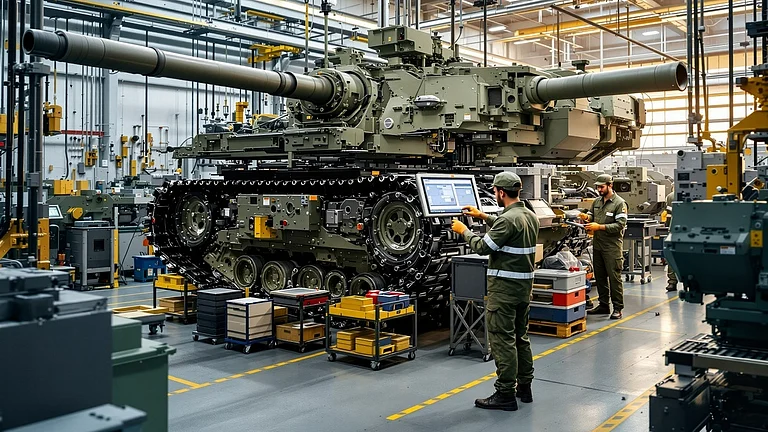
The government has nevertheless set ambitious targets of ₹3 lakh crore in annual defence production and ₹50,000 crore in exports by FY2028-29.
Achieving those goals will require continued investment in indigenous technologies, stronger private sector participation and greater self-reliance in critical components.
India's defence sector is therefore entering a new phase. Rather than simply being one of the world's largest arms buyers, the country is increasingly positioning itself as a competitive exporter of military hardware.
While import dependence has not disappeared, the balance is gradually shifting, signalling a structural transformation that could reshape India's role in the global defence industry over the coming decade.