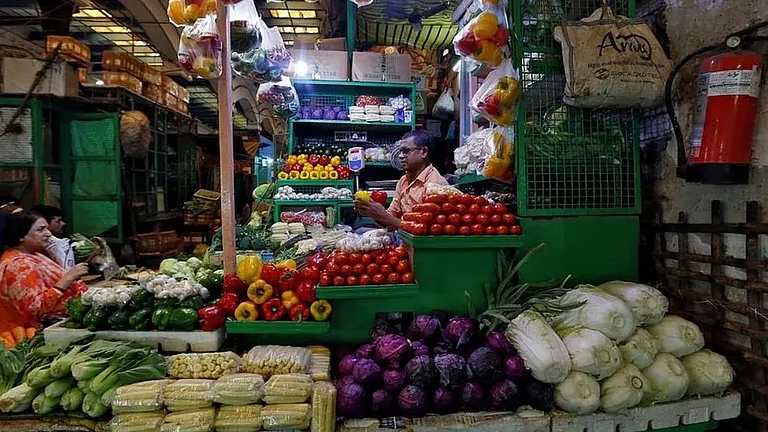

CPI, WPI and PPI measure inflation differently, tracking prices paid by consumers, wholesalers and producers to provide a more complete picture of India's economy.
Rising food prices, volatile global commodity markets and higher input costs are pushing all three inflation measures higher, while weak consumer demand is limiting companies' ability to pass on costs.
The divergence between retail and wholesale inflation presents a challenge for the RBI, which must balance inflation control with supporting investment, corporate profitability and economic growth.
You typically see inflation numbers in single. There’s usually one number, a CPI that make the headlines each month, influences the financial markets and set expectations about the next monetary policy step by the Reserve Bank of India.
But in an economy like India’s-large and fragmented-one number gives you only part of the story. Besides the CPI, there are two other inflation gauges that economists track – the Wholesale Price Index (WPI) and the Producer Price Index (PPI).
Each is a measure of inflation at a particular stage in the supply chain – whether it's from the factory floor to wholesale markets or to the ultimate consumer.

1 October 2026
Get the latest issue of Outlook Business

Together, they provide a more holistic picture of the forces that are driving prices and impacting businesses and households alike.
What Are Causing All Three Inflation Indices to Climb?
The drivers behind the latest inflation readings are a combination of domestic and global factors. A poor southwest monsoon - which experienced a 42.8% deficit in June 2026 - has disrupted food supply, increasing food prices.
On top of that, ongoing geopolitical instability in West Asia has kept energy and commodity prices highly volatile, driving up imported oil, metals, and industrial input costs.
Changes in inflation base years are another factor. In addition to the CPI shifting to a 2024 base year since January 2026, the WPI has also moved to 2022-23, offering a more relevant benchmark of post-pandemic price changes.
What Do the Three Inflation Measures Mean?
Advertisement
While they all aim to measure inflation, they look at prices at various points in the economic supply chain.
The Consumer Price Index (CPI) measures the prices that consumers pay for goods and services.
It is the primary index used by the RBI to gauge inflation. Retail inflation was recorded at 4.38% in June 2026, an increase from 3.93% recorded in May 2026. The RBI tries to maintain the inflation at 4%, with a tolerance band of +/- 2%.
The Wholesale Price Index (WPI) measures the wholesale prices of goods, rather than their retail counterparts.
It is heavily weighted toward manufactured products and primary articles, with services being excluded. Wholesale inflation registered at 9.87% in June 2026 as fuel, power, and industrial input prices experienced sharp upward revisions.
The Producer Price Index (PPI) captures price changes that are perceived by the producers before they are impacted by taxes, trade margins, and transport costs.
Advertisement
Unlike the WPI, it includes some services sectors, like banking, transportation, and telecommunications, making it a more comprehensive measure of producers’ input expenses.
If wholesale inflation is soaring, why isn’t consumer inflation doing the same?
The widening gap between WPI and CPI suggest that businesses are largely absorb higher input costs rather than pass it on to the customers.
Businesses are burdened with increased fuel costs, and the soaring prices of raw materials and imported products can make operations increasingly unsustainable.
As such, they have been trying to manage prices so as not to affect demand in a market where prices for such a substantial segment of customers have already become more price-sensitive.
Is the Weak Demand Limiting the Power of Price Increases?
The recovery of consumption in India is still uneven. The premium and luxury segments of the market may be booming, but the lower-income households and rural markets continue to witness slow consumer recovery. As these consumers are highly price-sensitive, companies are reluctant to pass on all price hikes so that demand for products is not hurt.
Why Is China's Impact on Inflation Persisting?
Even with efforts to boost local manufacturing capabilities, China remains a significant supplier of essential industrial components and inputs to India.
Many companies depend heavily on China for the procurement of electronic goods, pharmaceutical inputs, Chemicals and Solar equipment. A disruption to China’s production or export capacities, therefore, tends to directly lead to an increase in the cost of these imported items.
This impact typically starts showing in WPI and PPI, eventually transmitting to the CPI.

What Does All of This Imply for the RBI?
The divergence across inflation gauges may make the job of the RBI tricky. Since the central bank’s target inflation is at 4%, higher retail inflation may force the monetary policy to tighten, but raising interest rates may add further stress for businesses that are already grappling with high production costs and low profit margins.
In the long run, such a scenario can discourage companies from making private investments in future growth initiatives, affecting corporate earnings and India’s overall medium-term growth.
These three indices may show us three different stories of an economy, but they eventually describe the same one – how it grows.