
India's GDP outlook is improving as strong domestic demand, easing inflation, healthier bank balance sheets and rising private investment continue to support economic growth despite global uncertainty.
Manufacturing and services remain the key growth drivers, backed by government infrastructure spending, digital public infrastructure and reforms.
A stronger GDP outlook could translate into more jobs, higher incomes and better public services.
India continues to outpace most major economies, with its growth outlook improving despite geopolitical tensions, trade uncertainty and slowing global demand.
A combination of strong domestic consumption, resilient manufacturing, healthy bank balance sheets and sustained government investment has prompted economists and financial institutions to revise India's GDP projections upward.

1 September 2026
Get the latest issue of Outlook Business

Why are GDP forecasts being revised upwards?
India's economy has exceeded earlier expectations, with growth strengthening on the back of robust domestic demand rather than external trade.
One of the biggest reasons is the country's large consumer market, which has helped shield the economy from global slowdowns.
Household spending has remained resilient, supported by easing inflation that has preserved purchasing power.
Another key factor is the improved health of the banking and corporate sectors. After years of cleaning up bad loans and reducing debt, banks now have stronger balance sheets and greater capacity to lend, while companies are increasingly investing in expansion.
Advertisement
Which sectors are powering India's growth?
Growth has been broad-based, but manufacturing and services have emerged as the biggest contributors.
Manufacturing has benefited from government initiatives such as Make in India, rising domestic demand and global supply-chain diversification, encouraging companies to expand production.
The services sector has also remained a major growth engine, driven by strong performance in trade, transport, hospitality, financial services, real estate and information technology.
Agriculture, however, continues to face weather-related challenges. Uneven rainfall and climate risks have slowed the sector's growth, highlighting the need for greater resilience in farm productivity.
How are consumption and investment recovering?
Private consumption remains the backbone of India's economy. Household spending on goods and services has strengthened as inflation moderated and incomes improved, making consumption the largest contributor to GDP.
Advertisement
Investment activity has also picked up significantly. Companies are spending more on factories, machinery, infrastructure and commercial projects, reflecting growing confidence in future demand.
Higher private investment is particularly important because it creates jobs, boosts productivity and supports long-term economic expansion.
What role are government spending and reforms playing?
Public investment has played a central role in sustaining growth. The government's focus on roads, railways, airports and logistics has improved connectivity while creating demand across industries.
At the same time, digital public infrastructure—including UPI, DigiLocker and ONDC—has lowered transaction costs, improved financial inclusion and made businesses more efficient.
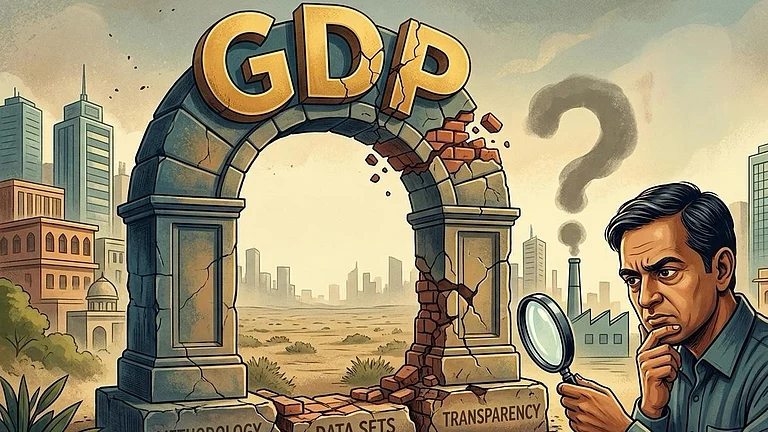
Recent updates to the GDP base year and national statistical framework are also expected to better capture fast-growing sectors such as digital services and the green economy.
What risks could slow growth?
Despite strong domestic fundamentals, several external risks remain. Global geopolitical tensions could disrupt energy supplies and push up crude oil prices, increasing India's import bill and inflation.
Rising protectionism, especially from major trading partners including the US, trade barriers and tighter immigration policies in advanced economies could also affect exports and services.
Domestically, an erratic monsoon remains a key concern, as agriculture continues to support a significant share of India's population and influences rural incomes as well as food prices.
What does a stronger GDP forecast mean for ordinary Indians?
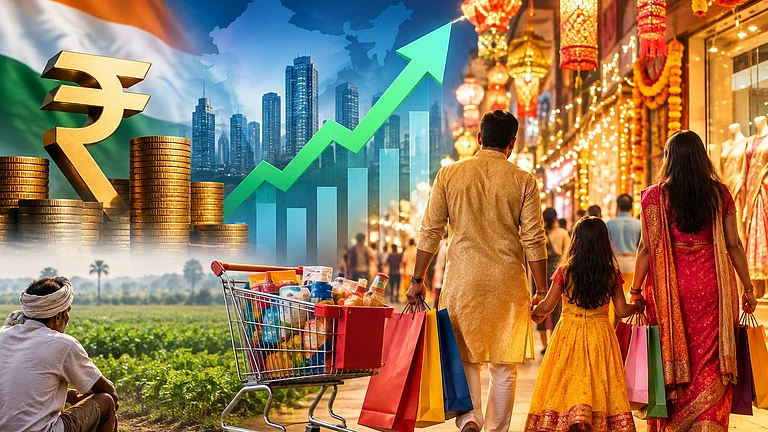
A stronger economy can translate into tangible benefits for households. As businesses expand, demand for workers is likely to increase, creating employment opportunities across manufacturing, construction, technology and services.
Healthy growth combined with moderate inflation also helps improve purchasing power, allowing households to spend more on education, healthcare, housing and other discretionary needs.
Higher economic growth also boosts government revenues through taxes, giving the Centre and states greater fiscal space to invest in infrastructure, healthcare, education and welfare programmes.


Over time, these investments can further strengthen economic productivity and improve living standards.