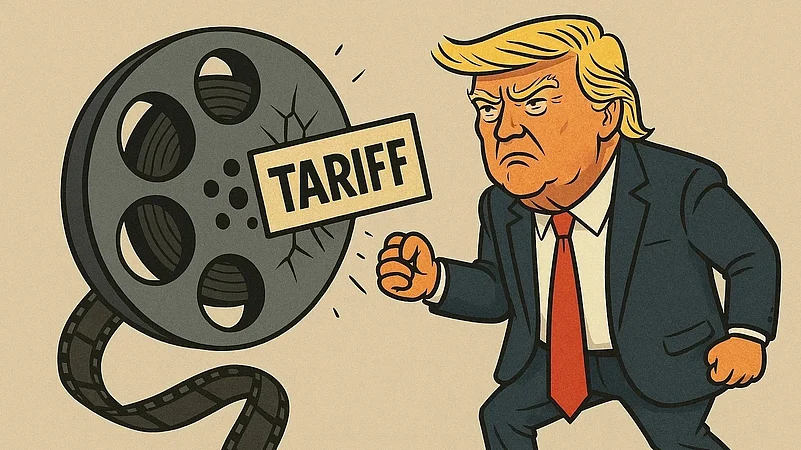

US President Donald Trump has threatened a 100% tariff on countries that impose digital services taxes on American technology companies, escalating global trade tensions.
India abolished its Equalisation Levy, popularly known as the "Google Tax", in April 2025, making it unlikely to fall within the scope of the proposed tariffs.
The dispute reflects a wider global debate over taxing multinational digital companies, with implications for trade negotiations, Big Tech and international tax rules.
US President Donald Trump has threatened to impose a 100% tariff on goods imported from any country that levies a digital services tax on American technology companies, escalating global trade tensions and putting digital taxation back in the spotlight.
The warning comes amid ongoing trade negotiations between the US and several of its trading partners. Trump said any country imposing such a tax would face punitive tariffs, regardless of whether it had signed or was negotiating a trade agreement with Washington.

1 September 2026
Get the latest issue of Outlook Business

While the announcement has raised concerns globally, India is unlikely to be directly affected, having already abolished its controversial Equalisation Levy—popularly known as the "Google Tax."
Why Did Trump Issue the Warning?
Trump's latest threat targets Digital Services Taxes (DSTs), which several countries have introduced to tax revenues earned by large multinational technology companies such as Google, Meta, Amazon and Apple.
Advertisement
The US has long argued that these taxes unfairly target American firms, which dominate the global digital economy. According to Trump, countries imposing such levies are effectively discriminating against US businesses.
He warned that any nation continuing to impose digital services taxes would face an immediate 100% tariff on exports to the US, with the measure overriding any existing or future trade agreements.
What Was India's 'Google Tax'?
India was among the first countries to introduce a tax specifically targeting the digital economy.
In 2016, the government introduced the Equalisation Levy, imposing a 6% tax on payments made to non-resident companies for online advertising services. Since global digital advertising was dominated by companies like Google and Meta, the levy quickly became known as the "Google Tax."
Advertisement
The scope of the tax was expanded in 2020 through a 2% levy on non-resident e-commerce operators. This brought global online marketplaces, digital platforms and technology companies—including Amazon, Apple and several streaming services—within India's tax framework.
The objective was to ensure that companies earning significant revenues from Indian users contributed to the country's tax base, even if they had little or no physical presence in India.
However, the government abolished the 2% Equalisation Levy from April 1, 2025, effectively removing India's digital services tax and easing a long-standing trade irritant with the US.
Why Was the Levy Controversial?
American technology companies consistently opposed the Equalisation Levy, arguing that it created multiple challenges.
One major concern was double taxation. Since the levy was treated as an indirect tax rather than a corporate income tax, companies could not claim foreign tax credits in the US, increasing their overall tax burden.
Many companies also passed the additional tax on to Indian businesses by increasing advertising and platform charges.
Industry groups further argued that the broad definition of digital services created compliance challenges, making it difficult to determine which transactions fell under the levy.
A Long-Running India-US Trade Dispute
Digital taxation has been a recurring source of friction between New Delhi and Washington. Following the expansion of India's Equalisation Levy in 2020, the Office of the US Trade Representative (USTR) launched a Section 301 investigation, concluding in 2021 that the tax disproportionately affected American companies.
The US subsequently threatened tariffs of up to 25% on several Indian exports, including jewellery, basmati rice and bamboo products. Although both sides later paused retaliatory measures while global negotiations on digital taxation continued under the Organisation for Economic Co-operation and Development (OECD) framework, the issue remained unresolved for several years.
India's decision to abolish the Equalisation Levy in 2025 significantly reduced tensions on this front.
Will India Be Affected by Trump's New Threat?
For now, India appears largely insulated from Trump's latest tariff warning. Since the Equalisation Levy has already been withdrawn, India no longer imposes a standalone digital services tax on foreign technology companies. This means it is unlikely to fall within the immediate scope of Trump's proposed action.
However, the broader implications could still matter.
India and the US are currently negotiating a bilateral trade agreement, while Washington continues to use tariff policy as a key negotiating tool. Any renewed escalation over digital taxation with other countries could complicate the global trade environment and indirectly influence ongoing trade talk.
Why Was the Levy Controversial?
American technology companies consistently opposed the Equalisation Levy, arguing that it created multiple challenges.
One major concern was double taxation. Since the levy was treated as an indirect tax rather than a corporate income tax, companies could not claim foreign tax credits in the US, increasing their overall tax burden.
Many companies also passed the additional tax on to Indian businesses by increasing advertising and platform charges.


Industry groups further argued that the broad definition of digital services created compliance challenges, making it difficult to determine which transactions fell under the levy.
A Long-Running India-US Trade Dispute
Digital taxation has been a recurring source of friction between New Delhi and Washington. Following the expansion of India's Equalisation Levy in 2020, the Office of the US Trade Representative (USTR) launched a Section 301 investigation, concluding in 2021 that the tax disproportionately affected American companies.
The US subsequently threatened tariffs of up to 25% on several Indian exports, including jewellery, basmati rice and bamboo products. Although both sides later paused retaliatory measures while global negotiations on digital taxation continued under the Organisation for Economic Co-operation and Development (OECD) framework, the issue remained unresolved for several years.
India's decision to abolish the Equalisation Levy in 2025 significantly reduced tensions on this front.
Will India Be Affected by Trump's New Threat?
For now, India appears largely insulated from Trump's latest tariff warning. Since the Equalisation Levy has already been withdrawn, India no longer imposes a standalone digital services tax on foreign technology companies. This means it is unlikely to fall within the immediate scope of Trump's proposed action.
However, the broader implications could still matter.
India and the US are currently negotiating a bilateral trade agreement, while Washington continues to use tariff policy as a key negotiating tool. Any renewed escalation over digital taxation with other countries could complicate the global trade environment and indirectly influence ongoing trade talks.