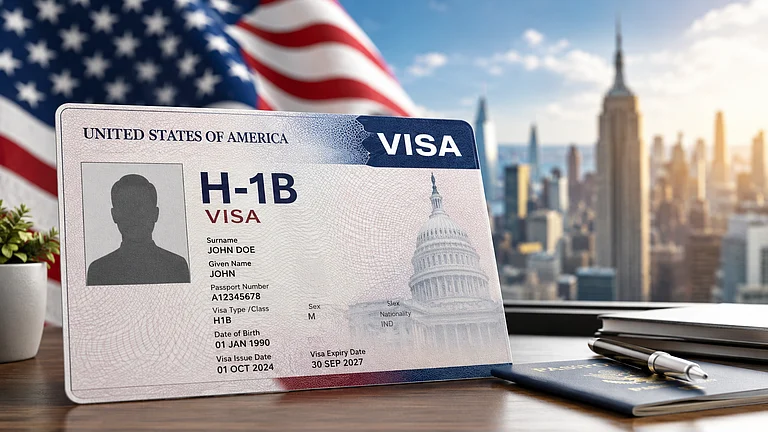
Employers of Indian professionals on H-1B and L-1 visas will soon face higher costs to retain their workers in the United States, even though the additional financial burden will fall on companies rather than employees directly. The US Department of Homeland Security (DHS) has expanded the 9-11 Response and Biometric Entry-Exit fee to now cover extension petitions for certain employers, a move that will raise sponsorship costs across the technology and consulting sectors.
The rule is set to be published in the Federal Register on August 10 and will take effect 30 days later, DHS said. It confirmed that the fee, applicable to employers with 50 or more US employees where more than half hold H-1B or L-1 status, will come into force from September 9. Under the expanded provision, employers will need to pay $4,000 for each H-1B extension petition and $4,500 for each L-1 extension petition.
This threshold, commonly known as the 50-50 rule, previously required qualifying employers to pay the fee only for initial petitions and change-of-employer filings. The new rule extends this requirement to extension-of-stay petitions filed for existing employees as well.

1 October 2026
Get the latest issue of Outlook Business

The 9-11 Response and Biometric Entry-Exit fee is not a new levy. Congress had introduced it in December 2015 as a successor to an earlier supplemental fee, with proceeds meant to fund biometric entry-exit systems mandated for national security purposes, according to DHS. Until now, the fee applied largely when employers filed for an initial grant of H-1B or L-1 status, or when a worker's employer changed. The revised rule closes what DHS described as an administrative gap by extending the fee to nearly all extension petitions filed by covered employers.
Advertisement
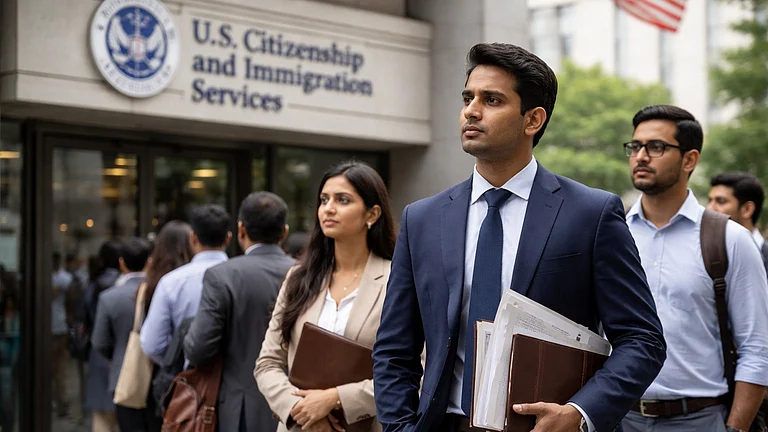
Impact On Employers
The change is expected to significantly raise immigration-related expenses for technology companies, global consulting firms, IT services providers and other multinational employers that rely heavily on H-1B and L-1 talent, particularly Indian professionals who make up a large share of these visa categories. Organisations that routinely file extension requests for existing staff will now incur additional costs that did not previously apply in such cases.
DHS estimates that the expanded fee could generate around $157.3 million annually. These funds are statutorily earmarked for the US Customs and Border Protection Air and Sea Biometric Entry-Exit System, an automated biometric tracking initiative that the current administration has prioritised under its national security agenda, the department said.