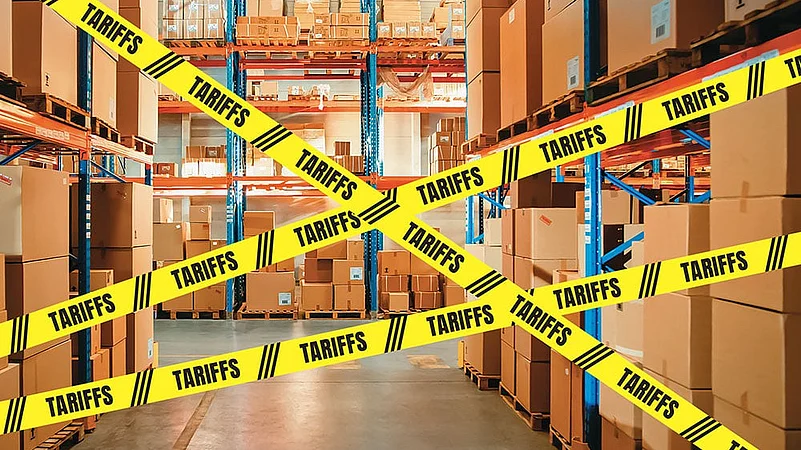

The US plans to use Section 301 investigations to restore higher tariff rates after the Supreme Court ruled that emergency powers could not be used to impose them.
Washington has proposed additional tariffs on Indian imports, while New Delhi continues to seek a competitive advantage over regional peers in ongoing bilateral trade negotiations.
The outcome of the Section 301 investigations and the expiry of temporary Section 122 tariffs on July 24 could shape the future of US trade policy and India's export prospects.
US Treasury Secretary Scott Bessent announced that tariff rates could return to previous levels once the Office of the US Trade Representative (USTR) completes its ongoing Section 301 investigations. The move signals Washington's strategy to restore trade barriers struck down by the US Supreme Court earlier this year by employing an alternative legal mechanism, Moneycontrol reported.
The administration temporarily replaced the invalidated measures with a 10% global tariff under Section 122 of the Trade Act.

1 September 2026
Get the latest issue of Outlook Business

"Right now, we have something called Section 122 tariffs, which is a 10% global tariff. Currently, USTR Ambassador Jamieson Greer is conducting studies for Section 301. And if those studies are successful… then the tariff rates are going to go back to exactly where they were," Bessent told CNBC.
Under US law, the interim Section 122 tariffs can remain in force for 150 days. They are scheduled to expire on July 24, 2026.
Legal Shift and Strategy
The Supreme Court ruled that the International Emergency Economic Powers Act does not authorise the president to impose tariffs. This prompted the Trump administration to adopt Section 122 as an interim measure while pursuing longer-term frameworks.
Advertisement
Unlike the emergency powers act, Section 301 requires a formal investigation before levies apply. This process includes written submissions and public hearings.
President Donald Trump historically used reciprocal tariffs to bring trading partners to the negotiating table, and the Section 301 process aims for the same objective, Bessent said. The Treasury expects only a minimal decline in tariff revenue in 2026 if the investigations conclude successfully.
Impact on India Trade
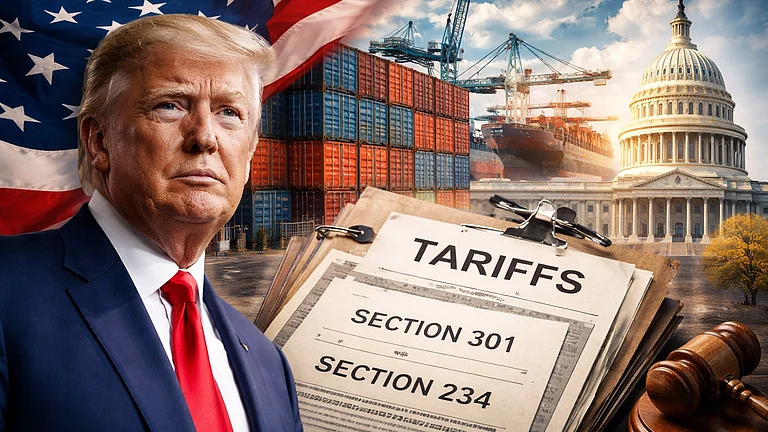
Washington has proposed an additional 12.5% tariff on imports from India and more than 50 other countries. The trade representative's interim findings base this on alleged failures to curb imports produced using forced labour.
Advertisement
A separate Section 301 investigation into structural excess capacity involving 15 countries, including India, remains pending.
Commerce and Industry Minister Piyush Goyal outlined India's firm stance on bilateral trade negotiations during an address in London. India seeks favourable conditions against nations with similar production costs.
"We had negotiated that deal on bringing down 50% tariff to 18%. The whole deal was centred around the competitive advantage over our neighbours and other competing countries. We were lower than all our neighbouring countries, all the Asean countries, other than Singapore. That is why the deal was attractive," Goyal said.


"We have to have some reason to be able to enter into force the agreement that we have and to ensure that we get a competitive advantage over countries in the same stage of development or same cost structures as India, whether its Vietnam, Thailand, the Philippines, Indonesia, Malaysia, China apart from Bangladesh, Sri Lanka and all our neighbours. Until that framework of getting that competitive advantage can be finalised, we can't enter into force a US deal. That's broadly the discussion," Goyal added.