
India and the US have finalised a trade agreement, but it is not yet in force.
Implementation depends on India securing tariff competitiveness over rival economies.
Both sides are working on final legal and tariff frameworks, Goyal said.
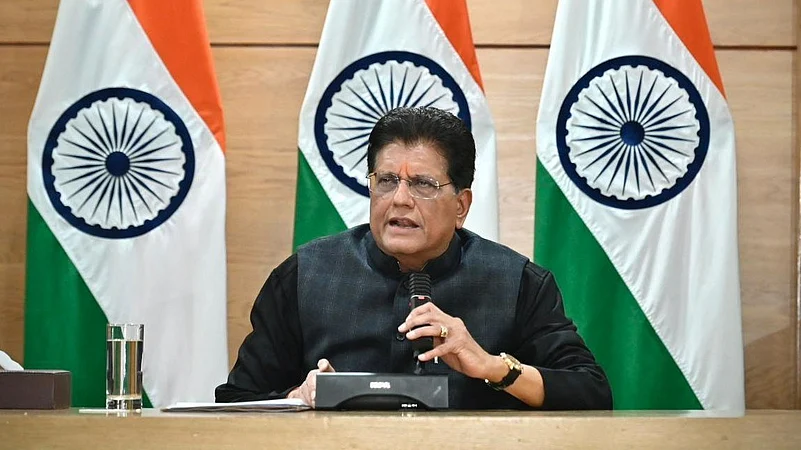
Commerce Minister Piyush Goyal on Thursday said the India–US trade agreement has been finalised, but will not come into force until India secures a clear tariff advantage over competing manufacturing economies.
He said there is no ambiguity that both sides have agreed to the broad framework of the deal, and only the detailed legal structure and tariff mechanism remain to be completed.

1 September 2026
Get the latest issue of Outlook Business

Goyal explained that the agreement is designed to ensure India maintains a competitive edge in global markets. “A FTA is basically about getting a comparative advantage over your competitors for market access,” he said.
Implementation Linked to Tariff Advantage
Goyal said the agreement cannot be implemented unless India secures a clear tariff advantage over competing economies such as Vietnam, Thailand, the Philippines, China, Malaysia, Bangladesh and Sri Lanka.
He said the success of the deal depends on how the United States frames legal and tariff tools to ensure India remains competitive. “Until that framework of getting that competitive advantage can be finalised, we can’t put a US deal into force,” Goyal said.
He added, “The US will have to find the appropriate tools and legal backing to give us that competitive advantage over our competition — the day that happens, the deal is on.”
Advertisement

Negotiations and Next Steps
Goyal made the remarks while speaking at the India Global Forum’s UK-India Week 2026: Capital Frontiers event in London.
He referred to recent discussions with US Trade Representative Jamieson Greer, where both sides reviewed market access, digital trade, supply chain resilience, and cooperation in strategic sectors.
The minister said both countries are now working to finalise the legal and tariff framework before the agreement can formally take effect.


India and the US are expected to move towards implementation of the first phase of the bilateral trade agreement (BTA) once clarity emerges on tariff structures and post-review outcomes.