
US began three-day hearing on forced labour issue that could affect 60 countries
USTR proposed that imports from India and 59 other economies should face additional tariffs ranging from 10% to 12.5%
India and US are working to finalise the first phase of a broader Bilateral Trade Agreement (BTA), covering market access, customs facilitation, investment and non-tariff measures
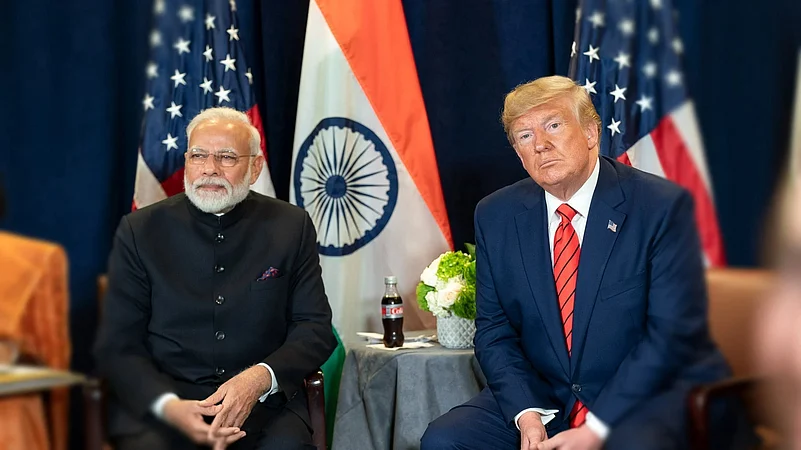
The United States has begun a three-day hearing process that could pave the way for another round of tariffs under President Donald Trump, potentially affecting imports from 60 economies, including India.
The proceedings come at a sensitive stage, with New Delhi and Washington simultaneously negotiating an interim trade agreement, raising fresh questions over whether the proposed duties could influence the outcome of the ongoing talks.

1 October 2026
Get the latest issue of Outlook Business

The hearings are centred on a proposal by the Office of the United States Trade Representative (USTR) to impose additional import duties on countries it believes have failed to effectively prevent goods made using forced labour from entering global supply chains.


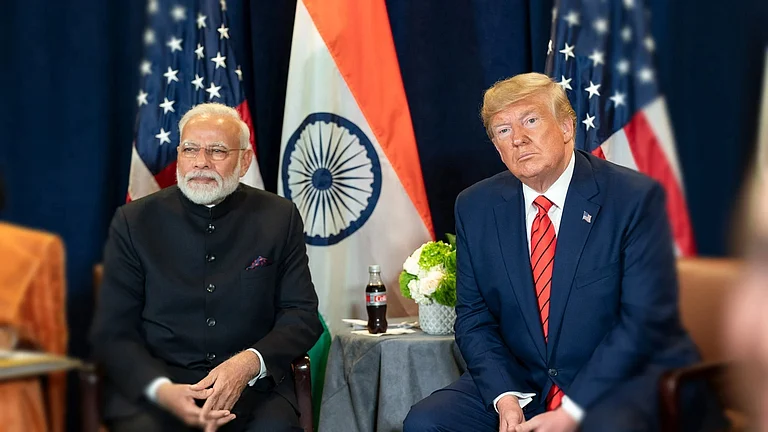

The outcome of the hearings, alongside the broader trade negotiations, is expected to play a significant role in determining the future tariff framework governing India-US trade.

Why Are The Hearings Taking Place?
The hearings stem from a Section 301 investigation launched by the USTR in March 2026. The probe examined whether countries prohibit imports produced through forced labour and whether such restrictions are effectively enforced.
Advertisement
The USTR proposed in early June that imports from India and 59 other economies should face additional tariffs ranging from 10% to 12.5%, as per a report by The Economic Times (ET).
The proposal argues that weak enforcement allows goods produced through forced labour to enter international supply chains, creating unfair competition for American businesses.
"The failure of our most important trading partners to address the importation of goods made with forced labour is unacceptable. This creates a dynamic where American workers are forced to compete globally on an unlevel playing field," Ambassador Jamieson Greer had said.
Advertisement
"We will no longer tolerate this disparity. Some trading partners have taken initial steps to prevent the importation of forced labour goods, including through USMCA and commitments in Agreements on Reciprocal Trade. However, each of our trading partners must do more to ensure that trade does not perversely encourage and entrench forced labour globally," he added.
What is Section 301?
Section 301 of the US Trade Act, 1974 empowers the USTR to investigate foreign government policies that are considered unreasonable or discriminatory and that restrict or burden US commerce.
If such practices are established, the US administration can impose retaliatory measures, including higher import tariffs. The provision gained prominence during the US-China trade war beginning in 2018, when Washington levied tariffs on Chinese goods following a Section 301 investigation into intellectual property practices.
Section 301 gained renewed importance after the US Supreme Court ruled in February that the International Emergency Economic Powers Act (IEEPA) does not authorise the President to impose tariffs.

Following that decision, Washington introduced a temporary 10% tariff under Section 122 of the Trade Act, which is due to expire on July 24, potentially making Section 301 the principal legal route for future country-specific tariffs.
Why Does It Matter For India-US Trade?
The hearings coincide with negotiations on the proposed India-US interim trade agreement, adding another layer of complexity to the discussions.
Both countries are working to finalise the first phase of a broader Bilateral Trade Agreement (BTA), covering market access, customs facilitation, investment and non-tariff measures.
Commerce and Industry Minister Piyush Goyal and USTR Greer had met in New Delhi and discussed finalising the interim trade deal.
Under the trade pact, Indian goods will face about 18% tariff rate. The labour proceedings, however, can take that to 28-32.5%. Hence, Indian officials are expected to discuss the implications of the Section 301 investigation alongside tariff rates during ongoing trade negotiations.

New Delhi is also seeking tariff terms that preserve its competitiveness against regional manufacturing rivals such as China, Vietnam, Bangladesh and other South Asian economies, as per Reuters.
What is India's position?
India has rejected the findings and has urged the USTR to terminate the investigation.
New Delhi has argued that the USTR probe does not satisfy the legal conditions required under Section 301 and has maintained that such concerns should be addressed through bilateral negotiations rather than unilateral trade action, as per Bloomberg (BBG).
India prohibits forced labour under the Bonded Labour System (Abolition) Act, 1976. However, several Indian export industries reportedly rely on intermediate goods imported from China, some of which could face scrutiny under the USTR's methodology.
The Global Trade Research Initiative (GTRI) has also cautioned that reliance on Chinese supply chains could expose certain Indian exports to investigations despite India's domestic prohibition on forced labour.