
Vice President JD Vance, Jared Kushner, and Steve Witkoff expected to lead fresh negotiations with Iran.
Tehran cites US naval blockade and nuclear demands as key reasons for rejecting participation.
Talks come as tensions rise over Strait of Hormuz transit restrictions ahead of the April 22 truce expiry.
US President Donald Trump has announced that a US delegation will travel to Islamabad for a fresh round of talks with Iran, even as Tehran has signalled it will not participate.
The renewed talks come amid heightened tension and uncertainty, with the two-week ceasefire set to expire on April 22. Iranian officials have stated that they remain willing to negotiate; however, transit through the Strait of Hormuz will not resume while the US naval blockade remains in place.

1 October 2026
Get the latest issue of Outlook Business

According to reports, US Vice President JD Vance will lead the delegation in the fresh round of talks, reversing earlier indications by Trump that Vance would not attend.
Vance also led the first round of talks in Islamabad, which lasted for over 20 hours but failed to secure a longer-term ceasefire. The US delegation will also include Trump’s son-in-law Jared Kushner and special envoy Steve Witkoff, reports said.
Security measures in Islamabad are tightening ahead of the peace talks between Washington and Tehran.
Pakistan has also stepped up diplomatic engagement amid the uncertainty, reports said. Prime Minister Shehbaz Sharif held a 45-minute conversation with Iranian President Masoud Pezeshkian to discuss the “current regional situation.”
Advertisement
“The prime minister reaffirmed that, with the support of friends and partners, Pakistan would remain fully committed to its honest and sincere efforts to advance regional peace and security,” the Prime Minister’s Office said.
According to reports, Pakistani officials have also reached out to Iranian leadership in an effort to push Tehran to join the next round of talks.
Iran Refuses Participation
Iranian state media reported that officials in Tehran have rejected participation in the second round of talks in Islamabad, citing “excessive demands, unrealistic expectations, constant shifts in stance, repeated contradictions, and the ongoing naval blockade” by Washington.
Advertisement
Tehran views the US naval blockade as a violation of the ceasefire, arguing that demands to surrender its nuclear programme threaten its sovereignty and rights as a state. However, other reports suggest that Tehran is yet to make a final decision.
Iranian parliamentary speaker Mohammad Bagher Ghalibaf reiterated that Tehran strongly condemns the blockade. “It is impossible for others to pass through the Strait of Hormuz while we cannot,” he said.

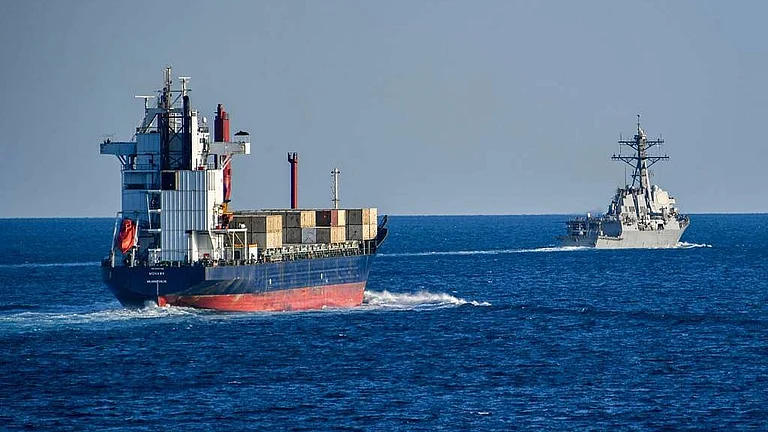
Amid rising tensions, Trump pushed back strongly against Iran, accusing it of violating the temporary truce and threatening retaliation. “Iran decided to fire bullets yesterday in the Strait of Hormuz — a total violation of our ceasefire agreement! Many of them were aimed at a French ship and a freighter from the United Kingdom. That wasn’t nice, was it?” Trump wrote on Truth Social.