UPI will attract a 0.4% MDR on specified merchant transactions above ₹2,000 from October 15.
While UPI remains cheaper than cards, experts say the new cost could matter more for merchants handling higher-value, low-margin transactions.
The impact on payment choices will vary as merchants weigh UPI's convenience against the costs of cards and cash.
It has been over a decade since UPI was launched as a pilot to move money in India. Wallets started staying at home, cash became less visible in everyday transactions and cards found themselves competing with a payment system that lives on a phone.
“This shift matters most in situations I used to worry about, crowded concerts, cricket stadiums, railway stations, anywhere pickpocketing is a real risk. Not carrying cash or cards removes that anxiety entirely,” says Arjit Saxena, a UPI user.

1 September 2026
Get the latest issue of Outlook Business

For Saxena, that change is less about technology and more about habit. A ₹10 cup of tea, a grocery bill, a restaurant tab or a much larger purchase can now be settled with a few taps. But the ease of that tap hides an entire payment chain, and a cost.
For years, UPI has felt free to the person making the payment. From October 15, however, specified person-to-merchant transactions above ₹2,000 will carry a 0.4% Merchant Discount Rate (MDR). A ₹5,000 payment, for instance, will cost the merchant ₹20.
But the customer will not see that ₹20 charge. Person-to-person UPI payments will remain free, while merchant transactions up to ₹2,000 and eligible small merchants will continue with zero MDR. The government estimates around 96% of P2M transactions will remain unaffected.
Advertisement
Yet after nearly a decade of making digital payments feel almost frictionless and free, the economics of that convenience are beginning to show.
So, what does it really cost to accept a ₹5,000 payment through UPI, a card or cash?

The Cost Of Moving ₹5,000 Through UPI
To a customer, a ₹5,000 UPI payment still looks like ₹5,000. For the merchant, there is now a ₹20 cost sitting underneath it.
At the new 0.4% MDR, a ₹5,000 transaction attracts ₹20 in charges. Add 18% GST, and the gross cost rises to ₹23.60 for a merchant unable to claim input tax credit. For a GST-registered business that can claim the credit, the effective cost remains closer to the 40-basis-point MDR, says Dr. Raj P Narayanam, Founder and Executive Chairman of Zagg.Money, UPI by Zaggle.
Advertisement
The ₹20 does not go to the government. It is shared across the payment ecosystem. Under the NPCI framework, Utkarsh Bhatnagar, Partner at Cyril Amarchand Mangaldas, breaks it down as ₹8 for the issuing bank, ₹6 for the acquiring bank, ₹4 for the UPI app and ₹2 for the sponsor bank. But for the merchant, where the money goes matters less than what it takes away.
Take a business operating on a 4% gross margin. On a ₹5,000 sale, that leaves ₹200 before other costs. A ₹20 MDR would consume 10% of that margin.
The charge may look small on a single transaction. Across hundreds of payments, however, the arithmetic can look very different.
That is where the impact of UPI's new pricing will depend, not just on how much a merchant sells, but on what it sells and how thin its margins are.
Where The New UPI Cost Will Exactly Bite
The impact of the new MDR will largely depend on what a merchant sells, and the size of the payments it receives.
For a neighbourhood shop where most transactions are below ₹2,000, the direct impact could be limited. The government says such transactions, along with eligible small-merchant transactions, will remain outside the MDR framework.
It is a different calculation for merchants regularly processing ₹5,000, ₹10,000 or more. For them, even a small percentage can start adding up. Take a grocer working on a 4% margin for instance. On a ₹5,000 basket, that is ₹200 in gross margin. A ₹20 MDR would absorb 10% of it, according to Bhatnagar.
Merchants cannot simply add that ₹20 to the customer's bill either because NPCI's rules do not permit merchants to pass the MDR on to customers, while UPI apps cannot charge consumers a separate platform fee.
That could make payment choice more relevant for larger transactions. Tanni Mandal, a UPI user, says she recently visited a salon where staff told customers they would request them to pay in cash.
Yash Agarwal, an entrepreneur and distributor, says the cost could make him think more carefully about payment modes for bigger transactions. “It may sound small, but for a business, ₹40 on a ₹10,000 transaction can add up over hundreds of transactions.”
He does not expect UPI's convenience to disappear, but says the additional cost could influence how he handles larger payments.
Dr. Raj Narayanam similarly sees the impact as category-specific. Everyday merchants, where most transactions remain below ₹2,000, should be largely insulated, while businesses such as electronics, jewellery and travel, where ticket sizes are higher, could pay closer attention to their payment mix.
The divide could also be between large and small businesses. Large organised retailers that already accept cards and pay card MDR may find the new UPI cost relatively modest. Smaller businesses with frequent transactions above ₹2,000 could be more sensitive to the additional charge, says Vibhu Agarwal, a content creator who tracks digital payment ecosystem.
There are also sector-specific exceptions. Transactions above ₹2,000 in areas such as railways, telecom, insurance, fuel and agricultural inputs will attract a flat ₹5 MDR. Capital-market transactions will attract a 0.02% MDR, capped at ₹300.

UPI Still Looks Cheap Against Cards
At ₹20 on a ₹5,000 transaction, UPI's new MDR may add a cost for merchants. But against cards, it still looks relatively light.
NPCI's benchmark puts standard credit-card MDR at 1.5-2.5%, while debit-card MDR can go up to 0.90%. However, the actual rate varies by merchant, acquiring bank, network and arrangement.
The difference is easier to see in rupees. A ₹5,000 payment would cost a merchant ₹20 through UPI at 0.4%, up to ₹45 through a debit card at 0.90%, and roughly ₹75-125 through a credit card at 1.5-2.5%. At an illustrative 1.65% MDR, a ₹5,000 Visa or Mastercard credit-card transaction would cost about ₹82.50, according to Ramakant Yadav, Co-Founder and CTO of Scalar Field.
For a business running on thin margins, the payment method can therefore become part of the economics of the sale.
“As a businessman, UPI has been the best. Easy to get money out of our customers. Cash deposits attract so many charges. It's easier to pay out vendors as well through UPI as it's fast and instant,” says Jai Singhal, a businessman and a distributor.
Cards, he says, are harder to absorb when margins are already tight. “Cards usually attract MDR charges from 2-3% which eats away our margins which are already low as a bulk wholesale dealer.”
The precise rate varies from merchant to merchant. But on the numbers available here, the new UPI MDR remains below typical card acceptance costs.

Cards Haven’t Lost Their Place
Yet a cheaper payment rail for the merchant does not automatically make it the preferred rail for the consumer.
Credit cards continued to grow in July 2026. Transactions rose 24.1% year-on-year to 601 million, while spending increased 7.4% to ₹2.08 lakh crore, according to RBI data cited by ACMIIL. The average transaction value, however, fell 13.5% to ₹3,460. Moneycontrol reported that ACMIIL linked part of the decline to the continued shift towards lower-value RuPay credit-card-linked UPI transactions.
That does not establish that UPI alone drove credit-card growth. But it points to an increasingly blurred line between the two payment systems.
Debit cards tell a different story. RBI data analysed by 1Lattice and reported by ETBFSI showed debit-card transaction volumes falling 9% year-on-year in July, while transaction value declined 5%. ATM withdrawals still accounted for roughly 80% of debit-card volume and 85.3% of value; POS transactions made up 14.6% of volume and 8.7% of value.
For consumers, however, the merchant's MDR is only one part of the equation.
Soumyashree Mishra gradually moved some professional expenses from UPI to cards because they offered something UPI did not: easier expense tracking and reimbursement.
“Using a card makes me pause and think about the expense, while also giving me a consolidated view of my monthly spending.”
The contrast is telling. For the merchant, the question is what a payment costs. For the consumer, it is often what the payment gives back.

Cash Looks Free, But Isn’t
There is no MDR when a customer hands a merchant a ₹5,000 note. But that does not mean cash is costless for the business. Cash has to be counted, reconciled, stored and eventually deposited. There can also be staff time, travel to the bank, security costs and the risk of shortages or losses.
Ramakant points to these as the less visible costs of cash. The merchant may not see a payment-processing fee on the transaction, but the business still spends resources handling the money.
For Singhal, this is one reason UPI would remain preferable even after MDR is introduced. “Even if UPI starts charging us money I would prefer using it over cash as sending someone to deposit cash and deposit charges are way higher.”
That is an important distinction. Comparing ₹20 UPI MDR with ₹0 for cash does not capture the entire cost of accepting the two payment modes.
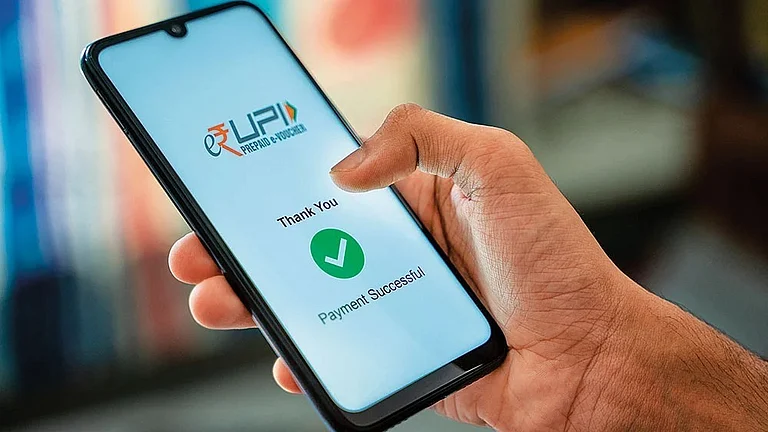
Consumers’ Calculation Is Different
For consumers, the biggest change may be that very little appears to change at all. The MDR is a merchant-side cost, so the payment experience at checkout is unlikely to change directly. But payment behaviour is about more than fees.
“With cash I become more conscious about how much I am spending and how much I have left,” says Ishmeet Singh Bedi, a UPI user. “With UPI my spending increases.”
Amit Chopra, another content creator who speaks on digital payment methods, also points to UPI's relatively low merchant cost compared with cards even after the new MDR. But for consumers, convenience remains a major reason for continuing to use it.


That is why the introduction of MDR does not necessarily turn the payment choice into a simple UPI-versus-cash question.
For merchants, UPI is still cheaper than most card acceptance costs, while cash carries its own operational burden. For consumers, UPI remains convenient, cards can offer rewards and better expense tracking, and cash can make spending feel more tangible.
The cost of a payment, therefore, is not always visible at the checkout.
As India's payment habits move further away from physical wallets, the bigger change may be that the cost of convenience is becoming easier to see, not necessarily for the person making the payment, but for the business accepting it.
And the more interesting shift, then, may be at the margin. Merchants could become more selective about which payment rail they prefer for high-value transactions, even as UPI continues to dominate the broader habit of paying.