




The US and China agreed that Iran must not acquire nuclear weapons and stressed the importance of keeping the Strait of Hormuz open.
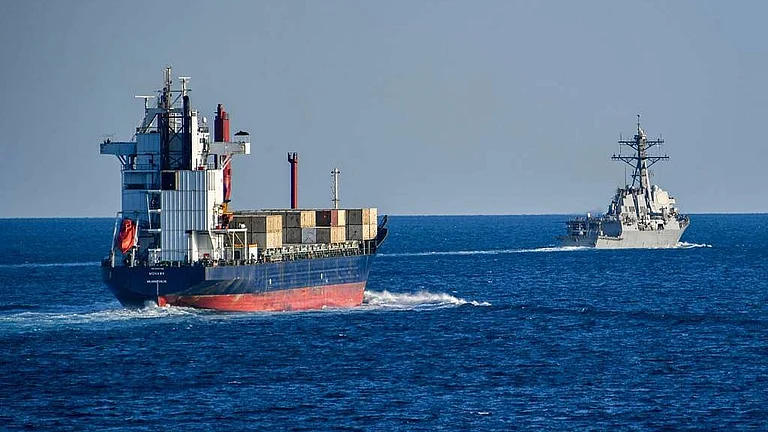
Iranian Foreign Minister Abbas Araqchi said Hormuz remains open to commercial vessels, but “ships must cooperate” with Iran’s navy.
The ongoing Iran-US war has disrupted global trade and energy markets, pushing crude prices sharply higher and intensifying recession fears.
Iranian Foreign Minister Abbas Araqchi said the strait remains “open to all commercial vessels” but added that there is a condition. “Ships must cooperate with our navy,” Araqchi said.
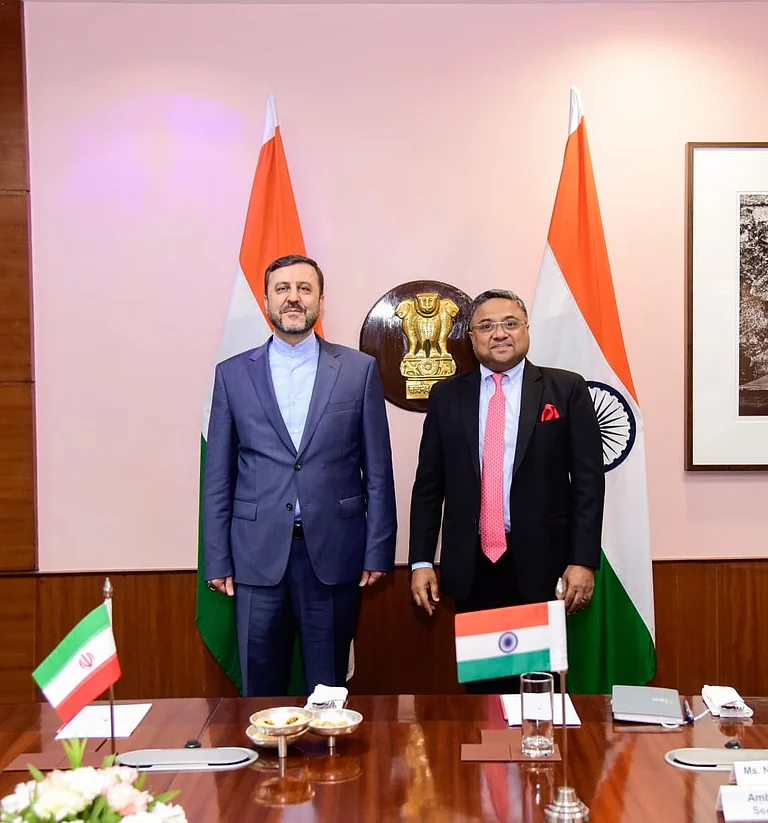
The remark comes amid heightened geopolitical uncertainty, as the Iran crisis takes centre stage in major forums, including the Xi-Trump Summit and the BRICS+ Foreign Ministers’ Meeting in New Delhi.

1 September 2026
Get the latest issue of Outlook Business

Araqchi has urged all BRICS member states to condemn the US-Israeli military attacks on Iran, but the UAE’s presence complicates consensus on a joint statement.
The war has had ripple effects across the region, with military attacks escalating to neighbouring countries, including Iran’s strike against the UAE and Saudi Arabia.
Araqchi’s statement likely hints at two things: Tehran is not formally shutting the critical trade route; however, it expects operational control and coordination over vessels moving through the strait, reports said.
Xi-Trump Agrees On No Nuclear Power for Iran
Washington and Beijing have agreed that Tehran must be stopped from developing and obtaining nuclear weapons, according to a Reuters report citing White House officials.
Advertisement
The high-stakes meeting between US President Donald Trump and Chinese President Xi Jinping took place on Thursday. The meeting came against the backdrop of sustained military tensions in West Asia, with no signs of easing or a long-term ceasefire.
The West Asia crisis emerged as a key point of discussion during the Xi-Trump bilateral talks, along with trade, technology, and fentanyl trafficking.
As per the report, a White House official said both sides agreed that Iran should never be permitted to acquire a nuclear weapon. The two leaders also agreed on the significance of keeping the vital waterway, the Strait of Hormuz, open for international trade and the global economy.

Advertisement
“The two sides agreed that the Strait of Hormuz must remain open to support the free flow of energy,” a summary statement from the White House said. The war, now in its third month, has significantly disrupted global trade and supply chains and sent global crude prices soaring.
Analysts have cautioned that a prolonged war could have a damaging impact on the global economy and financial markets, including increasing the risk of a recession.
As per earlier reports, Trump was also expected to encourage China to pressure Iran to help ensure transit through Hormuz remained open and that a deal is signed with Washington.
A White House official quoted by CNN said, “Xi also made clear China’s opposition to the militarisation of the Strait and any effort to charge a toll for its use.” The official also added that Xi expressed interest in purchasing more American oil to reduce China’s future dependence on the strategic waterway. China is Iran’s largest oil buyer.









