China’s dependence on Iranian oil and the Strait of Hormuz gives Beijing a major stake in ending the Iran-US war.
Washington is expected to push Xi Jinping to use China’s leverage over Tehran to bring Iran back to negotiations.
Despite US pressure and sanctions, China has largely maintained a neutral stance while criticising Washington’s actions in the conflict.
US President Donald Trump is set to meet his Chinese counterpart, Xi Jinping, in Beijing on Wednesday, marking the first-ever visit by a sitting US President to the East Asian country in a decade. Along with Trump are top leaders, including Elon Musk and Tim Cook, signalling potentially large deals to be struck in the tech world.
When Trump and Xi last met in South Korea around six months back, tariffs were their biggest arena of friction. With the evolving geopolitical landscape and escalating military tensions, the Iran-US war is likely to take the spotlight in discussions between the two leaders.

1 September 2026
Get the latest issue of Outlook Business

Trump has reassured that Washington did not need any help from China with Iran. “We’ll win it one way or the other – peacefully or otherwise,” Trump said before departing from the White House.
However, Beijing is the rook that Washington can strategically play to checkmate Tehran.
China the Rook
One may wonder, in the traditional geopolitical sense, aren’t both China and Iran rivals to the US? But that’s a classical lens. The world and global politics have come a long way.
Advertisement
A war in West Asia is not isolated or exclusive to the destabilisation of that region. Globalisation has interconnected the world in ways such that a supply chain disruption in the Gulf will compel factories in China to shut down.
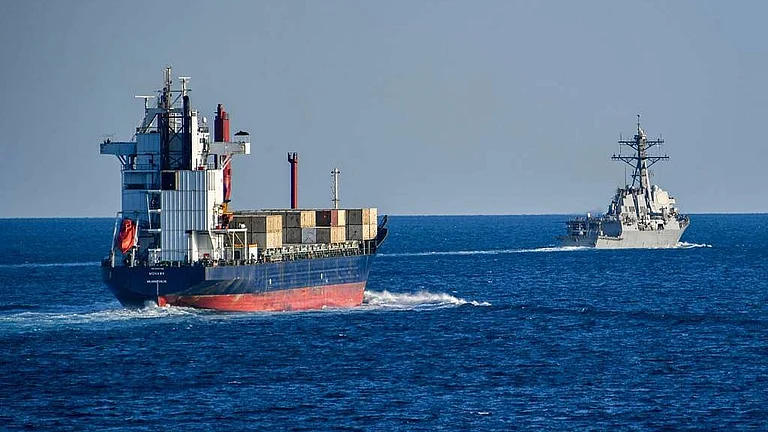
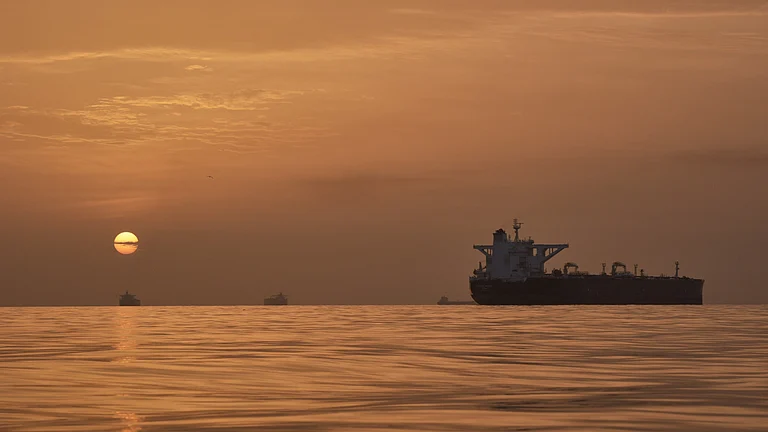
Moreover, China needs the war to end and the Strait of Hormuz to reopen just as much as the rest of the world, or maybe even more. China is the largest importer of Iranian oil, and over 50% of China’s energy transit passes via the critical waterway.
Amid already sluggish economic growth, the rippling impact of the West Asian war is pushing China to encourage Iran to end the war sooner rather than later.
Advertisement
Following the blockade of the strait in the immediate aftermath of the war, China intervened and convinced Tehran to sit for negotiations. Washington knows this a little too well.
So, in its plan, the White House can likely pressure Beijing through sanctions or deals to convince Iran to agree to a resolution.
Pressure Through Sanctions
In recent weeks, the Trump administration has accused Beijing of selling arms to Iran and supporting the war from the shadows. However, Chinese authorities have deemed them “false allegations,” claiming no such arms transaction happened.
The US sanctioned several Chinese firms for assisting Iranian oil shipments. Beijing condemned the measures as “illegal unilateral sanctions.”
According to a report by The Guardian, China invoked a rarely used blocking statute that prohibits Chinese firms from complying with the said sanctions.
China continues to remain vocal on its stance on the Iran-US war. Chinese Foreign Minister Wang Yi last week defended Iran’s right to develop civil nuclear energy, whose complete destruction remains the US’ top priority in the war.
Xi also expressed criticism of the US over the war and stated that safeguarding international rule of law remains paramount and “must not be selectively applied or disregarded.”

How Is the War Impacting China?
The Chinese economy is grappling with the energy crisis and supply-chain disruption, though it is better insulated than any other Asian economy.
In the first quarter of the year, the Chinese economy withstood the war and expanded by 5%. However, medium- to long-term insulation against supply disruption and the energy crisis does not seem well protected.
Last year was burdened with Trump’s tariff policies and a full-fledged trade war between the US and China. When a truce was made in the trade war and tariffs were rolled back, the West Asian crisis became the next straw.
China’s most important concern remains the economic impact stemming from the West Asian war. China heavily relies on the region for fuel and energy supplies, especially hydrocarbons, of which China sourced 52% from West Asia.

Economic ties in the region were also a boost to China’s manufacturing and high-tech export sectors. As per reports, China imports nearly 45% of its methanol and 10% of its polyethylene from Iran.
With a 15–30% increase in methanol prices and disruption in trade routes, China’s manufacturing sector could face a huge blow to growth.
Moreover, sulphur imported from West Asia has also raised fertiliser costs, posing risks to China’s agricultural sector.
Too Big to Coerce
Various reports citing experts have suggested that Washington is coercing Beijing to pressure Tehran into a deal.
The primary reason is the economic leverage China holds over Iran due to its oil purchases. Washington wants Beijing to once again encourage Tehran to return to the negotiating table and agree to a deal.
However, although China convinced Iran to negotiate in the early stages of the conflict, which is now in its third month, it has largely remained neutral while openly criticising the US for not abiding by international laws.
China has resisted US pressure and condemned Washington’s sanctions as “illegal.”
Analysts and experts have also cautioned that Trump is unlikely to pressure Xi aggressively, as the US does not have enough leverage to force China to accept its demands.
The US can still resort to sanctions and tariffs, which would only further complicate global trade and economic growth. Further friction with another country amid escalating tensions would also carry significant political weight for Trump ahead of the November midterm elections, something his team is unlikely to risk.
China could become central to ending the Iran war not because it is aligned with the US, but because prolonged instability threatens Beijing’s own economic and energy security.