India’s Department of Land Resources and the World Bank have opened talks in New Delhi on a major overhaul of India’s land governance system.
Officials stressed that land is the key productive asset for most households, yet its potential is constrained by outdated laws and fragmented records.
The proposed collaboration aims to build a modern, transparent, technology-driven framework tailored to India’s needs.
India's Department of Land Resources (DoLR) and the World Bank held high-level discussions in New Delhi, deliberating on a collaboration to modernise the country's land governance system.
The meeting was held between the DoLR Secretary Narendra Bhooshan and the World Bank delegation headed by Paul Procee, Country Director for India. Lead Economist at the World Bank, Klaus W. Deininger, also participated in the discussion.

1 September 2026
Get the latest issue of Outlook Business

Bhooshan emphasised that land remains one of the most important productive assets available in Indian households, playing a critical role in agricultural productivity, rural prosperity, urban development, financial inclusion and economic growth.
Need for Update in Land Governance System
Bhooshan noted that while land constitutes the largest asset class for the majority of Indian families, its economic potential remains highly underutilised, driven by outdated governance frameworks and fragmented record systems.
He underlined the need for a modern, transparent and technology-enabled land governance system capable of facilitating secure property rights, improving access to institutional credit, supporting investment and enhancing ease of living for citizens.
Advertisement
The Secretary highlighted the ongoing departmental initiatives, including the modernisation of land records, survey and resurvey, urban property record creation, watershed development and efforts towards interoperability of land-related digital systems.
During the discussion, both sides deliberated on the possibility of developing an India-specific framework.
The World Bank delegation shared International experiences and global best practices in land administration, digital land records, property governance, institutional strengthening and technology adoption.
India's Urban Land Crunch
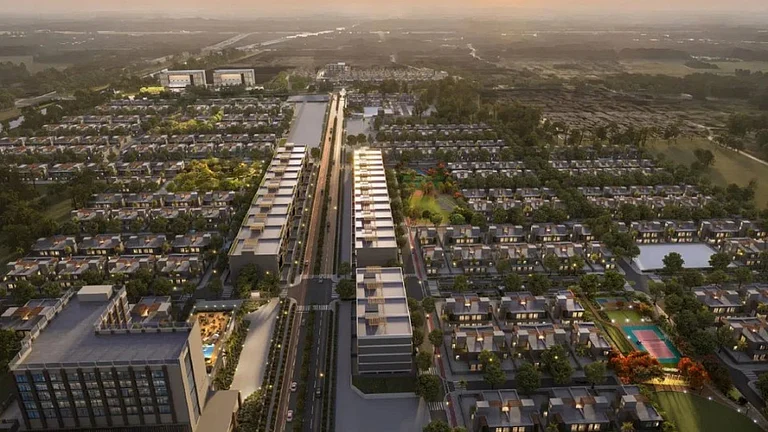
The collaboration plans coincide with the deepening urban land crisis in India.
A report by NDTV highlights that, driven by rural to urban migration in search of jobs, education, healthcare and better opportunities, Indian urban centres are witnessing shrinking open spaces, rising property prices, congested roads, and growing pressure on infrastructure.
Advertisement
India's urban population is expected to touch nearly 600 million by 2036, while the housing demand is projected to reach around 30 million by 2030.
Against this backdrop, the push for modernised, digitised and transparent land records, central to the India-World Bank discussion, takes on added urgency.


Efficient land governance is a prerequisite for unlocking the investment, planning and infrastructure delivery that a rapidly urbanising India will demand in the decade ahead.