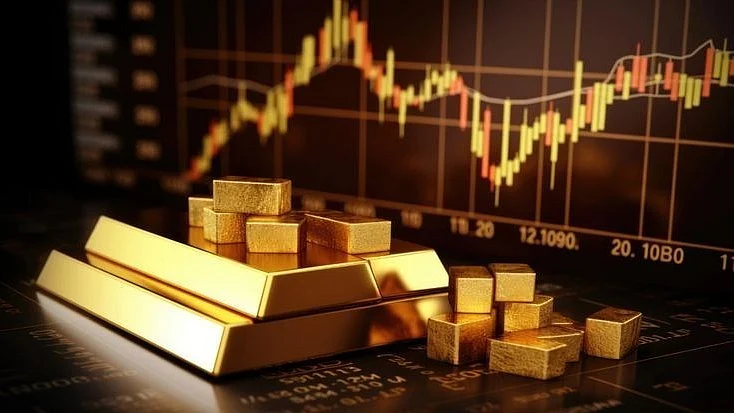

India's gold demand fell 6% year-on-year to 131 tonnes in Q2 2026.
Despite lower volumes, the value of gold demand surged 50% to a record ₹1.98 lakh crore as prices remained elevated.
Consumers shifted towards lighter jewellery, exchange schemes and gold-backed loans instead of cutting purchases completely.
India's gold demand declined during the April-June quarter as record-high prices weighed on purchases, but the total value of spending on the precious metal climbed to an all-time high, reflecting changing consumer buying patterns.
According to the World Gold Council's latest India report, total gold demand fell 6% year-on-year (YoY) to 131 tonnes in the second quarter of 2026. However, the value of that demand rose 50% to a record ₹1.98 lakh crore ($21 billion) as domestic gold prices remained significantly higher than a year ago.
1 September 2026
Get the latest issue of Outlook Business

The report attributed the decline in volumes to elevated gold prices, higher import duty, a weaker rupee and a seasonally weak period for purchases. Even though international gold prices softened during the quarter, domestic prices remained high because of currency depreciation and import duties.
Consumers Shift to Affordable Buying Options
Jewellery demand improved from the previous quarter, rising 14% sequentially to 75 tonnes, supported by purchases during Akshaya Tritiya and the wedding season. However, it remained 15% lower than a year earlier, making it one of the weakest second quarters for jewellery demand in recent decades.
Instead of postponing purchases, consumers adapted to higher prices by opting for lighter-weight ornaments, lower-carat jewellery and studded designs, according to the report.
Advertisement
Jewellers also witnessed higher use of exchange schemes, with some retailers reporting that exchanged jewellery contributed as much as 70% of their sales during the quarter. Overall, exchange volumes increased by 10-20%, helping buyers manage higher prices.
.jpg?auto=format%2Ccompress&fit=max&format=webp&w=768&dpr=1.0)
Investment Demand Moderates, Gold Loans Rise
Investment demand, including bars, coins and gold exchange-traded funds (ETFs), eased after three exceptionally strong quarters. Total investment demand stood at 54 tonnes, lower than recent quarters but still above the long-term average.
Bar and coin demand declined sequentially as investors paused after the sharp rally in prices. However, purchases remained 9% higher YoY, while first-half demand reached its highest level in 13 years. Gold ETF inflows also moderated, although India continued to record positive inflows even as investors in several major markets reduced their exposure.
Advertisement
On the supply side, India's gold availability fell to a six-year low after bullion imports declined following the import duty hike. However, the World Gold Council said domestic inventories and recycled gold were sufficient to meet demand. Rather than selling their jewellery despite record prices, many consumers chose to pledge it for loans. Outstanding bank gold loans doubled over the past year to ₹5.1 lakh crore, while gold loan books of non-banking financial companies rose 70% to ₹3.3 lakh crore.
The World Gold Council said gold demand is likely to remain sensitive to price movements during the rest of the year. It expects wedding and festive purchases to support demand, while investment buying could remain healthy if prices stabilise or moderate.