IMD forecasts above-normal heatwave days across multiple regions in India this May.
Climate change intensifies heat extremes, causing earlier, longer and stronger heatwaves.
Urban heat islands and erratic weather patterns increase risks to health.
The India Meteorological Department’s (IMD) monthly forecast published on May 1 predicted above-normal heatwave days in some parts of the foothills of the Himalayas, east coast states, Gujarat and Maharashtra in May.
In a statement, Director General of Meteorology, IMD, Mrutyunjay Mohapatra, said “During May 2026, minimum temperatures are expected to be above normal across many parts of the country.” “However, many areas of northwest India, along with some parts of central India and adjoining areas of peninsular India and southern parts of northeast India, are likely to experience normal to below-normal minimum temperatures,” reported PTI.

1 September 2026
Get the latest issue of Outlook Business

The IMD also said the rainfall in May is most likely to be above normal over India, except some parts of east, northeast and east central India where below normal rainfall is likely.

Erratic Weather Conditions
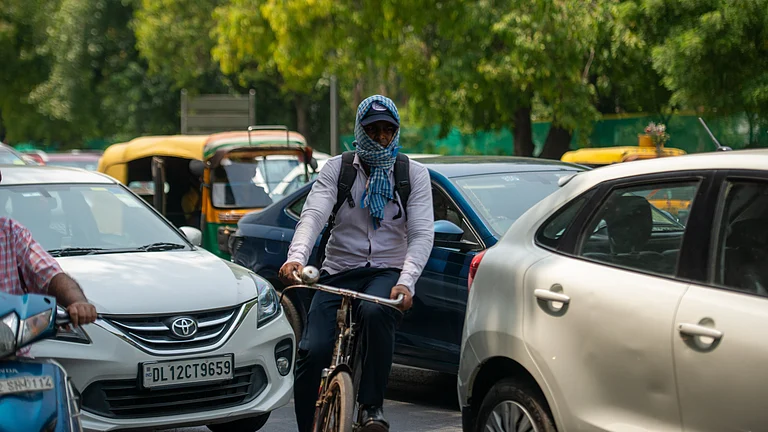
In the past few months, the weather conditions have shown some erratic trends with the weather suddenly switching from sweltering hot in early March, to unusually cool conditions by mid-March then switching back to intense heat until a day back in Delhi. Other cities in the country are reeling under pinching heat; however, some regions such as parts of southern peninsular India, including Bengaluru, are still experiencing normal to above-normal rainfall.
Advertisement
This brings focus to the issue of climate change and its impact on erratic weather. According to the study published in the journal, International Journal of Stroke, climate change poses an escalating threat to brain health with extreme heat, rapid humidity shifts and exposure to dust and sandstorms increasing the risk of having a stroke.
Reason Behind Quick Changes in Weather
Commenting on the reasons behind sudden changes in the weather, Adelle Thomas, Senior Director, Climate Adaptation, Environmental Health, said, “What we’re seeing in India this year is a combination of natural variability and a warming climate that is making extreme heat worse.”
Advertisement
She elaborated that the cooler March was driven by repeated storm systems that brought cloud cover and rainfall and temporarily made temperatures lower. The rapid return to hotter conditions happened once those systems moved away.
Underscoring that the baseline temperature is now warmer than it used to be, she shared that when the weather shifts back towards heat, it does so more sharply and reaches higher temperatures more quickly. Climate change is essentially loading the dice toward more abrupt and intense temperature swings.

Heatwaves to be Different Now
Earlier, heatwaves in India would peak in May and June, however, in recent years, the peak months have shifted closer to the beginning of the year. Addressing the changing trends of peak heatwaves, Thomas said that there is a growing evidence that heatwaves in India are starting earlier, lasting longer, and becoming more intense. She acknowledged that what used to be peak heat in May and June is increasingly creeping into April.
“Climate change is a key driver. Higher baseline temperatures mean that it takes less of a push from normal weather patterns to tip conditions into a heatwave,” she said adding, “We’re also seeing more frequent compound hazards, like dry conditions combined with extreme heat, which intensify impacts on health, water security and livelihoods.”
Heatwaves are not just hotter; they are arriving sooner. She further asserted that this would place stress on communities for a longer portion of the year.

Impact of Changing Weather Patterns
Drawing experience from an IPCC perspective, Thomas said, “What India is experiencing is very consistent with what climate science has projected.”
As the planet warms, variability doesn’t disappear; it just becomes more volatile, leading to sharper transitions between cooler and hotter conditions and more frequent heat extremes, she added.
For countries like India, this has significant implications because of high population density, existing heat exposure and reliance on climate-sensitive sectors like agriculture, effectively extending heat risk beyond a short seasonal window. This makes it urgent to accelerate both climate mitigation and adaptation efforts, including stronger early warning systems, resilient infrastructure and investing in public health preparedness.
Prevention Is Better than Cure
There are several practical, proven steps that the governments and cities can take to make a real difference, Thomas said. These include:
Heat Action Plans: Cities should establish and regularly update plans that trigger early warnings, public advisories, and emergency response measures before temperatures peak. Importantly, these heat action plans need to be implemented and they need the financial resources to do so.
Cooling Access: Ensure access to cooling centers and affordable electricity, especially for vulnerable populations.
Urban Design: Expand tree cover, cool roofs and reflective surfaces in order to reduce temperatures at the neighborhood level.
Water and Worker Protections: Providing safe drinking water and adjusting work hours during extreme heat in order to prevent serious health impacts.
These measures are relatively low-cost compared to the damages from extreme heat, and many have already been successfully implemented in parts of India and around the world.

Urban Heat Island Effects Amplify Climate Change
Urban heat islands significantly amplify the impacts of climate change in cities like Delhi, where dense construction, limited vegetation and heat-absorbing materials make urban areas several degrees hotter than surrounding regions.
“When you layer climate change on top of that, you get dangerously high temperatures, especially at night when cities retain heat and don’t cool off. This increases health risks because people don’t get relief from sustained exposure,” Thomas stated.
Climate change raises the baseline and urban heat islands intensify the local experience of that heat. Addressing both together is essential.
According to NASA, an urban heat island is when a city is much warmer than the surrounding rural areas. The difference in temperature between urban and less developed rural areas has to do with the ability of surfaces in each environment to absorb and retain heat.

Expanding Heat Vulnerability Zones
Regions in Northern and central India, including states like Rajasthan, Uttar Pradesh, and Delhi, are especially prone to extreme heat due to their continental climate and lack of moderating ocean influence, while parts of eastern and central India are also experiencing increasing variability tied to shifting rainfall patterns and land-use changes.
“What’s changing is that heat volatility is no longer confined to traditional hotspots. We’re seeing a broader geographic spread of extreme heat conditions, which means preparedness needs to expand beyond historically high-risk areas,” she concluded.
Despite being a contributor to hundreds of deaths due to heat-stroke and other related diseases, heatwave is not yet classified as disaster under the Disaster Management Act in India. The report of the Sixteenth Financial Commission, which was tabled last year, had recommended that both heatwaves and lightning be brought under the category of notified disasters.
These trends point to the urgent need to develop preparedness, from early warning systems to climate-resilient infrastructure, as India is likely to face additional heatwaves in the coming days.