




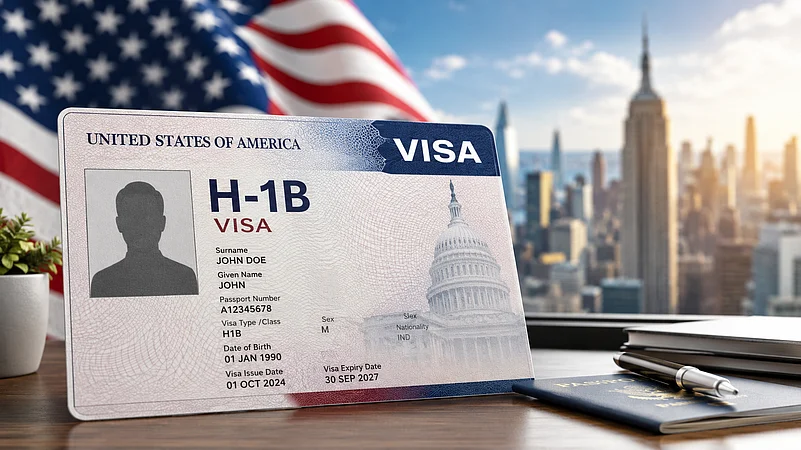

Trump administration reviews H-1B visa programme, raising concerns among Indian professionals dependent on it
US Ambassador Sergio Gor says review part of wider immigration reform, not India-specific targeting
USCIS data shows Indians receive largest share of approved H-1B petitions in US workforce
The Trump administration's ongoing review of the H-1B visa programme has raised questions among Indian professionals, many of whom rely on the visa to work in the United States.
While addressing these concerns, US Ambassador to India Sergio Gor said the review is part of a broader immigration reform exercise and should not be seen as a move specifically targeting Indians.
In an interview with IANS, Gor said the H-1B changes are linked to the administration's wider immigration agenda rather than any country-specific policy. His remarks come as students, technology professionals and employers closely follow developments that could affect one of the most widely used work visa programmes for skilled foreign workers.

1 September 2026
Get the latest issue of Outlook Business

The issue is particularly important for India, with Indian nationals continuing to account for the largest share of approved H-1B petitions, according to United States Citizenship and Immigration Services (USCIS).
The programme enables US companies to recruit foreign professionals for specialised roles, particularly in sectors such as technology, engineering and scientific research.
Advertisement
What Has Changed?
Among the latest changes, the biggest shift is in the selection process for cap-subject H-1B visas. For the FY27 season, the United States has moved away from a purely random lottery system towards a wage-weighted selection approach.
Under this system, applications linked to higher-paying jobs receive greater weight during selection, while lower-paying and entry-level roles get less preference. The administration says the aim is to prioritise highly skilled workers and better-paying positions.
Another proposal requiring certain new H-1B petitions to include a $100,000 payment was struck down by a federal district court in Massachusetts earlier this month. The ruling came after the proposal triggered uncertainty among prospective applicants and employers.
Advertisement
Meanwhile, USCIS data shows properly submitted H-1B registrations fell from 343,981 in FY26 to around 211,600 in FY27. Selections involving applicants with advanced US degrees increased, while those from the lowest wage category declined.
Against this backdrop, it becomes important to understand the H-1B visa programme in detail, including its eligibility rules and other key aspects that applicants need to know.

What Is H-1B Visa?
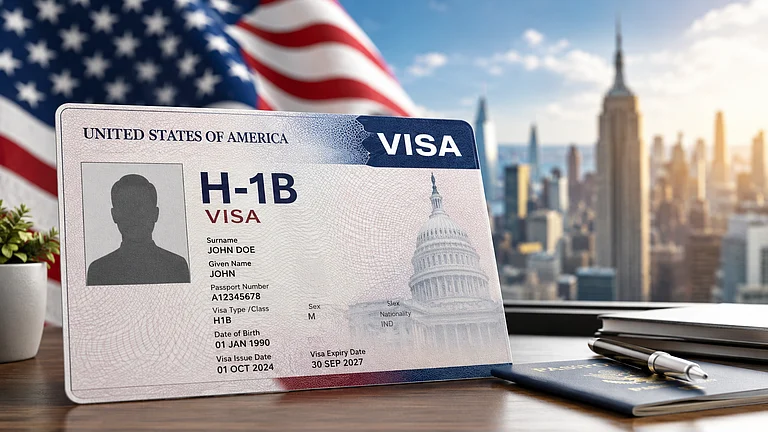
The H-1B visa is a non-immigrant work visa that lets US employers temporarily hire foreign professionals for specialised roles requiring technical or professional skills. It is one of the most commonly used programmes for bringing skilled workers to the United States.
It is mainly used for jobs in fields such as technology, engineering, healthcare, finance and research. These roles usually require specialised knowledge and, in most cases, at least a bachelor’s degree or an equivalent qualification.
The programme is managed by the United States Citizenship and Immigration Services (USCIS), which works under the Department of Homeland Security. Workers approved under H-1B can live and work in the US for the employer who sponsors them.
The visa is usually granted for up to three years at first and can be extended to a maximum of six years. In some cases, workers applying for permanent residency may stay longer through further extensions.
Who Can Apply for H-1B Visa?
The H-1B visa is available to foreign professionals offered temporary employment in the United States in a specialty occupation. Applicants cannot apply independently and must have a sponsoring US employer that files the H-1B petition on their behalf.
The position must require specialised knowledge and, in most cases, at least a bachelor's degree or an equivalent qualification in a field related to the job. Applicants must also possess the required educational qualifications or equivalent professional credentials.
An employer-employee relationship is mandatory under the H-1B programme.The sponsoring employer must pay the applicable wage for the role and provide the same employment benefits offered to similarly employed workers.
The H-1B visa is employer-specific, job-specific and location-specific. Workers cannot take up employment with another employer unless the new employer files the required H-1B petition and receives the necessary authorisation from USCIS.

What Are H-1B Consultancies?
The term H-1B consultancy commonly refers to companies that sponsor eligible foreign professionals for H-1B visas and place them in consulting roles, often on projects for client organisations in sectors such as information technology, engineering and business consulting.
Sponsorship is not automatic. Consultancies typically file an H-1B petition only after offering a full-time role and confirming that both the position and the candidate meet the programme's eligibility requirements.
Like other H-1B employers, consultancies must comply with USCIS rules. They are required to maintain a valid employer-employee relationship and ensure that the job qualifies as a specialty occupation under the H-1B programme.

What Is Body Shop & Is It Legal?
A "body shop" refers to a hiring structure in which outsourcing or staffing firms recruit foreign workers and place them at client companies while remaining their official employer.
The practice itself is legal under current US immigration law and is commonly used by staffing and consulting firms.
However, the United States Department of Labor has identified "body shopping" as a concern in the H-1B programme. According to the department, workers in these arrangements may receive lower wages because wage comparisons are often made within the staffing firm rather than at the client company where they perform the work.
To address these concerns, the Department of Labor has proposed changes to how wages are calculated under temporary and permanent visa programmes. The proposed changes aim to strengthen wage protections for foreign workers and ensure fairer pay.

What Rights Do H-1B Workers Have?
If we talk about the rights, H-1B workers have the right to receive the prevailing wage or the actual wage paid to similarly qualified employees, whichever is higher.
They are also entitled to the same employment benefits offered to comparable US workers. They are entitled to work conditions comparable to those of US workers in similar positions, including work hours, shifts, time off and other workplace benefits.
H-1B workers can not be required to pay certain H-1B petition filing costs, employer business expenses related to the visa process or unlawful monetary penalties for ending a job before the end of their employment contract.
They are also protected from intimidation, retaliation or discrimination for reporting suspected violations of H-1B rules or cooperating with official investigations.If they believe their rights have been violated, they can file a complaint with the US Department of Labor.
What Happens If They Lose Their Jobs?
Well, losing a job does not automatically end an H-1B worker’s lawful status in the United States. Under current US immigration rules, eligible workers may get a grace period of up to 60 consecutive days or until the end of their authorised stay, whichever comes first.
This allows them some time to figure out their next moves without immediately going out of status. In the grace period, workers can look for a new employer willing to sponsor their H-1B visa. If the worker finds a new job offer, the new employer can file an H-1B transfer petition, which allows the worker to continue working if all eligibility criteria are met.
If they are unable to secure another H-1B job, they may apply to change to another eligible non-immigrant status, such as H-4, F-1 or B-2, provided they meet the relevant immigration requirements. Some workers may also apply to extend or change their status by filing the required immigration forms before their authorised stay expires.
If no action is taken before the grace period ends, the individual may fall out of lawful immigration status and could be required to leave the United States.
Employers that terminate an H-1B worker are also generally required to notify USCIS. If the employer initiates the termination before the authorised H-1B period expires, it must also offer to pay the reasonable cost of the employee's return transportation to their last place of foreign residence.









