




The USS George Washington is moving west toward the Middle East and is expected to replace the USS Abraham Lincoln after nearly nine months of deployment.
Lawmakers have raised concerns over the carrier’s extended deployment, including reported shortages, plumbing problems, lack of port calls and crew fatigue.
Deploying the Japan-based George Washington to the Middle East could reduce US carrier presence in the Indo-Pacific and add further strain to an already stretched 11-carrier fleet.
The US military is preparing to deploy the USS George Washington to the Middle East, replacing the USS Abraham Lincoln after the latter has spent nearly nine months on active deployment, The Wall Street Journal reported, as published by Moneycontrol.
The George Washington was recently tracked moving west through the Strait of Malacca alongside guided-missile destroyers, according to ship-tracking data and a US official cited by the Journal.

1 October 2026
Get the latest issue of Outlook Business

The carrier rotation had been planned before lawmakers raised concerns about conditions aboard the Lincoln, including supply shortages, plumbing failures and crew welfare.
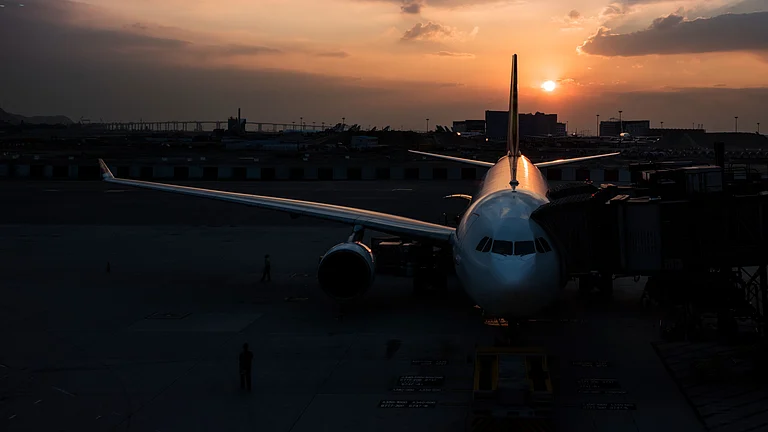


Lawmakers Raise Concerns Over Lincoln Deployment
The Lincoln’s unusually long deployment has drawn increasing scrutiny on Capitol Hill. In an August 12 letter to Defence Secretary Pete Hegseth and acting Navy Secretary Hung Cao, Senator Richard Blumenthal said the carrier had been deployed for more than 250 days and had spent over 200 days without a port call.
Advertisement
Blumenthal sought answers on reports of shortages, contaminated water, plumbing problems, deck-safety issues and delays in mail deliveries.
He also questioned reports of broken toilets and laundry facilities, while asking the Pentagon to explain how it was monitoring crew fatigue, morale, mental health and operational readiness.
The senator also asked officials to identify every extension to the Lincoln’s deployment and the operational justification behind each decision.
Senator Ruben Gallego, an Arizona Democrat and Iraq war veteran, said he was seeking an oversight visit to the carrier involving a bipartisan group of senators.
Republican Representative Marlin Stutzman of Indiana also said he intended to seek an update from the Pentagon on conditions aboard the ship.
Advertisement
Separately, a US official told the Journal that a person went overboard from the Lincoln in early August but was rescued quickly. The Navy said it had not observed an increase in mental-health problems, suicidal ideation or suicide attempts aboard the carrier.
Pentagon Pushes Back On Conditions
Hegseth rejected reports that conditions aboard the Lincoln had deteriorated significantly.
“We make sure every ship, every crew, every captain has everything we can provide them at every single moment,” Reuters quoted Hegseth as saying during a visit to Panama.
US officials cited by the Journal said the conditions described were not necessarily unusual during wartime deployments. They acknowledged, however, that extended periods without port visits could place additional strain on sailors.
Hegseth has also indicated that the US could maintain its blockade of Iranian ports by rotating naval assets through the region.
Lincoln's Deployment Extended By Iran War
The USS Abraham Lincoln departed Naval Base San Diego on November 21, 2025, for what was initially expected to be a seven-month deployment. After operating in the Indo-Pacific, the carrier was redirected to the Middle East in January.
Its aircraft subsequently participated in Operation Epic Fury, the US bombing campaign against Iran. The carrier later became involved in the blockade of Iranian ports, according to the Journal.
The proposed deployment of the George Washington would help relieve the Lincoln but would also temporarily reduce America's carrier presence in the Indo-Pacific.
Pressure On US Carrier Fleet
The George Washington is normally forward-deployed to Yokosuka, Japan. It recently completed a port visit to Da Nang, Vietnam, between July 30 and August 5, where the carrier and accompanying vessels conducted a search-and-rescue exercise with the Vietnamese navy.
Bryan Clark, a former US naval officer and senior fellow at the Hudson Institute, told the Journal that sending the carrier to the Middle East would mean giving up some of its routine regional activities and signalling missions involving allies such as Japan and the Philippines.
Clark said the operational demands created by the Iran conflict could take as long as three years to resolve before the US Navy’s 11-carrier fleet returns to its preferred readiness posture.
The Lincoln’s deployment follows another unusually long assignment by the USS Gerald R. Ford, which spent 326 days deployed before returning to Norfolk on May 16.
Blumenthal cited the Ford’s deployment while asking whether extended carrier assignments were becoming a recurring feature of US naval operations.
He also asked the Pentagon how it plans to maintain a carrier presence in the Middle East over the next 12 to 24 months without disrupting maintenance cycles or deployments in other strategic theatres.









