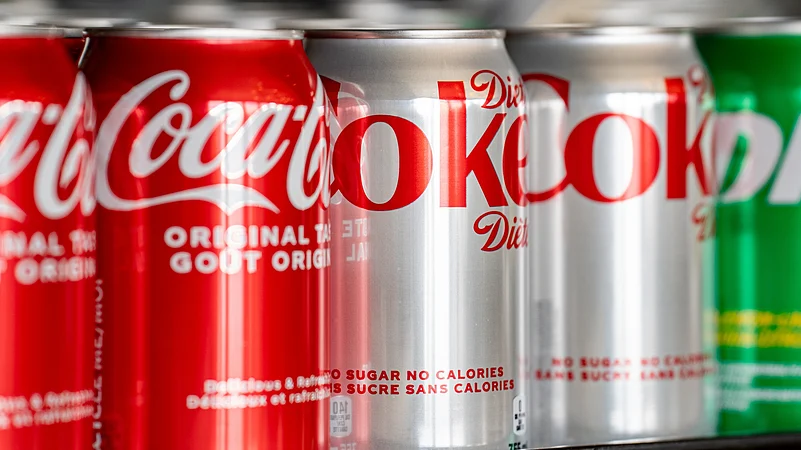

The West Asia conflict has disrupted aluminium supply chains, leading to a shortage of cans and hitting Diet Coke availability across major Indian cities.
Cities like Mumbai, Bengaluru and Delhi are seeing stockouts as shipments are delayed and retailers struggle to replenish supplies.
Rising summer demand and reliance on canned packaging have worsened the crunch, turning a global supply shock into a local consumer shortage.
A war thousands of kilometres away is now showing up on Indian store shelves. The ongoing West Asia conflict has triggered a shortage of aluminium cans in India, hitting Diet Coke supplies just as soaring summer temperatures are driving double-digit growth in cola and beer sales across the country.
Around 9% of global aluminium production comes from the Gulf, according to a report by DAM Capital, and Iran's blockade of the Strait of Hormuz has severely disrupted can supplies to India. The ripple effect has been swift and wide.
1 September 2026
Get the latest issue of Outlook Business

Two Coca-Cola distributors told Reuters the company had notified them it was either rationing supplies or not fulfilling some orders due to the can shortage. "We've been placing orders but have been told there is a shortage due to war," one distributor was quoted as saying.


Why Diet Coke Is Hit the Hardest
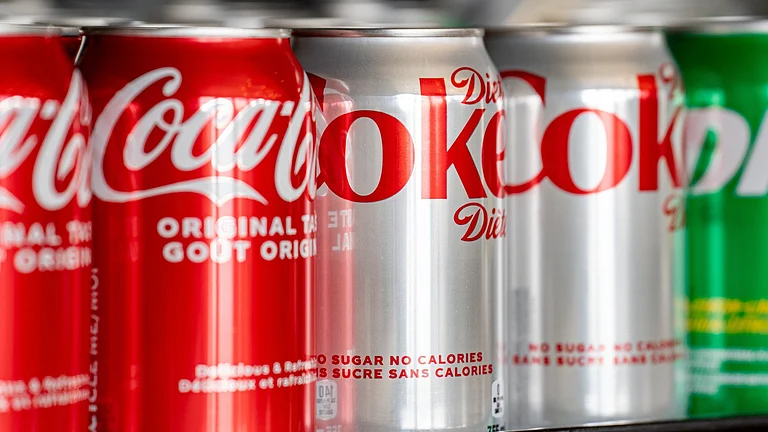
While soft drinks in India are sold in both plastic bottles and cans, Diet Coke is available only in cans, making it uniquely vulnerable to the shortage. "While can shortages are impacting all soft drinks, the reason why Diet Coke is seeing a shortage in particular is because of a combination of factors," a leading bottling partner told the Economic Times. "It is the fastest growing diet drink in the country by a significant margin."
Advertisement
Diet Coke recorded sales of ₹50 billion ($533 million) in 2024-25, its highest since at least 2021, underlining just how much is at stake for Coca-Cola.

Shortage Spreads From Mumbai to Delhi-NCR
The supply gap, which first surfaced in Mumbai, has since spread to Bengaluru, Pune and parts of Delhi-NCR, arriving at precisely the wrong time for the beverage industry, which is riding a seasonal demand surge.
An industry executive told Reuters that the shortage was caused by delays in consignments of imported cans. To make matters worse, fuel shortages have also made the domestic production of cans and bottles more expensive.
Advertisement
To bridge the gap, companies are now turning to aluminium can suppliers in the UAE, Sri Lanka and Southeast Asia. However, these alternatives come at a steep price, at least 25-30% higher than usual, according to multiple reports. These markets together supply as much as a third of India's aluminium can requirements, owing to their large, low-cost manufacturing capacities.
Beyond Cans: A Wider Packaging Crisis
Diet Coke is not the only casualty. The war has caused shortages and price increases across a range of packaging materials, including plastics and glass.
Plastic preforms used to make PET bottles have surged in price, while glass bottle costs have risen sharply, squeezing manufacturers of bottled water and beer alike, for whom packaging forms a significant portion of production costs. Brewers have already approached state governments seeking permission to raise beer prices by around 12-15% to offset rising costs.
The conflict has also disrupted India's condom manufacturing industry, valued at $860 million. The war has impacted supplies of aluminium and petrochemical derivatives used in both the production and packaging of condoms, an indication that the supply chain fallout is spreading well beyond beverages.