




Narendra Modi pushes targeted Europe partnerships across energy, chips and defence
India signs strategic agreements with Netherlands, Sweden and Norway during tour
Semiconductor, green hydrogen and AI collaborations emerge as major investment focus areas
Prime Minsiter Narendra Modi has gone beyond his recurring template this time. Unlike his previous foreign visits, where he pitches India's growth story, signs agreements, and leaves with a headline or two, the five-nation trip covering covering the UAE, the Netherlands, Sweden, Norway, and Italy was not just about agreements. It is the specificity of what is being asked for and what is being offered in return.
The visit is being seen as an important diplomatic push focused on energy security, trade, investment, and strategic partnerships as India looks to protect its economic interests amid global uncertainty. That framing is accurate enough, but does not seem complete.

1 September 2026
Get the latest issue of Outlook Business

The Opening Act
India and the Netherlands elevated bilateral ties to a full-fledged Strategic Partnership, announcing 17 major agreements spanning semiconductors, green hydrogen, defence cooperation, mobility, critical minerals, and emerging technologies.
The deal between Tata Electronics and Dutch semiconductor firm ASML drew most attention. ASML, for context, makes the specialised machines without which modern chip fabrication is essentially impossible. MEA Secretary (West) Sibi George called it a "game-changing" development for India's semiconductor ecosystem, one that would help build a robust manufacturing base and create high-skilled jobs.
Advertisement

Both sides also adopted an ambitious Green Hydrogen Roadmap aimed at supporting India's production, usage and export of green hydrogen, along with a joint working group on renewable energy. Bilateral trade between India and the Netherlands stood at $27.8bn in 2024-25, with the Netherlands also being India's fourth largest investor with cumulative FDI of $55.6bn. There was clearly existing depth to build on.
Sweden and 'Mother of All Deals'
If the Netherlands was about hardware, Sweden was about strategic positioning. Modi addressed the European Round Table for Industry in Gothenburg alongside Swedish PM Ulf Kristersson and European Commission President Ursula von der Leyen. Modi told business leaders that electronics, deep tech manufacturing, AI, green energy, infrastructure, mobility, urban transformation, healthcare and life sciences are all areas where he was seeking collaboration, and said the next wave of technology innovation should be co-created in India.
Advertisement
Von der Leyen used the occasion to press for an investment agreement on top of the trade deal already concluded. "We call it the mother of all deals," she said, referring to the India-EU Free Trade Agreement signed in January, and added that "trade is only half of the equation" and that an investment agreement was now "the missing piece of the puzzle."

India and Sweden also elevated their bilateral ties to a Strategic Partnership, with a Joint Action Plan running from 2026 to 2030 built around four pillars including strategic dialogue, next-generation economic partnerships, and emerging technologies. Modi also mentioned the Pahalgam terror attack and thanked Kristersson specifically for Sweden's support in its aftermath.
Norway & Nordic Summit
Modi's arrival in Oslo marked the first visit by an Indian Prime Minister to Norway in 43 years, which gives some sense of how much ground had been left uncovered in Northern Europe.
India has been engaged with the region sinec1920, despite not sharing land or maritime border with any Arctic nation.
India and Norway signed 12 agreements during the visit, elevating ties to a Green Strategic Partnership, with a joint statement focusing on climate action, circular economy initiatives, and leveraging Norwegian technological expertise alongside India's manufacturing strength.

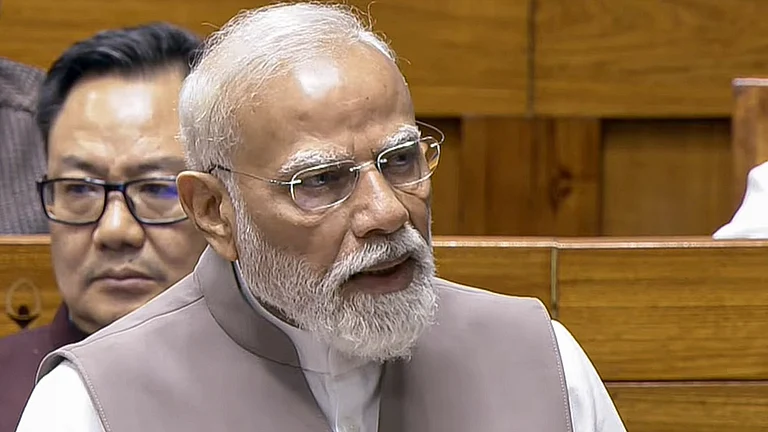


The 3rd India-Nordic Summit, held in Oslo on 19 May with the leaders of Norway, Sweden, Denmark, Finland, and Iceland, focused on renewable energy, Arctic cooperation, defence, space, and resilient supply chains. Modi said the outcomes from his broader tour would "add new strength to a partnership rooted in trust, sustainability and shared aspirations."
The Bigger Picture
What ties all of this together is India's attempt to build multiple redundancies into its strategic relationships at a moment when the global order is visibly less stable. Modi told the European Round Table audience that India has been working on the basic mantra of reforms, performance, and transformation for the past 12 years and that India's "reform express" is going at full speed.
Whether European boardrooms fully believe that pitch is a separate question. But the specificity of these deals — chips in Dholera, green hydrogen corridors, joint naval exercises, AI corridors — suggests that at least some of them are beginning to act on it.









