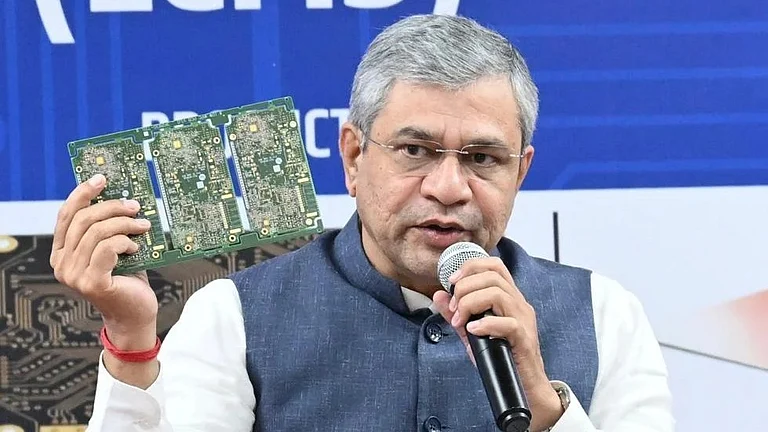
Modi’s Malaysia visit advances a $20bn partnership and a new CSP agenda.
Talks span trade, semiconductors, defence sales and SU-30 upgrades.
Malaysia handles 30% of global chip packaging—key to India’s tech ambitions.
BRICS partnership, rupee-settled trade and ASEAN negotiations also in focus.
When Prime Minister Narendra Modi travels to Malaysia on February 7-8, it will be far more than a routine bilateral stop. The visit sits at the intersection of India’s economic priorities, the evolving geopolitical landscape in the Indo-Pacific, and New Delhi’s attempts to deepen ties with a region that has the potential to become central to global supply chains and strategic competition.
That the visit is taking place while Parliament is in session has not gone unnoticed. But the government has underscored that the Prime Minister is simply keeping his word to Malaysian Prime Minister Anwar Ibrahim—he had promised an early-2026 visit after skipping the in-person ASEAN-India Summit owing to other commitments.
1 September 2026
Get the latest issue of Outlook Business

This is Modi's first trip to Malaysia since Ibrahim visited India in 2024, when both countries elevated their relationship to a Comprehensive Strategic Partnership (CSP).
What, then, sits at the heart of this diplomatic outreach?

Economic Partnership
Malaysia is India's third-largest trading partner within ASEAN, with trade hovering around $20bn in FY24 from $17bn in FY19. While palm oil has long been the anchor, the basket has broadened to minerals, chemicals, machinery and electronics. Overall, Malaysia has emerged as the 16th largest trading partner for India, while India figures among the 10 largest trading partners for Malaysia.
Advertisement
On the investment front, Malaysia ranks as the 31st largest investor in India with FDI inflow of $3.3bn. In addition, various companies have announced investments totalling $5bn in renewable energy, particularly green hydrogen and green ammonia, as well as infrastructure projects.
Around 70 Malaysian companies, including joint ventures, have established operations in India, focusing on sectors such as infrastructure, healthcare, telecommunications, oil and gas, power plants, tourism, and human resources.
On the other hand, there are more than 150 Indian companies, including 61
Indian joint ventures and 3 Indian Public Sector Undertakings operating in Malaysia. Indian companies have invested in around 250 manufacturing projects of over $2.62bn.
Advertisement
A notable development came into effect on 1 April 2023: bilateral trade can now be settled in Indian Rupees, offering an additional mechanism beyond existing currency options.
Still, expectations for major breakthroughs remain tempered. P. Kumaran, Secretary (East) in the Ministry of External Affairs, told reporters that negotiations on the ASEAN-India Trade in Goods Agreement are ongoing, particularly on tariff liberalisation and rebalancing. As for the India-Malaysia CECA, talks are still in early stages, with both sides working to define the scope of a future review.
What's More on Agenda
Semiconductor: One of the most consequential pieces is the emerging semiconductor cooperation.
Malaysia is a global semiconductor hub, handling an estimated 30% of global semiconductor testing and packaging exports. It brings decades of ecosystem expertise that India wants to learn from as it builds its own chip fabrication and ATMP capacity. A government-to-government MoU is also expected in this area.
Defence: On defence cooperation, India is looking at selling Dornier aircraft. Collaboration on the Scorpene submarine is also there. Furthermore, New Delhi also wants to offer upgradation, retrofitting and mid-life maintenance for Malaysia’s SU-30 fleet—leveraging India’s own experience.
"We are also looking at the potential for supply of naval platforms by Indian shipyards," said Kumaran.

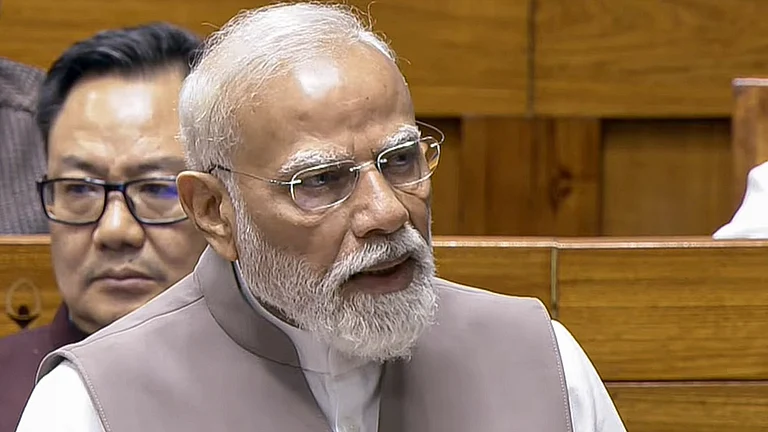


BRICS Membership: Malaysia currently holds the status of a BRICS partner country, and India had supported Kuala Lumpur’s bid for membership during Ibrahim’s 2024 visit. With New Delhi chairing the grouping this year, the subject may surface again—though the MEA has signalled that no imminent expansion of membership is on the cards.