India raises petrol and diesel prices by ₹3 after 49-month freeze
State-run oil firms still face heavy under-recoveries despite latest fuel hike
Higher fuel prices risk pushing CPI inflation and freight costs significantly higher
Petrol pumps in India held steady for 49 months without any price hike. Through a West Asia war that sent crude soaring past $100 a barrel, through a rupee in freefall, and through a government openly losing over ₹1,000 crore a day on petrol and diesel, India's state-owned oil companies kept prices frozen at levels set in March 2024, after a ₹2 reduction. That finally ended on Friday morning.
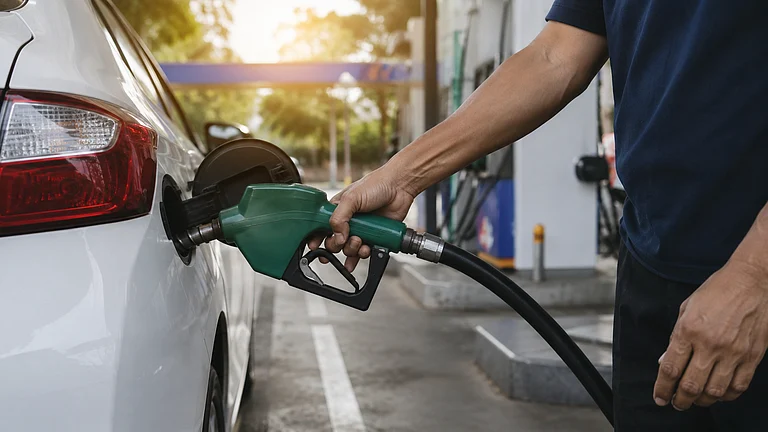
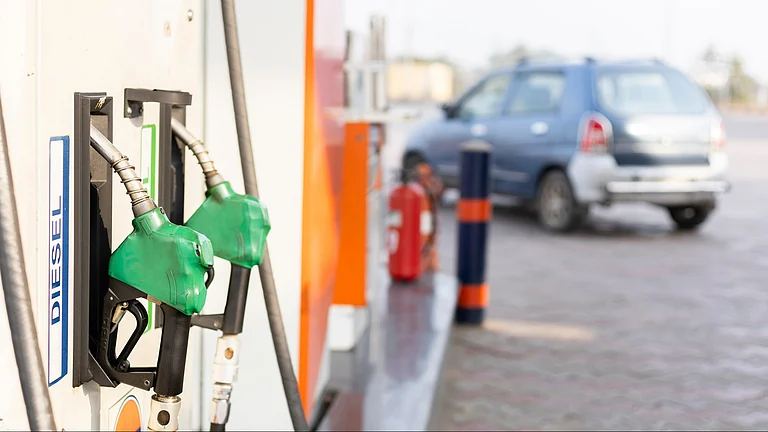
Indian Oil Corporation (IOC), Bharat Petroleum (BPCL) and Hindustan Petroleum (HPCL), which together control over 90% of the country's more than one lakh fuel stations, raised petrol and diesel prices by ₹3 per litre each — the first such hike in more than four years.

1 September 2026
Get the latest issue of Outlook Business

In Delhi, petrol now costs ₹97.77 per litre and diesel ₹90.67. The hike arrived 16 days after assembly elections concluded in Assam, Kerala, Tamil Nadu and West Bengal. Fuel prices had been held steady through the entire polling period despite soaring international crude rates. Monetary Policy Committee (MPC) member Ram Singh had explicitly forecast post-election fuel price hikes even before the polls ended, and private refiner Nayara Energy had already raised pump prices in late March to stem its own losses.
Advertisement
A Modest Fix for a Massive Problem
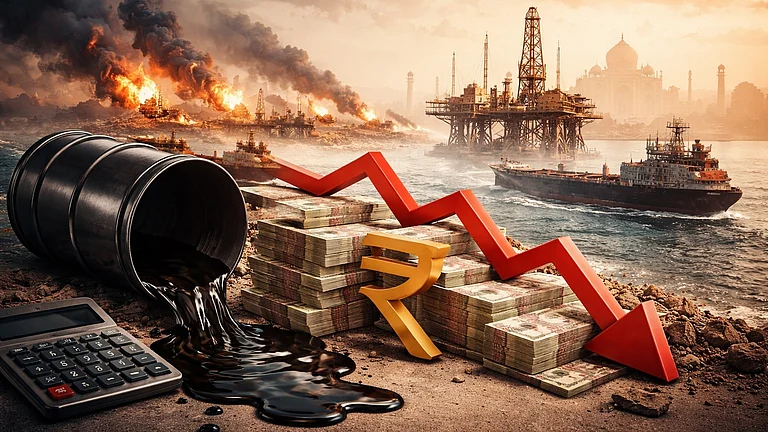
The ₹3 hike is a small fraction of what is required. India's crude oil import basket averaged $69 per barrel in February 2026, before the war. It averaged $113-114 per barrel in the weeks that followed — a surge of around 50%. Oil ministry officials reportedly stated that retailers were losing ₹100 per litre on diesel and ₹20 per litre on petrol at prevailing prices.
Brokerage firm Emkay Global pegged under-recoveries at ₹17-18 per litre at current crude levels, even after the government's excise duty cuts of ₹10 per litre were effected on 27 March. The brokerage estimated that a ₹10 per litre hike would cover only 50% of under-recoveries, and warned of "an inflation and consumption shock, with a more pronounced impact on mass segments" if prices were corrected at once. Separately, analysts estimated a ₹15-20 per litre increase is needed for OMCs to stop incurring losses altogether.
Advertisement
Government estimates suggest that OMC under-recoveries could surge to nearly ₹2 lakh crore this quarter, while overall losses may touch ₹1 lakh crore despite the latest price increase. In other words, the bleeding continues — just a little more slowly.
"A rise in these costs at some point was largely anticipated, given the challenging geopolitical conditions," says Mrunmayee Jogalekar, research analyst at ACMIIL Research.
She sees the shockwaves spreading far beyond the pump. "The petrol and diesel cost increase will have a broad-based effect on sectors and categories owing to increase in freight costs," she noted, adding that the CV segment within autos will be "most vulnerable, as fleet operator profitability will play a key role in determining CV sales."
The Ghost
India's retail inflation, based on Consumer Price Index (CPI), stood at 3.48% in April 2026, up from 3.40% in March. That figure may not hold for long. Every ₹1 per litre rise in petrol and diesel prices in India is estimated to add nearly 4-6 basis points to headline CPI inflation over time. Higher fuel prices then travel through transportation, logistics, manufacturing, agriculture, and eventually food and core inflation.
The Ambit Capital ran scenario analysis on what fuel price corrections would mean for prices. A ₹6.5 per litre hike would push headline CPI inflation to 4.5% in FY27, while a worst-case full pass-through of ₹25 per litre would trigger a surge of around 100 basis points. What makes these projections especially sensitive is that fuel weights in the updated CPI series have nearly doubled — petrol and diesel earlier accounted for just around 2.3% of the CPI basket, compared to 4.8% in the FY24 series.
The ripple effects are already showing up across industries. Jogalekar points to the paint sector, where raw material costs have led to price increases of over 10%. In FMCG, she says, "crude and palm inflation has also led to a round of calibrated price hikes across several categories. Further industry-wide hikes cannot be ruled out as the overall cost base increases with fuel price uptick."
Further Hikes When, Not If
The government's dilemma is visible in the numbers. The Centre is simultaneously managing expanding subsidy commitments on LPG and fertilisers, which constrain the fiscal space available to absorb further OMC under-recoveries through direct budget transfers. This creates a genuine bind — the government cannot easily compensate OMCs without widening its fiscal deficit at a time when food inflation is already applying pressure, an ET EnergyWorld report noted.
At $126 per barrel crude, even a ₹5 per litre hike would still leave the OMCs absorbing meaningful losses per litre, as Business Today reported citing sources— slowing balance sheet deterioration while signalling that the price freeze era is ending. If the government chooses not to act further, or acts too slowly and too modestly, the OMCs' capex plans, already under pressure, would be the first casualty.
The Ambit note said that oil imports are expected to rise 41% year-on-year in FY27, with crude averaging $90 per barrel against $70 in FY26. India's energy dependence on imports stands at 89%, and petroleum accounts for roughly a quarter of the total import bill.
A paper by Michael Debabrata Patra, former Deputy Governor of the Reserve Bank of India, observed that fuel price shocks in India have significant inflationary effects through input costs in agriculture and manufacturing, with transport cost pass-through typically completing within two to three months of the initial price change. That clock is now ticking.


The ₹3 hike is best read not as a resolution but as the opening move in a longer correction. Industry sources quoted by India TV News described it as "calibrated enough to partially ease margin pressure on oil companies without creating major inflationary shock." The operative word is "partially."
With OMC losses still running at scale and crude showing no signs of softening, the ₹3 hike may well be the first in a series of corrections — the pace and quantum of which will depend on how global energy markets move in the months ahead.