




India’s average rocket launch cost stood at $13,302 per kg, the highest among six major space markets
The figure was more than four times the US cost of $3,225 per kg
Limited launch frequency and smaller rocket payload capacities are key factors behind the gap
India has the highest rocket launch costs among six major spacefaring markets, with the average cost of placing payload into low Earth orbit estimated at $13,302 per kg at the end of 2025 — more than four times the US figure of $3,225 per kg, according to a study published in the peer-reviewed journal Economics Letters.
First reported by Mint, the study by Alessio Terzi of the University of Cambridge and Francesco Nicoli of Politecnico di Torino placed India above the European Union, Russia, China and Japan in terms of launch costs.

1 October 2026
Get the latest issue of Outlook Business

Europe was the next most expensive market at $9,897 per kg, followed by Russia at $6,682, China at $5,809 and Japan at $5,287, the study said.


The research analysed more than 6,740 rocket launches between 1960 and 2025 to assess how accumulated experience and launch activity affect costs.
India's estimates were based on launches coordinated by NewSpace India Ltd (NSIL), the commercial arm of the Indian Space Research Organisation (Isro), using a mix of domestic launch vehicles, as per Mint.
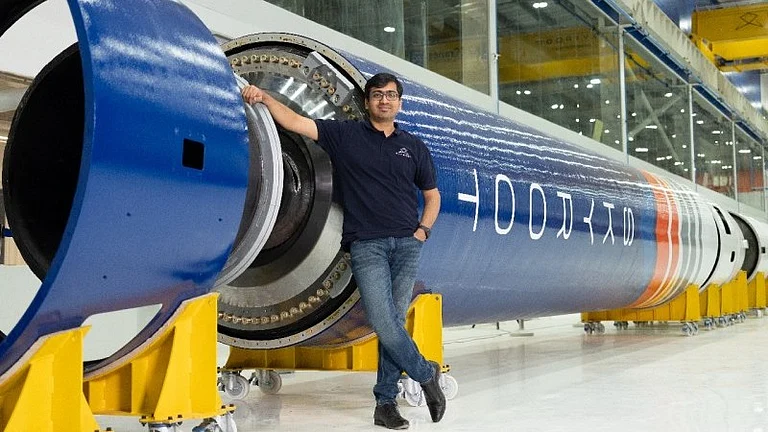
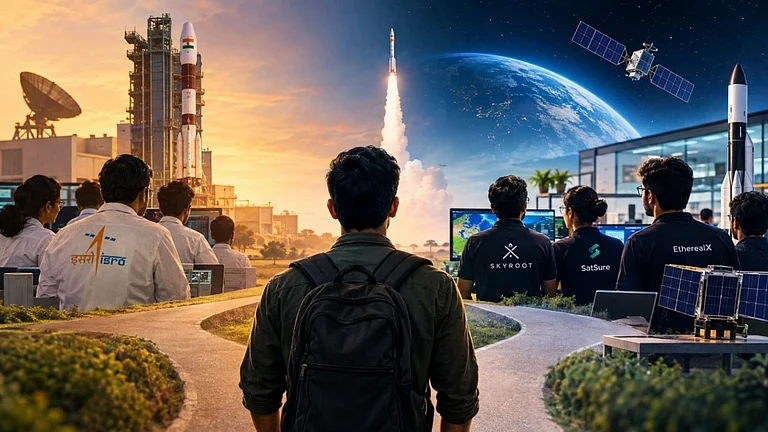
The findings highlight a challenge for India's commercial space ambitions, even as private companies begin entering the launch market. Skyroot Aerospace's first private commercial rocket launch on July 18 marked an important milestone, but lower costs may take time to materialise.
Advertisement
Skyroot chief executive Pawan Kumar Chandana had told Mint in October 2025 that the company expected to generate at least $4 million from each launch of its Vikram-1 rocket. At its maximum payload capacity of 350 kg to low Earth orbit, this would translate to about $11,000 per kg.
Scale and launch frequency remain major advantages for the US. According to the study, the United States accounted for more than 80% of global payload sent to orbit in 2025.
The researchers also found that since 2010, only the US and Europe had demonstrated statistically significant reductions in costs linked to accumulated launch experience, with the US improving faster.
Advertisement
SpaceX's reusable Falcon 9 can carry up to 22,800 kg to low Earth orbit, compared with the 10,000-kg capacity of India's LVM3, which was not reusable. India completed four successful launches in 2025, while SpaceX reportedly carried out eight successful missions in August alone.

The study suggests that increasing launch frequency, payload capacity and technological capability will be crucial if India is to narrow its cost gap and build a competitive commercial launch market.
"The very high figure for India might be counterintuitive as it stands in stark contrast with the narrative of the country’s frugal space programme. However, this is a result of focussing on small rocket sizes, which implies that, albeit being low by international standards, fixed costs get amortised over a limited payload," Terzi and Nicoli wrote, as per Mint.









