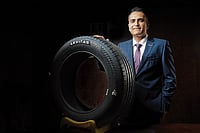
N Chandrasekaran took over a Tata Group emerging from a bitter corporate battle and operating with limited coordination
He streamlined the portfolio and brought greater focus to its businesses
Tata, under Chandrasekaran, has placed big bets on industries expected to drive its next phase of growth
When Natarajan Chandrasekaran was chosen to run Tata Sons in January 2017, the group was still fighting over the man he was replacing. Cyrus Mistry had been removed as chairman three months earlier, and Ratan Tata had returned as interim chairman. The dispute between Mistry and Tata Sons turned into one of the most bitter public boardroom battles corporate India saw. Mistry was challenging the circumstances of his removal, Tata Sons was defending its decision, and investors were trying to understand what had gone wrong inside one of India's most respected business groups.
Chandrasekaran was an unusual answer to that crisis. He was the first non-Parsi and professional chairman of Tata Sons. He had spent almost his entire career at TCS, joining the company in 1987 and rising through its ranks to become CEO in 2009. Unlike many senior Tata executives at the time, who came through the Tata Administrative Service (TAS), the group's leadership development programme, Chandrasekaran had built his career within TCS. By the time he was picked for Tata Sons, he had already spent eight years helping make TCS the group's most valuable listed business. He was then asked to run the group spanning steel, automobiles, IT, consumer products, hotels and telecommunications.

1 September 2026
Get the latest issue of Outlook Business

Advertisement
The Mistry dispute followed him into the chairman's office. In December 2019, the National Company Law Appellate Tribunal (NCLAT) ordered Mistry's reinstatement and questioned Chandrasekaran's appointment. Tata Sons went to the Supreme Court, which stayed the order in January 2020.



Chandrasekaran spent the first few years of his chairmanship trying to establish his own direction for a group that was still dealing with the fallout of the previous leadership.
When he joined, he wanted to make Tata simpler, more performance-oriented and more coordinated. In 2017, he spoke about reducing a group of more than 100 companies into five, six or seven broad clusters. He wanted businesses to have clearer roles and greater accountability, while the group itself became more disciplined about capital and performance.
Advertisement
Chandrasekaran, who had grown up in Mohanur in Tamil Nadu, took up running in his forties after a health scare and eventually completed all six World Marathon Majors. He has said that it made him calmer and more reflective. When explaining why Tata companies needed to improve their performance, he once compared it with running a six-minute mile: before trying to run faster, he said, you have to bring your weight down. The analogy fitted the approach he was taking at Tata: strengthen the businesses first, then push for growth. But the world in which he had planned to do that changed rapidly.

Rebuilding Tata
The pandemic arrived in 2020, just as Chandrasekaran was moving beyond the initial clean-up. Covid exposed the vulnerability of global supply chains, accelerated digital adoption, and forced companies to rethink where they manufactured and sourced critical products. For Tata, it was the first sign of the disruptions still to come. Then came Russia's invasion of Ukraine in 2022. Energy prices rose and global supply chains were reshaped. Companies began looking for manufacturing bases beyond China. For India, that created an opening to attract manufacturing and build capabilities in areas such as electronics and components.
At almost exactly the same time, Tata was making one of the biggest bets in its history.
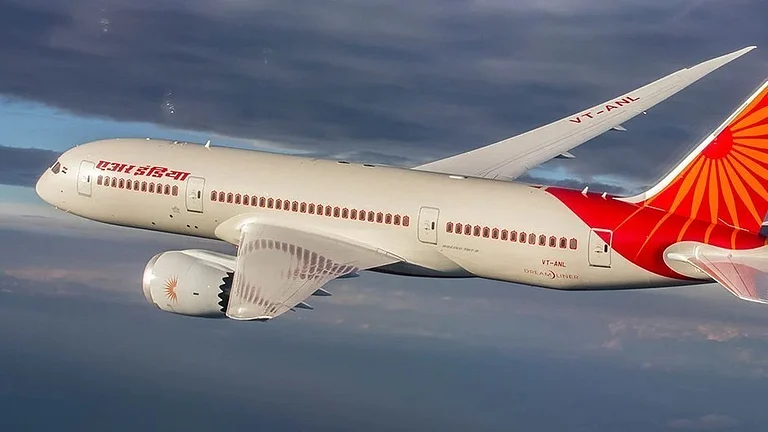
In January 2022, Tata Sons bought Air India from the government for ₹18,000 crore. The airline had been founded by J.R.D. Tata in 1932 and nationalised in 1953. Under Chandrasekaran, it came back to the group nearly seven decades later. AirAsia India and Vistara were subsequently brought into Air India.
While his initial years had been about making the existing group work better, Chandrasekaran was increasingly building businesses that Tata had not traditionally been associated with. The group was selling tea, salt and pulses through different entities. Chandrasekaran wanted an FMCG arm for Tata. Tata Consumer Products was created in 2019 by combining the consumer businesses of Tata Global Beverages and Tata Chemicals’ packaged foods unit.
In 2019, Tata Sons set up Tata Digital as a wholly owned subsidiary to build digital businesses under one platform. Instead of building it from scratch, it decided to pursue an inorganic acquisition strategy. The first was the acquisition of a majority stake in BigBasket, followed by online healthcare platform 1mg in 2021. Over the next two years, it brought together existing Tata consumer businesses, including electronics retailer Croma and e-commerce platform Tata Cliq, under the same subsidiary and launched Tata Neu, a financial super-app aimed at bringing all of Tata's digital services onto a single platform.
Then came electronics manufacturing, semiconductors, batteries, electric vehicles and new energy. The scale of the shift was significant. Tata's semiconductor plans alone include a ₹91,000-crore fabrication plant in Dholera and a ₹27,000-crore OSAT facility in Assam.
These bets reflected two shifts happening at the same time: India's push to build strategic manufacturing capabilities and global companies' efforts to diversify their supply chains beyond China. The energy transition was creating new industries around batteries, EVs and renewable energy. Semiconductor shortages had turned chip manufacturing into a strategic priority for governments as well as companies.
Tata began committing capital accordingly.
And then another disruption arrived, this time in the industry from which Chandrasekaran had come. Artificial intelligence began changing the economics of technology services. TCS, the company that had defined his career, was itself having to adapt to a technology that could change the economics of IT services. At the same time, he was pushing the wider group to make AI part of its next generation of businesses. Tata's 2026 plans included AI-first factories, while Tata Motors was using connected-vehicle data to better understand real-world EV performance.
His 2026 letter to shareholders described the year as being shaped by geopolitical conflicts and an unprecedented global AI investment cycle.

Room to keep going
For much of this period, Tata's performance strengthened Chandrasekaran's case.
The combined market capitalisation of Tata's listed companies was around $130 billion when he took over. It reached nearly $277 billion by March 2026. TCS roughly doubled its revenue between FY17 and FY26. Tata Motors also went through a substantial turnaround, including a recovery at Jaguar Land Rover and a demerger of its commercial and passenger vehicle units.
There was a broader change in the group as well. Consumer businesses became more important. Aviation became a major part of the portfolio again. Tata began building an industrial presence in electronics and semiconductors, areas that were barely visible in the group's traditional business mix.
Chandrasekaran's leadership was also unusual in the context of Indian conglomerates. Mukesh Ambani, Gautam Adani and Anand Mahindra are closely identified with the families and businesses they lead. Chandrasekaran had neither a promoter stake nor a family connection to Tata. His authority came from having spent decades inside the organisation and from the performance of the businesses he had run.
His tenure was a test of the professional-manager model at the top of a trust-controlled conglomerate: how far could an executive without a family stake reshape Tata, and how much room would he have to pursue long-term bets when they began demanding large amounts of capital?

The bets that still need to pay
Chandrasekaran's real achievement was changing where Tata placed its biggest bets, from managing a sprawling legacy portfolio to building new positions in industries he believed would matter to India. That was also the source of the biggest tension at the end of his tenure: the new Tata required much more capital, and some of those bets were still years away from proving themselves.
Air India is the clearest example. The airline needed new aircraft, new systems, integration of multiple airlines and a major operational overhaul. It was always going to require time and capital. But the losses have been substantial.
Air India and Air India Express reported a combined net loss of ₹22,238 crore in FY26. Tata Digital lost ₹4,974 crore, Tata Electronics ₹1,611 crore and Agratas ₹1,101 crore, according to the group's 2026 annual report.
None of those numbers, by themselves, means the strategy has failed. Many of these businesses are long-term bets and are being built in industries where scale requires large upfront investment and long gestation.
That was both the strength and the challenge of Chandrasekaran's strategy: Tata was building new growth engines, but many of them would require years of investment before they could start delivering returns. The question for the group is therefore whether these bets can deliver the returns to justify the capital and patience they will require.
Air India became an even more difficult story after the crash of AI171 in June 2025. The airline's transformation suddenly had to be managed alongside the aftermath of a tragedy that killed at least 260 people. Chandrasekaran spent weeks dealing with the crisis.
Above all this sat another unresolved question about Tata Sons itself: its ownership and future structure.
The RBI's classification of Tata Sons as an upper-layer NBFC has brought the question of a potential listing into focus. The Shapoorji Pallonji Group, which owns 18.37% of Tata Sons, has also sought an exit. The issue has remained unresolved.
These issues were different in nature, but together they made the job Chandrasekaran was leaving more complicated than the one he had inherited.
The uncertainty eventually reached Chandrasekaran himself. The Sir Dorabji Tata Trust and Sir Ratan Tata Trust had unanimously recommended extending his term for another five years. The proposal went to the Tata Sons board on February 24, 2026, but did not receive unanimous support. Six months later, there was still no resolution.
The Trusts weighing his reappointment were no longer the ones that had installed him. Ratan Tata, who had backed Chandrasekaran for the job in 2017 and whom Chandrasekaran considered a "mentor, guide and friend," died in October 2024. It was Noel Tata, his successor at the Trusts, who was reported to have raised the concerns about the performance and capital requirements of newer businesses, particularly Air India and Tata Digital, that contributed to the delay in reappointment for a third term.
On August 12, Chandrasekaran brought the uncertainty to an end. He said he would not offer himself for reappointment when his current term ends on February 20, 2027 and asked the Tata Sons board to decide on his successor soon.
It brings Chandrasekaran's Tata career to a point that would have been difficult to imagine when he arrived in 2017.
He came into a group struggling to recover from a leadership fight. He leaves one that is more valuable, more diversified and more deeply committed to businesses such as aviation, consumer, electronics, semiconductors, EVs and batteries than it was when he took charge.
Some of those bets have already changed Tata. Others remain works in progress. The market value has risen sharply. TCS has grown. Tata Motors has recovered. Consumer, aviation and technology have become much bigger parts of the group. Tata has committed itself to electronics, semiconductors, EVs and batteries.
But many of the businesses he built for Tata's next phase still need time, capital and execution. That is the unfinished part of his legacy, and the question his successor will inherit. The immediate task will be to decide where Tata should keep investing, where it should demand faster returns and where it should be willing to wait.