




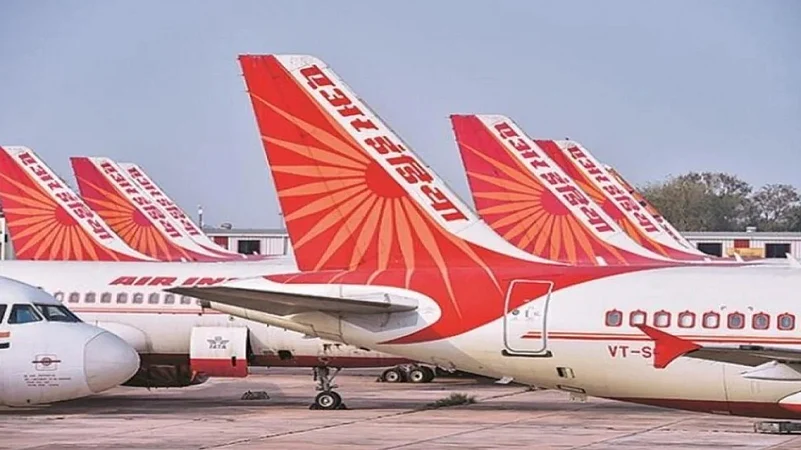
Airbus SE has identified hydraulic system faults in an Air India aircraft that suddenly dropped nearly 300 feet mid-air on August 4, 2026, while flying from Phuket to Delhi, Bloomberg reported. The sudden drop injured around 20 passengers including cabin crew members.
The Airbus A320neo was carrying 137 passengers and eight crew members at the time of the incident.
What The Technical Sheet Shows
According to a post-flight technical sheet and preliminary Airbus assessment accessed by The Print, the aircraft recorded 12 warning and failure messages around the time of the sudden altitude drop. These included low-pressure warnings across the aircraft's Green, Yellow and Blue hydraulic systems, an "AUTO FLT AP OFF" alert indicating the autopilot had disconnected, and faults involving both the left and right elevators.

1 September 2026
Get the latest issue of Outlook Business

The A320's three hydraulic systems use pressurised fluid to operate key flight controls. Elevators control the aircraft's pitch, determining whether the nose moves up or down. The technical sheet also recorded low reservoir levels in the Yellow and Blue systems, an Engine 1 anti-ice fault, and warnings related to the right door and aft emergency exits.


Sequence Of Events
Airbus's preliminary findings show that the Green hydraulic system failed shortly before 04:02:44 hours, followed roughly a second later by the Blue and Yellow systems. This caused a temporary loss of the elevators, ailerons and remaining spoilers for about four seconds. During this window, the ailerons moved towards negative positions, which increased the aircraft's pitch.
Advertisement
At around 04:02:46 hours, the autopilot disconnected, and the First Officer applied a full nose-down input. However, the flight-control surfaces did not respond immediately. The hydraulic systems recovered shortly after, restoring control.
Airbus attributed this flight-control behaviour to the loss of hydraulic pressure and flagged an issue with a component called the Green hydraulic pressure switch 1151GN, which monitors pressure in the system.
The France-based manufacturer has asked Air India to conduct further tests on all three hydraulic systems, including their pressure switches and transducers, and to share maintenance records from the past month.
An Airbus spokesperson earlier told Bloomberg that the company is supporting the airline and cooperating with investigating authorities, but declined to comment further on the preliminary findings.
Advertisement
The Aircraft Accident Investigation Bureau (AAIB) is leading the investigation, with technical support from Airbus and France's Bureau of Enquiry and Analysis for Civil Aviation Safety (BEA). The AAIB has said it is examining the aircraft's systems, recorded flight data, maintenance records, medical information and human factors, along with interviewing those connected to the incident.
Pilot Tests Positive For Drugs
Separately, the flight's captain tested positive for psychoactive substances in both the initial and confirmatory tests. Following this, Air India began screening all its pilots for drug use.
Aviation experts cited by The Print said that without the airline clarifying what exactly happened on board, questions remain around the transparency of the investigation process and the severity of the technical failure.
Part Of A Wider Pattern
The incident has also drawn attention to repeated technical defects across Air India's fleet. Data tabled in the Lok Sabha in February 2026 showed that 137 of 166 Air India aircraft examined, about 82%, had been flagged for repetitive defects between January 2025 and February 3, 2026.
At the time, Air India had said the high number reflected checks conducted across its fleet "out of an abundance of caution."
Airbus had issued its largest-ever recall in 2025 after a similar altitude loss incident involving an A320. More than 6,000 aircraft of that model required a software update following that episode.
Airbus SE discovered hydraulic system faults on an Air India Ltd jet that dropped approximately 300 feet in mid-flight on August 4, 2026, while flying from Phuket, Thailand, to Delhi. The sudden altitude drop injured 20 passengers and four cabin crew members, Bloomberg reported. The aircraft lost systems controlling its pitch and tilt before regaining normal functions.
An initial report sent to Air India and seen by Bloomberg indicates the A320 lost pitch and tilt controls before regaining normal functions within a seven-second span. The France-based manufacturer asked Air India to "provide recent maintenance activities performed on the hydraulic system in the last month" and conduct several other checks on the aircraft.
An Airbus spokesperson told Bloomberg the company is assisting the relevant investigating authorities and supporting the airline but declined to comment on the preliminary findings.
The captain of the August 4 flight tested positive for illegal drugs. Following the positive test, Air India began screening all of its pilots for drugs. The carrier took the step immediately after the captain failed the test.
In 2025, Airbus issued its largest recall ever after an A320 suddenly lost altitude. More than 6,000 of those models required a software revision following the previous altitude loss incident.









