Chandrasekaran shifted Tata’s capital allocation beyond mature businesses such as TCS and Tata Steel towards aviation, electronics, semiconductors and EVs.
Tata acquired Air India, expanded electronics manufacturing, committed to a semiconductor fab in Gujarat and built an integrated EV ecosystem.
Most of these businesses require heavy upfront investment and years to mature, leaving the next Tata leadership to balance ambitious expansion with capital discipline and returns.
N Chandrasekaran’s tenure at Tata Sons has been defined by a deliberate shift in how India’s largest conglomerate thinks about growth. Rather than relying primarily on established businesses such as Tata Consultancy Services (TCS), Tata Steel and the group’s traditional automotive operations, Tata under Chandrasekaran began directing significant capital towards businesses that require large upfront investments but could become important growth engines over the next decade.
Tata therefore began using the cash generated by its established companies to make long-term bets on aviation, electronics, semiconductors, batteries and electric vehicles.

1 September 2026
Get the latest issue of Outlook Business

The strategy also coincided with major shifts in the global economy, including the China-plus-one manufacturing push, supply-chain diversification, electrification and India’s expanding consumer market.

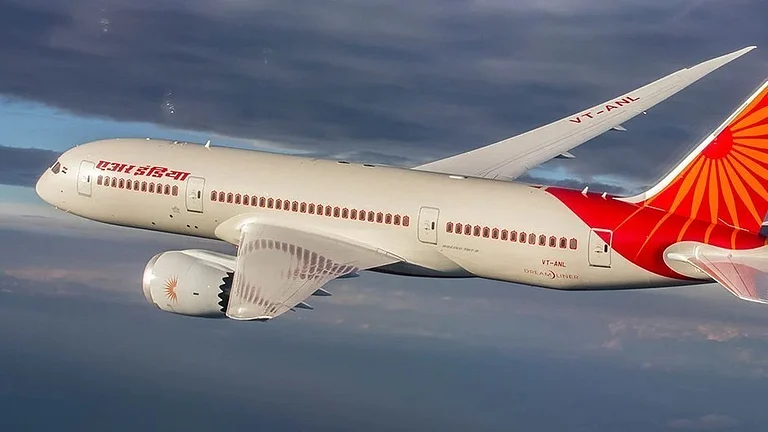


The Air India bet
The most visible expression of this strategy was Tata Group’s return to aviation. In 2022, the group completed its acquisition of Air India from the government, bringing the airline back under Tata ownership decades after it had been nationalised.
Tata subsequently consolidated Air India with Vistara and AIX Connect, creating a much larger aviation business spanning full-service and low-cost operations.
Advertisement
The bet goes beyond reviving an iconic brand. India’s air-travel market is expected to expand substantially as incomes rise, more passengers fly domestically and international traffic increases.
Tata is attempting to build an airline capable of capturing that growth while competing for premium international traffic.
The transformation, however, requires substantial investment in aircraft, technology, airport and ground infrastructure, customer experience and operational efficiency. Air India therefore represents a long-term infrastructure and consumer-business bet rather than an immediate earnings play.
Electronics and the China-plus-one opportunity
Tata’s next major expansion has been in electronics manufacturing, where the group is attempting to position India as an alternative manufacturing base to China.
Advertisement
Through Tata Electronics, the conglomerate has invested in semiconductor-related operations, component manufacturing and electronics assembly.
Its relationship with Apple has been particularly important, with Tata becoming increasingly involved in the iPhone manufacturing supply chain in India.
The opportunity is being driven by global companies seeking to diversify production beyond China, but capturing that opportunity requires scale, precision manufacturing capabilities and reliable supply chains.
Tata’s investments are therefore intended not merely to assemble products but to build deeper expertise in components and advanced manufacturing.
The group’s expansion in places such as Hosur reflects an attempt to create an industrial ecosystem that can eventually support a much broader range of global electronics production.
India’s semiconductor opportunity
The semiconductor business represents an even more ambitious extension of this manufacturing strategy.
Tata has committed to building a semiconductor fabrication facility in Dholera, Gujarat, while also developing a semiconductor assembly and testing facility in Assam.
India remains heavily dependent on imported chips, even though semiconductors are essential to automobiles, smartphones, computers, telecom equipment, industrial machinery and defence systems.
Building domestic manufacturing capacity is therefore both a commercial opportunity and a strategic priority for the country.
For Tata, entering semiconductors also represents a move into a technologically sophisticated industry with significant barriers to entry.
But fabs require enormous capital investment, specialised technology and years of development before production reaches efficient yields. The returns, consequently, are unlikely to resemble those generated by Tata’s mature businesses in the short term.
Tata’s EV ecosystem
Chandrasekaran’s strategy has also been visible in electric mobility, where Tata has attempted to connect several businesses rather than treat EVs as a standalone automotive opportunity.
Tata Motors built an early lead in India’s electric passenger-vehicle market, while Tata Power expanded its charging infrastructure.
Tata AutoComp has worked on localising components, and Agratas is developing battery manufacturing capabilities.
Together, these businesses form what Tata has called the Tata UniEVerse, allowing the group to link vehicles, batteries, components and charging infrastructure.
The advantage of such integration is that Tata can potentially capture value across several parts of the EV supply chain while reducing its dependence on external suppliers.
It also gives the group greater control over localisation, an increasingly important factor as India seeks to build domestic electric-vehicle manufacturing capabilities.
The cost of building new businesses
The transformation has come with a significant financial cost. Unlike TCS or other mature Tata businesses that generate substantial and relatively predictable cash flows, aviation, semiconductor manufacturing, electronics and batteries require heavy capital expenditure before they begin producing meaningful returns.
This creates a delicate capital-allocation challenge for the group. Cash generated by established businesses such as TCS can help fund these investments, but the conglomerate must ensure that aggressive expansion does not weaken its balance sheet or dilute returns on capital.
The risk is particularly high because several of these businesses operate in highly competitive global markets where achieving scale and profitability can take years.
Tata is effectively accepting lower or uncertain returns today in the expectation that these businesses will become significant contributors to group value in the future.
When will these bets pay off?
The timing of returns is one of the biggest questions surrounding Chandrasekaran’s strategy.
Businesses such as aviation can take years to achieve operational efficiency, while semiconductor fabs and battery plants require substantial time to reach scale, improve yields and establish customer relationships.
Electronics manufacturing may generate revenue sooner, but moving up the value chain towards sophisticated components requires continuous investment and technological development.
This means the success of Chandrasekaran’s strategy cannot be judged entirely through near-term quarterly earnings.
The more important question is whether Tata can turn these capital-intensive projects into competitive businesses with sustainable margins and strong market positions over the next five to ten years.
The answer will determine whether the conglomerate’s current capital allocation represents a successful transformation or an expensive collection of bets.
Continuity versus a strategic reset
Chandrasekaran’s exit today therefore comes at an important juncture for Tata Group. Much of the strategy associated with his tenure is still being built rather than fully realised.
The next leadership will inherit an organisation that has expanded into industries far removed from its traditional strengths, but it will also inherit the opportunity to shape businesses that could become Tata’s next generation of growth engines.
The challenge will be to maintain the group’s institutional emphasis on governance, scale and long-term thinking while imposing greater discipline on businesses that are consuming substantial capital.
Chandrasekaran’s legacy may ultimately be defined less by the businesses that generated profits during his tenure and more by whether the bets he made on Air India, electronics, semiconductors, batteries and electric mobility become the businesses that drive Tata Group’s next decade.