

Over 40% of software development work across Indian technology companies is now handled by artificial intelligence, according to a new surveys.
The report finds that 20–40% of work across technology organisations is already being carried out using AI across multiple functions.
The study shows AI adoption spanning HR, software development, IT and administration, BPM, finance and accounting and others.
Over 40% of the software development work is done by artificial intelligence (AI) across Indian technology companies, a new industry report has found. The report, based on HR surveys, claims that 20–40% of work across technology organisations is already being done through AI across functions.
The report, organised by industry body NASSCOM and jobs platform Indeed, claimed that AI is increasingly embedded across business functions in technology organisations, with adoption spanning HR, software development, IT and administration, BPM, finance and accounting, intelligent automation, core business operations, and infrastructure services.

1 September 2026
Get the latest issue of Outlook Business

The report titled “Work Reimagined: The Rise of Human–AI Collaboration” said that HR and IT/admin functions are currently leading in AI usage, while core business operations also show strong adoption.




Around 30% of organisations report that 20–40% of their work in HR and IT or admin is now handled through AI, helping manage scale and complexity by automating high-volume, repetitive tasks while improving speed, productivity and reliability. Meanwhile, about 35% of organisations say more than 40% of their work is primarily driven by AI, led by software development (45%), followed by intelligent automation (39%) and BPM (37%).
Advertisement
Overall, organisations report a 25–35% improvement across key KPIs due to AI adoption, including gains of 30–35% in employee productivity, 25–30% in customer satisfaction, 20–25% in cost optimisation, along with significant improvements in error reduction and operational efficiency.
The report is based on a survey conducted with over 120 HR leaders across the technology sector. Its authors say it was explicitly designed to assess the maturity of human–AI collaboration, identify key challenges and capture emerging organisational practices.
It comes in the backdrop of the Indian IT sector’s increasingly visible challenges to monetise AI across their platforms. Analysts have claimed that the use of AI might become revenue-deflationary for the sector as AI removes the need for large manpower at clients. For a long time, companies used the number of resources deployed as a benchmark for billing; in recent days, industry leaders have reported that clients are increasingly asking for outcome-based deals.
Advertisement
The shift in deal structure and AI adoption comes at the same time as geopolitical and trade uncertainty has pushed companies to tighten their purse strings for IT and other discretionary spending.
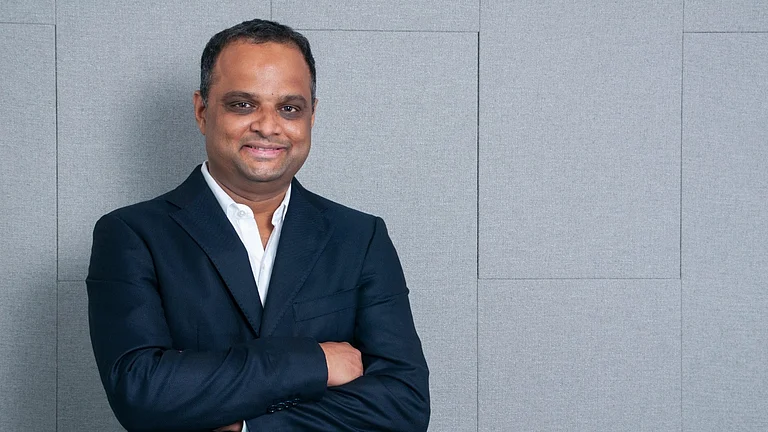
While uncertainty persists in the global market leading to slow spending growth, HCLTech CEO C. Vijayakumar noted that they will now “proactively identify where the new spending is occurring and target those opportunities.”
“We at HCLTech are always working to address such evolving trends and I'm confident we will do it well in this cycle as well,” said Vijayakumar at the post-earnings press conference on January 12.

What Jobs Are at Stake?
The report claimed that execution-heavy tasks are being automated. In application development, AI has taken on a larger share of repetitive tasks such as boilerplate code generation and unit test creation, significantly reducing effort, while core business logic, UI development, and complex engineering work are being transformed through human–AI collaboration, as per the report.
Code quality, refactoring, testing, and bug fixing are also evolving, with AI improving efficiency and reliability while humans retain oversight and accountability.
In DevOps and operations, AI supports CI/CD, deployment, monitoring, and performance optimisation, enhancing stability and enabling engineers to focus on high-value work.
Security, governance, and DevSecOps functions are seeing growing AI adoption but remain human-guided. Documentation is increasingly AI-driven, reducing manual effort, while maintenance, enhancements, and technical leadership—including mentoring and team guidance—remain stable, core human roles, underscoring that AI is augmenting rather than replacing human capability across the software lifecycle.
In product and requirements engineering, activities such as understanding business needs and creating user stories remain human-led but are increasingly AI-assisted, enabling higher-value decision-making by product managers, business analysts, and tech leads.
Architecture and system design, including solution design and API or data model creation, continue to be critical human responsibilities, with AI playing an informed and elevating role rather than replacing judgement.
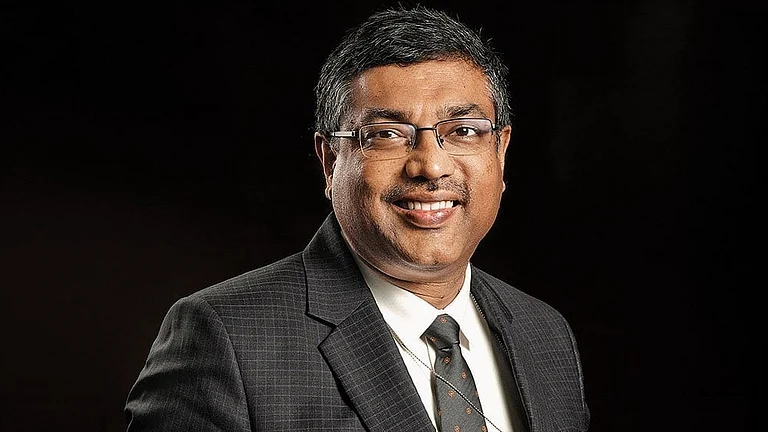
“AI is no longer a future consideration for the technology industry and is already shaping how work gets done. The real opportunity now lies in preparing people to work effectively alongside AI. As AI adoption deepens, skilling and capability building will be central to ensuring that talent continues to move up the value chain and delivers meaningful outcomes for businesses,” said Ketaki Karnik, Head of Research, NASSCOM.
Demand for AI Skills
According to the report, over 60% of the organisations have a “fully ready workforce” for this AI-led transformation. However, HR executives also think that AI will impact jobs across organisational levels. Junior-level roles are viewed as the most vulnerable, particularly those involving repetitive, routine, and standardised tasks, where AI systems already outperform humans and can be easily deployed as replacements. Reflecting these concerns, 35% of respondents believe junior employees are the most adversely impacted by AI, followed by 33% who point to mid-level roles, 20% who see risks for senior roles, and just 4% who feel leadership positions are significantly affected.
Leadership and senior roles are seen as relatively lower risk, as AI acts as a force multiplier by enhancing decision intelligence, scenario planning, market and customer insights, and overall operational efficiency, enabling leaders to manage AI-enabled teams more effectively.
Mid-level roles face notable challenges due to slower learning and adaptability, reliance on legacy skillsets and technologies, resistance to reverse mentoring, and declining demand for SME roles anchored in outdated platforms, even as AI increasingly replaces execution layers.
Amid this threat, Indian IT companies are also planning to hire a more skilled workforce. The report shows that 85% of respondents see an increase in skills-based hiring, indicating that practical skills are increasingly preferred over traditional degrees and CGPA, although 14% still believe degrees continue to hold primary importance and 1% see no change.
An overwhelming 98% of respondents stress the need for hybrid or multidisciplinary skills. In terms of in-demand capabilities, professional skills such as critical thinking and logical reasoning, along with learning ability and adaptability, rank highest across levels, followed by technology and domain skills.
At the junior level, demand is strongest for specialisation in emerging technologies and engineering disciplines, while mid-level roles require both emerging tech expertise and industry-relevant domain knowledge.
This demand can also be seen across companies like HCLTech and Infosys. HCLTech's Chief People Officer Ramachandran Sundararajan on Monday said that 15% of hires in Q3 were part of an “elite cadre” of engineers who are skilled in new-age skills.
The company also reiterated that elite engineers are offered significantly higher compensation, with entry-level salaries about three to four times that of the regular cadre. These hires fall into two salary bands ranging from ₹18 lakh to ₹22 lakh per annum.
Earlier, it was reported that Infosys is also paying similar compensation to freshers with specialised skills.
“What’s changing isn’t the number of jobs, it’s what those jobs expect from people. We’re seeing roles evolve internally long before hiring signals catch up,” said Sashi Kumar, Managing Director, Indeed India.