Reliance Industries is seen as a key beneficiary of the India–US trade deal, even as analysts flag challenges in fully replacing Russian oil.
Experts point to Venezuela’s limited crude supply compared with Russia, making a rapid shift difficult.
They note that oil supply volumes are unlikely to change immediately as orders for the coming months are already in place.
Mukesh Ambani-led Reliance Industries is seen as a key beneficiary of the India–US trade deal announced earlier this week, even as analysts say it may not be possible to fully replace Russian oil supplies with Venezuelan crude in the near term. They point to the limited volume of crude available from the Latin American nation compared with Russia.
According to Nikhil Dubey, senior research analyst, refining and modelling at global real-time data and analytics provider Kpler, volumes are unlikely to change immediately in the coming months as orders have already been placed.

1 September 2026
Get the latest issue of Outlook Business

While, he agrees that Russian oil supplies to India have already been declining over the past few months, but adds that “any meaningful shift away from Russian barrels would only occur if there is clear direction from New Delhi.”
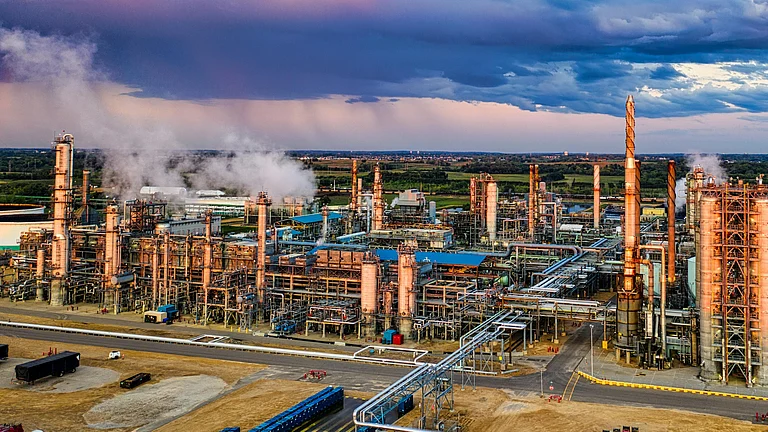

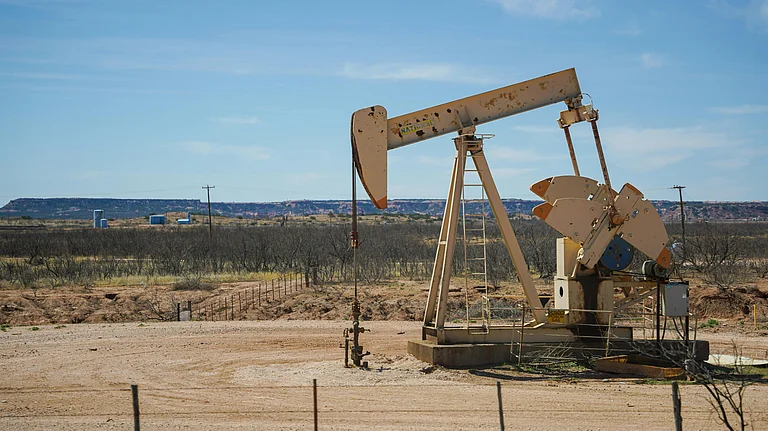

On February 2, US President Donald Trump announced in a social media post that he would reduce reciprocal tariffs on India to 18% after Prime Minister Narendra Modi agreed to stop buying Russian oil and would now “buy oil from the US and potentially Venezuela”. Trump said the announcement was part of a broader trade deal.
Advertisement
While the Indian side has agreed to diversify sourcing, it has refrained from confirming a complete halt in Russian crude supplies. On February 4, Union Minister for Commerce and Industry Piyush Goyal told Parliament that “diversifying our energy sourcing in keeping with objective market conditions and evolving international dynamics is at the core of our strategy to ensure the energy security of 1.4 billion Indians”.
For a country that imports roughly 4.5–5.4 million barrels of oil per day, halting Russian oil purchases could be costly, some analysts say, though estimates vary.
“ICRA estimates that replacing Russian crude with market-priced crude would lead to an increase in the country’s import bill of less than 2%,” said Prashant Vasisht, senior vice president and co-group head, corporate ratings at ICRA Ltd. Earlier, Kresha Gupta, fund manager at Steptrade Capital, told Outlook Business that replacing Russian crude with US or other global grades would typically raise India’s landed crude cost by about 5–10% per barrel, depending on global prices and freight.
Advertisement

How Reliance Gains From the Deal
Even amid the disagreement, there is one area of consensus: Indian refiners can process heavy crude from Venezuelan wells. Until 2022, India was among Venezuela’s key buyers, before US sanctions forced state-owned and private refiners to pivot to Gulf suppliers and, following the Ukraine invasion, to Russia. Many Indian refiners still retain the capability to process Venezuelan crude.
Reliance Industries, however, stands out as a clear winner, according to a recent note by Japanese brokerage Nomura.
“Trade deal with the US is positive for Reliance Industries due to: 1) availability of Venezuelan crude for its export refining facility with potentially attractive discounts, as it has completely stopped taking Russian crude at the export facility; and 2) opening up exports to Europe, which had been facing challenges due to sourcing from Russia,” Nomura Research analyst Bineet Banka wrote.
He added that other oil marketing companies are also likely to benefit from access to Venezuelan crude.
“However, it is unlikely to be more attractive than processing Russian-sourced crude, given higher logistics and processing costs,” the note said.
Nomura noted that discounts on Venezuelan crude are not yet attractive enough for Indian refiners. Citing Argus data, it said current offers for Venezuela’s Merey crude are around a $5 per barrel discount to Brent on a delivered basis, which is seen as uneconomical. Some refiners indicated that discounts would need to widen to at least $10 per barrel to make processing viable.
Meanwhile, Reliance Industries’ retreat from the market has weighed on Russian Urals crude, with discounts widening to their largest level since June 2023, to more than $11 per barrel against dated Brent on a delivered basis, Argus data show.
“From an economics perspective, Russian crude continues to offer strong value. At current discounts, India is estimated to be saving around $3–4 billion per year. Replacing these barrels with alternative grades would raise feedstock costs,” Dubey said.
He added that even if public sector refiners are asked to scale back, private refiners such as Nayara Energy are likely to continue lifting Russian barrels, given their ownership structure and sanctions-related constraints.
The European Union imposed sanctions on Nayara Energy in July 2025 as part of a broader package targeting Russian oil exports linked to Moscow’s invasion of Ukraine. These include restrictions on access to European banking, insurance and shipping services, as well as a ban on imports of fuels refined from Russian crude into the EU.

Will India Fully Replace Russian Oil?
Another key concern is the volume of supply Venezuela can offer compared with Russia. Nomura pointed out that Venezuelan export volumes currently stand at less than 1 million barrels per day, compared with Russia’s 4–5 million barrels per day.
“It will take many years to ramp up production from current levels,” the brokerage said.
Following the capture of Venezuelan President Nicolas Maduro by the US, President Trump has moved ahead with plans for American oil companies to invest in the country and boost production. Despite holding the world’s largest crude oil reserves, Venezuela currently produces only about 800,000 barrels per day, with years of US sanctions and underinvestment severely denting output capacity.
Trump has also said Venezuela will hand over 30–50 million barrels of sanctioned oil to the US to be sold at market prices. Recently, US energy secretary Chris Wright said the US received prices about 30% higher for Venezuelan crude in its first sales since the military action.
While Venezuela’s oil production has seen a modest recovery in recent years, analysts say its vast reserves — estimated at 241 billion barrels of recoverable crude and potentially as high as 300 billion barrels of proven reserves — give it the potential to emerge as a major global producer if investment and infrastructure constraints are addressed.
However, scepticism remains over how quickly those reserves can be translated into higher production.
Kpler data show that India has already reduced its Russian oil purchases to around 1.1 million barrels per day in January 2026, the lowest level since November 2022. Over the medium term, volumes could soften further towards the 1 mbd range, Dubey said.
According to Vasisht, the Indian refining sector has ample alternative sourcing options, including the US, noting that Russian crude accounted for less than 2% of India’s crude imports prior to FY23.
Whether these supplies will come from Venezuela, and whether they will be economical, remains to be seen.