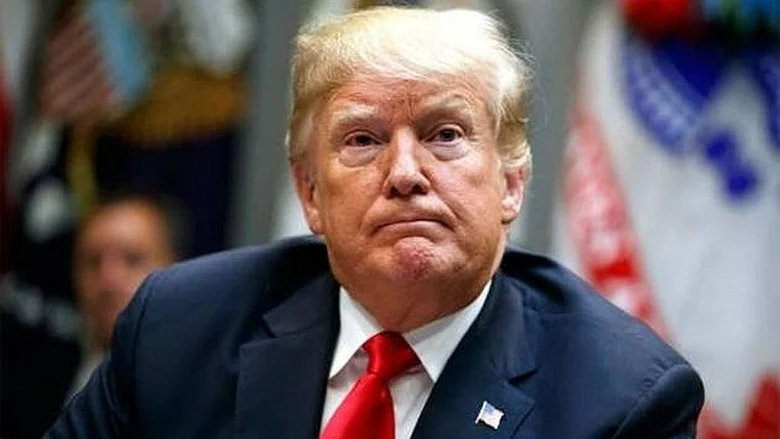

Donald Trump has halted his $1.8 billion “weaponisation” compensation fund after sharp Republican resistance.
Critics in both parties brand the fund a political slush pool that could aid January 6 convicts.
The event exposes GOP defiance as they clash with Trump over broader immigration enforcement and border security funding priorities.
US President Donald Trump has planned to put a hold on his $1.8 billion “weaponised” compensation fund, following the major opposition the White House faced from Republicans against the fund.
Axios was first to break the news. “It’s dead for now”, an unnamed senior officer told the news publication.

1 October 2026
Get the latest issue of Outlook Business

The fund has been widely criticised by both parties and has been labelled as a “political slush fund” with allegations that it could be used to provide financial benefits to individuals who were convicted of attacking the US Capitol in January 2021.



The opposition from within the Republican Party demonstrates the scepticism towards the funds and their overall settlement. While speaking to the reporters, as quoted by Reuters, Senate Majority Leader John Thune said that he made it clear to the white house that the fund needed to be killed.
The plan was held after the senators returned from Washington after Memorial Day and faced an impasse with the President regarding a $72 billion bill to fund ICE and Border Patrol Operations.
The Republicans' rebuke is a rare incident of defiance, especially given Trump's insistence on loyalty. "They gave us an ultimatum," a White House source told the news agency, describing how the Republican lawmakers negotiated over the fund.
Advertisement

Trump's IRS Lawsuit
The fund was introduced following a lawsuit filed by the US President against its own government seeking $10 billion. In January, Trump filed a lawsuit against the Internal Revenue Service (RS), after the institution allegedly disclosed his tax returns to media agencies, including The New York Times and ProPublica.
To settle the lawsuit, the Department of Justice (DoJ) created a $1.776 billion fund to compensate individuals who claim to have suffered government weaponisation and lawfare. These terms have frequently been used by Trump and his allies to describe the criminal cases against them.
Advertisement
On May 29, federal judges in Virginia and Florida temporarily blocked the fund till June 12, according to Reuters.
The Department of Justice spokesperson said in a statement on Monday that the DoJ "disagrees strongly" with the decision, but "the department will abide by the court's ruling."
The department statement did not admit to abandoning the fund entirely.