Institutional investors are emerging as the dominant buyers in India’s hotel market, deploying about ₹21,812 crore
Hotels are turning out to be income-generating commercial assets rather than mere real estate
Valuations are driven by operating performance, scalability, governance and long-term cash flows
Institutional investors have emerged as the largest buyers in India’s hotel transaction market, investing around ₹21,812 crore across hotel acquisitions as hospitality increasingly attracts long-term capital.
The Art and Science of Buying and Selling Hotels report by NOESIS Hotel Advisors suggested that hotels are increasingly being evaluated as income-generating commercial assets rather than merely real estate holdings, with investors focusing on operating performance, scalability and long-term value creation.

1 September 2026
Get the latest issue of Outlook Business

Institutional investors accounted for the largest share of capital deployed in India's hotel transaction market, investing nearly ₹21,812 crore across acquisitions. The hotel ownership landscape has expanded beyond traditional operators to include developers, high-net-worth individuals (HNIs), corporates and other strategic investors, the report said.



It reviewed around 125 disclosed hotel transactions involving nearly 37,847 hotel keys with a combined reported transaction value of about ₹36,564 crore. Based on this dataset, the implied average transaction value works out to approximately ₹97 lakh per key. The report noted that pricing varies significantly depending on location, hotel category, brand affiliation, operational performance, capital expenditure requirements and deal structure.
Advertisement

India's hotel transaction market has evolved from individual asset sales into a broader capital market where investors are pursuing multiple ownership routes. These include acquisitions of operational hotels, portfolio purchases, insolvency-led deals under the National Company Law Tribunal (NCLT), brownfield and under-construction projects, land-linked hospitality developments and partial stake acquisitions.
Luxury Assets Command Premium Valuations
According to the report, luxury hotels continue to account for the highest transaction values despite recording fewer deals than the midscale segment. Luxury hotels represented 29 transactions covering 13,155 rooms and generated approximately ₹22,033 crore in reported transaction value, translating into an implied valuation of about ₹1.68 crore per key.
Advertisement
In comparison, the budget segment accounted for 48 transactions involving 14,903 rooms with reported deal values of ₹5,639 crore, reflecting an implied valuation of roughly ₹38 lakh per key.
Premium pricing in the luxury segment is driven by limited supply, prime locations, established brands and long-term asset value, while midscale hotels continue to attract investors seeking scalable platforms and value-led acquisition opportunities.

The report also found that pan-India hotel portfolios attracted the highest concentration of investment, accounting for approximately ₹15,095 crore across 10 transactions involving 17,259 keys.
Bengaluru, the National Capital Region (NCR), Mumbai, Chennai and Goa emerged among the most active individual markets for hotel investments.
Investment Decisions Becoming Business Focused
Investors are increasingly valuing hotels on the basis of recurring operating income rather than simply the value of land or physical infrastructure, as per the report.
Institutional investors often focus on governance, scalability and exit opportunities, while developers assess redevelopment potential and land value, and hotel operators seek strategic market expansion.
"A hotel is not conventional real estate. A residential or commercial asset may be valued through land, construction, approvals and rental or end-use value. A hotel is different. Its value is linked to profitability," said Nandivardhan Jain, Founder and CEO of NOESIS Hotel Advisors.
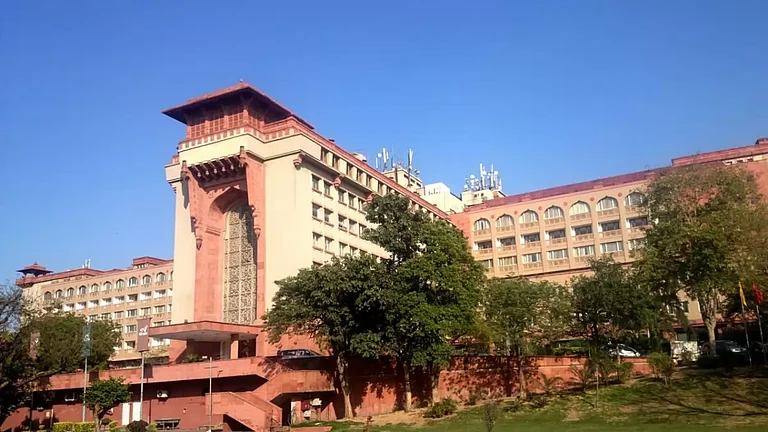
"Its real worth depends on how much revenue it can generate, how efficiently that revenue converts into profit, and how much free cash flow finally reaches the owner. The building is important, but the business inside the building determines value," he added.
Future of Hospitality Sector
India's hotel ownership market is expected to continue attracting institutional and long-term capital as investors increasingly view hospitality alongside other commercial real estate asset classes, supported by stable cash flows, growing travel demand and a widening range of acquisition opportunities, as per the report.
Jain said that India’s hospitality sector is entering a much stronger phase. Travel frequency has increased, spending propensity has improved, and demand is no longer limited to traditional corporate and metro-led markets.
"Leisure destinations, weekend getaways, wedding-led markets, airport locations, industrial corridors, education hubs, office clusters and high-connectivity nodes are all creating new hospitality demand. The next five to seven years will be important because smart investors need to read the market before the demand becomes obvious to everyone else," he remarked.