




The Tata Trusts play a central role in choosing the Selection Committee
Their three nominees form the majority of the five-member panel
However, the Tata Sons board formally appoints the next chairman
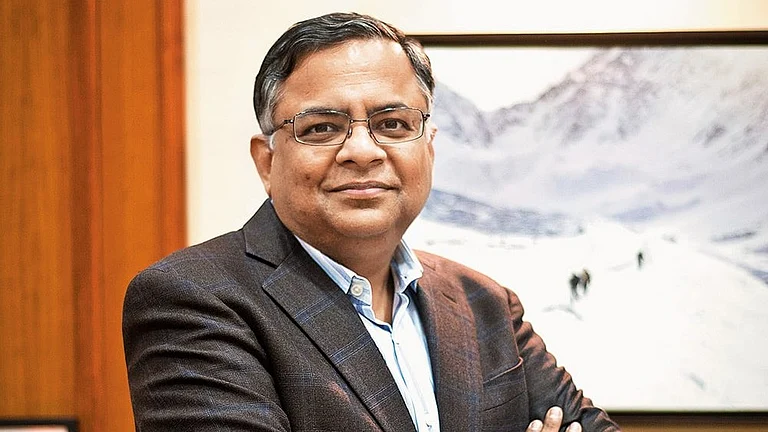
Tata Sons is set to begin the process of identifying its next chairman after N Chandrasekaran said he would not seek another term when his tenure ends on February 20, 2027.
The succession exercise will follow a formal mechanism laid down in the company’s Articles of Association, with the Tata Trusts playing a key role because of their majority ownership, as per a report by Business Standard (BS).

1 September 2026
Get the latest issue of Outlook Business

The process is governed primarily by Article 118 of the Tata Sons Articles of Association. As long as the Tata Trusts together hold at least 40% of the company’s paid-up ordinary share capital, Tata Sons must constitute a Selection Committee to recommend a candidate for chairman.


The committee has five members. Three are jointly nominated by the Sir Dorabji Tata Trust (SDTT) and the Sir Ratan Tata Trust (SRTT), while one member comes from the Tata Sons board. The fifth is an independent external member selected by the board.
The two Trusts also choose the committee’s chairperson from among their three nominees. A majority of the Trust-nominated members must be present for the committee to conduct its business.
The committee recommends a candidate, but does not make the final appointment. That decision rests with the Tata Sons board, subject to the voting provisions under Article 121.
Advertisement

Why Noel Tata Can't Take The Role
Tata Sons amended its Articles in 2022 to separate the leadership of the Tata Trusts from the chairmanship of Tata Sons.
Under the revised rules, the chairman of either the Sir Dorabji Tata Trust or Sir Ratan Tata Trust cannot simultaneously head Tata Sons, as per BS.
As Noel Tata currently chairs the Tata Trusts, he cannot also become chairman of Tata Sons under this provision.
How Earlier Successions Unfolded
The same broad mechanism was used during earlier transitions. Cyrus Mistry was selected following a search lasting more than a year and was appointed deputy chairman in November 2011 before succeeding Ratan Tata in December 2012.
Advertisement
After Mistry’s removal in 2016, Tata Sons formed another five-member committee to identify a permanent successor. The panel eventually unanimously recommended N Chandrasekaran, then CEO and managing director of Tata Consultancy Services (TCS). The Tata Sons board appointed him executive chairman on January 12, 2017, with effect from February 21.

Article 118 later came under scrutiny during the Tata-Mistry legal battle. In its March 2021 ruling, the Supreme Court examined the provision and ultimately upheld the Tata Sons board’s decision in the dispute.
With Chandrasekaran due to step down in February 2027, the company is expected to now follow this established framework to select its next chairman.









