West Asia conflict pushes crude futures to ₹10,549 per barrel.
Strait of Hormuz disruption threatens 20% of global oil supply.
Analysts compare risks with 1973 and 1979 oil shocks.
Markets driven by geopolitical risk premium, not major supply loss yet.
West Asia's conflict entered its second week without a clear sign of cooling down anytime soon. With escalation at such a range, where the Strait of Hormuz has remained closed for a while now, the global oil price reacted swiftly too.
Crude oil prices surged over 26% on Monday, hitting a lifetime high of ₹10,549 per barrel in futures trade amid disruptions in global energy supply due to the intensified West Asia crisis.

1 September 2026
Get the latest issue of Outlook Business

SBI Capital Markets noted that the decline in global inflation over the past year has been largely supported by relatively benign fuel prices. The latest developments, however, pose a significant risk to that trend.
Oil markets have historically repriced sharply when geopolitical tensions intersect with critical supply routes — even when actual supply has not yet been removed from the market. The current situation has prompted analysts to draw comparisons with the oil shocks of the 1970s, when crude prices rose by nearly 300%.
The 1970s Energy Crisis
The 1973 Arab oil embargo marked a decisive turning point. Prices rocketed by roughly 300%, climbing from around $3 to $12 per barrel, after the Organisation of the Petroleum Exporting Countries (OPEC) cut off supplies to the US and Western Europe in response to their backing of Israel — a move that wiped out some 9% of global oil supply.
Advertisement
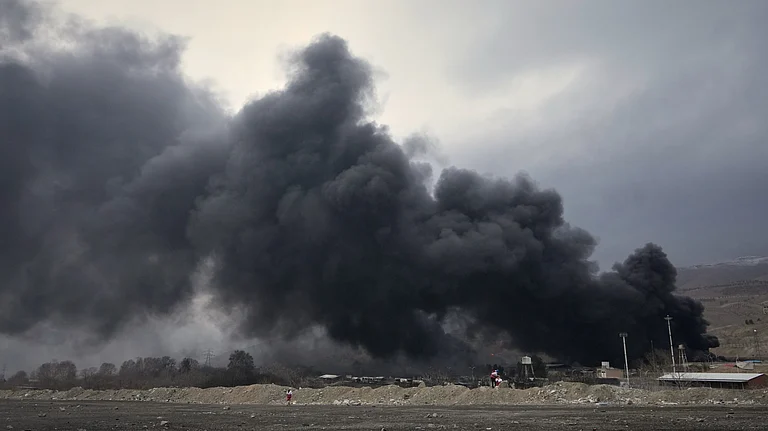
Then came the 1979 Iranian Revolution, which delivered another severe jolt: Iran slashed production, halted exports and tore up its contracts with American firms, sending prices surging by approximately 180% on the back of a 6% supply shortfall.
Why the Current Crisis Matters
Equirus Securities, in a report, pointed out that Iran’s oil production has declined over the past decade, with its share of global cross-border oil trade falling to 2.5%, nearly half of what it commanded a decade ago.
On production metrics alone, Iran appears less systemically critical than in prior cycles. However, volume understates influence. Iran sits astride the Strait of Hormuz, the narrow chokepoint through which 20% of global oil supply and a similar share of LNG trade transit and hence its geographic position grants it disproportionate leverage over crude flows from Saudi Arabia, Iraq, Kuwait, and the UAE.
Advertisement
The Gulf produces one-third of the world’s crude, and the Strait of Hormuz is the second biggest choke point for fuel in the world. Reflecting these risks, Brent crude prices, which were below $70/bbl just a month back, touched almost $120/bbl briefly, and TTF gas prices are up 90%+ m/m.
"Crude prices have firmed by 10% since the U.S. began positioning military assets in [West Asia], as traders price in a headline-driven geopolitical risk premium. The move reflects the asymmetric risk tied to the Strait of Hormuz, where even a temporary disruption could materially affect global flows," Equirus Securities noted.
The Possible Escalations
Analysts outlined a range of potential escalation scenarios and associated risks.
"The first stage is the current disruption in transit through the Strait of Hormuz. The second, more serious risk, would be direct attacks on oil and gas infrastructure across the region," Anindya Banerjee, Head of Commodity and Currency Research at Kotak Securities, told PTI.
"The third and least probable but most severe scenario would involve damage to critical water infrastructure, which would have a major humanitarian dimension," Banerjee added.
Exceptions Remain
Not all analysts believe the current situation will lead to an oil shock comparable to that of the 1970s.
In a research note examining the geopolitical and market implications of the Iran conflict, Swiss private bank Julius Baer said the current spike in oil prices is unlikely to trigger the same economic fallout, reported Arabian Business.
Modern economies, the bank noted, are far more energy-efficient and less dependent on crude oil than they were five decades ago.
Much of the current price surge also appears to be driven by market anxiety rather than immediate supply shortages.

Large-scale damage to energy infrastructure has not yet occurred, limiting the risk of a prolonged global supply shock.
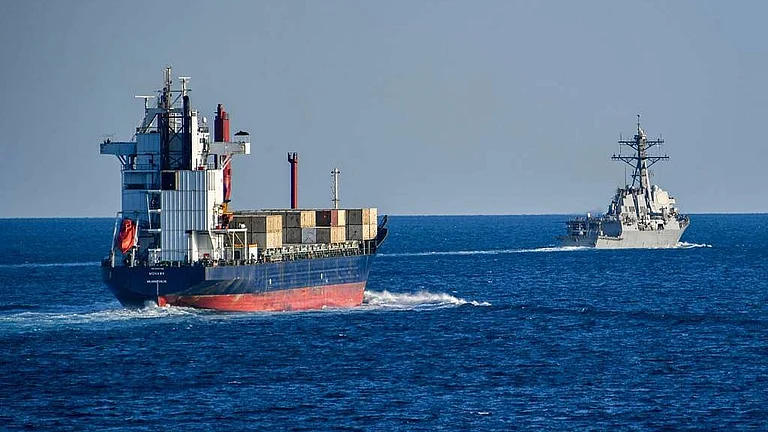
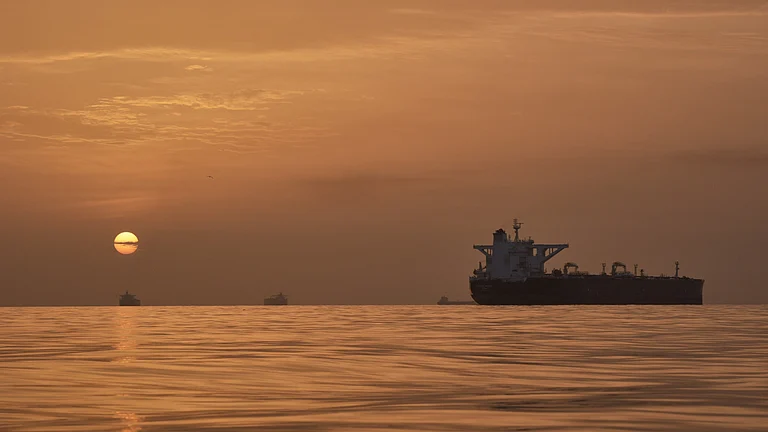
For now, the disruptions are largely logistical. Ships are being delayed, rerouted or temporarily stranded as companies reassess security risks in the Gulf.
Julius Baer added that if a ceasefire emerges soon, energy markets could correct rapidly. However, prolonged instability around the Strait of Hormuz would keep geopolitical risk premiums elevated in global oil markets.