
Attacks on Qatar and Bahrain energy infrastructure disrupt regional gas and oil flows
India faces LNG supply cuts affecting industries and city gas distribution companies nationwide
Strait of Hormuz risks highlight India’s energy vulnerability despite diversified crude imports recently
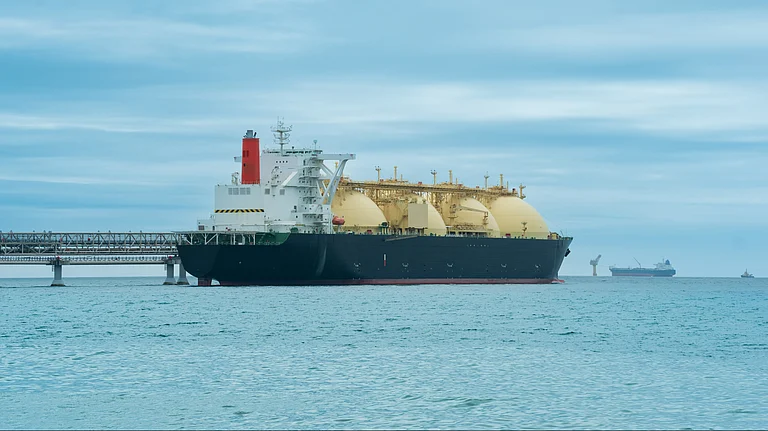
After Qatar halted liquefied natural gas (LNG) production on March 4 as its facilities came under attack amid the ongoing West Asia conflict, supplied to India were disrupted and feedstock availability for key domestic sectors was squeezed.
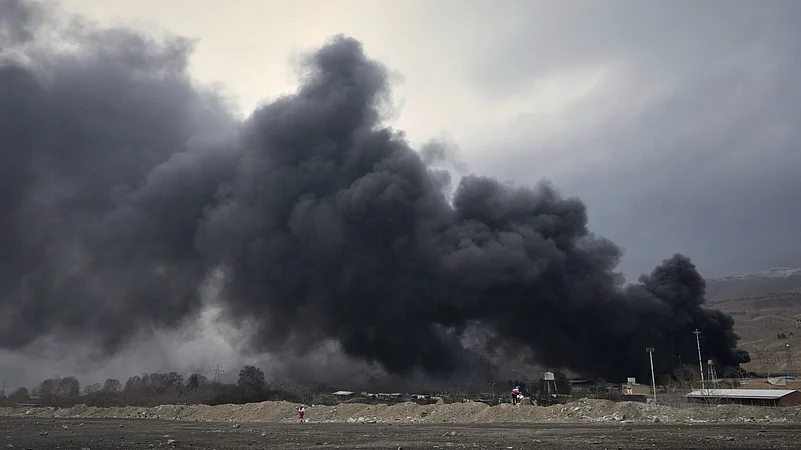
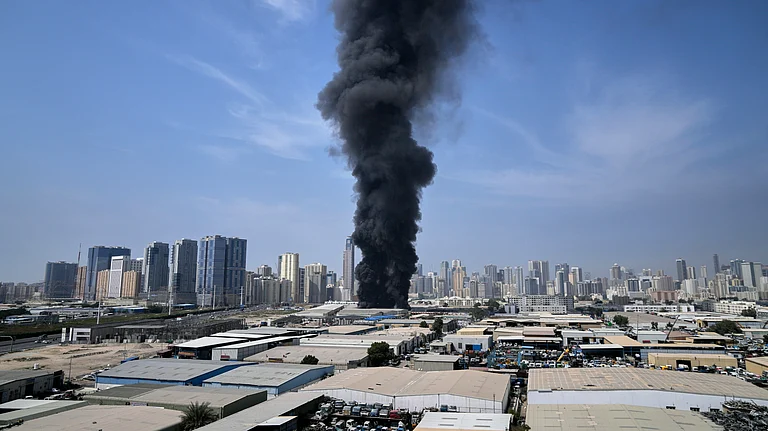
Now, Bahrain's state oil company has taken the same step after an Iranian attack set its refinery ablaze, reported the Associated Press on March 9.

1 September 2026
Get the latest issue of Outlook Business

The move represents a further intensification of the economic consequences of the Iran war, which are now interfering with contractual energy flows across the Gulf as well as military and civilian infrastructure. The state-run Bahrain News Agency reported Bahrain's force majeure declaration on Monday as oil prices surged above $114 per barrel and regional governments evaluated the damage to vital infrastructure.
India, which depends on long-term LNG contracts with Qatar for a significant share of its gas needs, has seen a temporary suspension of cargoes, leading to supply cuts up to 40% of a range of industrial customers and city gas distribution (CGD) companies.
While some industrial users can switch to alternative, through costlier fuels, the CNG-retailing city gas sector has warned of severe stress. CGD operators said replacing contracted Qatari volumes with spot LNG priced at more than double the contracted rate could erode CNG’s price advantage and result in a permanent shift of customers to electric vehicles.
Advertisement
Petronet LNG Ltd, India’s largest LNG importer, hasn’t been able to send ships to Qatar to ferry LNG as the Strait of Hormuz—a narrow shipping route through which West Asian countries, including Qatar, export most of their oil and gas—is all but closed.

Bangladesh & Pakistan Take Conservation Route
The war in West Asia is disrupting global energy flows and increasing fuel prices. In the wake of this, the governments across South Asia have started implementing emergency conservation measures to protect their economies from supply shocks, according to Reuters.
So far, Bangladesh and Pakistan have both moved to curb electricity and fuel consumption, pushing for austerity ranging from shutting universities to preparing remote-work policies as the conflict threatens energy imports and power stability.
Advertisement
Bangladesh has ordered to shut all public and private universities from March 9, bringing forward Eid al-Fitr holidays as part of a nationwide effort to conserve electricity and fuel, reported Reuters.
Authorities said the decision will reduce energy consumption across campuses while also easing traffic congestion, which contributes to fuel wastage. Officials said university campuses consume large amounts of electricity for residential halls, classrooms, laboratories and air conditioning and the early closure would help ease pressure on the country’s strained power system.
Government and private schools in Bangladesh are already closed for the Islamic holy month of Ramadan, meaning most educational institutions across the country will now remain shut during the period.
Implications for India
The Strait of Hormuz is significant for India as the country relies heavily on imported oil and a large part of it comes from the Middle East. India imports around 90% of its crude oil and an estimated 35 to 50% of those volumes passed through the Strait of Hormuz in 2024 and 2025.
Suppliers of oil from locations such as Iraq, Saudi Arabia, the UAE and Kuwait rely on the strait for shipments to Indian refineries. If this route is blocked or disrupted, more than 2mn barrels per day of India-bound crude could stop, which would raise domestic fuel prices in the country.
However, in recent years, India's exposure has decreased. Currently, between 35 and 40% of India's crude imports come from Russia through routes that avoid Hormuz, such as the Suez Canal and the Cape of Good Hope, reported Moneycontrol. The strait is also avoided by additional imports from Brazil, West Africa, and the United States. Short-term shocks are further mitigated by India's strategic petroleum reserves, and Qatar's LNG supplies to India do not pass through Hormuz.
Reassuring domestic customers, government sources told ANI on March 7, “that process of petrol and diesel prices will not increase”. The government also addressed allegations by Congress regarding the pricing of Liquefied Petroleum Gas (LPG), dismissing claims of a price hike as a misinterpretation of official statements. Sources clarified to ANI stating that their previous assurances regarding price freezes were never intended to cover cooking gas.