The Jagannath Puri Rath Yatra leads to massive spending on security, transport, surveillance and infrastructure, highlighting the scale of the festival's public investment
The festival is also a major economic driver for Odisha, boosting tourism, hospitality, transport, local businesses and temple donations
Hotel fares have reportedly crossed ₹50,000 per night, while two people have died during the ongoing festival
The Jagannath Rath Yatra is not only one of India's largest religious gatherings but also one of Odisha's biggest annual economic events. While the Odisha government is yet to disclose the cumulative expenditure for Rath Yatra 2026, as the nine-day festival has only just begun, government announcements, budget allocations and administrative preparations indicate that significant public funds are spent every year on security, infrastructure, sanitation, transport and crowd management.
At the same time, the festival generates substantial economic activity for the state through tourism, hospitality, retail and religious donations.

1 October 2026
Get the latest issue of Outlook Business

Thousands of security personnel, temporary infrastructure, transport arrangements, surveillance systems, medical facilities and sanitation services have been deployed across Puri, all of which involve considerable government expenditure.



This year's arrangements have been strengthened after last year's festival, when three devotees lost their lives in a stampede-like situation near the Gundicha Temple, prompting widespread criticism of crowd management. Two devotees also died during this year's opening day celebrations, though the state government did not describe the incident as a stampede.
Security One Of Biggest Areas Of Govt Spending
A significant portion of public expenditure goes towards security and crowd management.
Advertisement
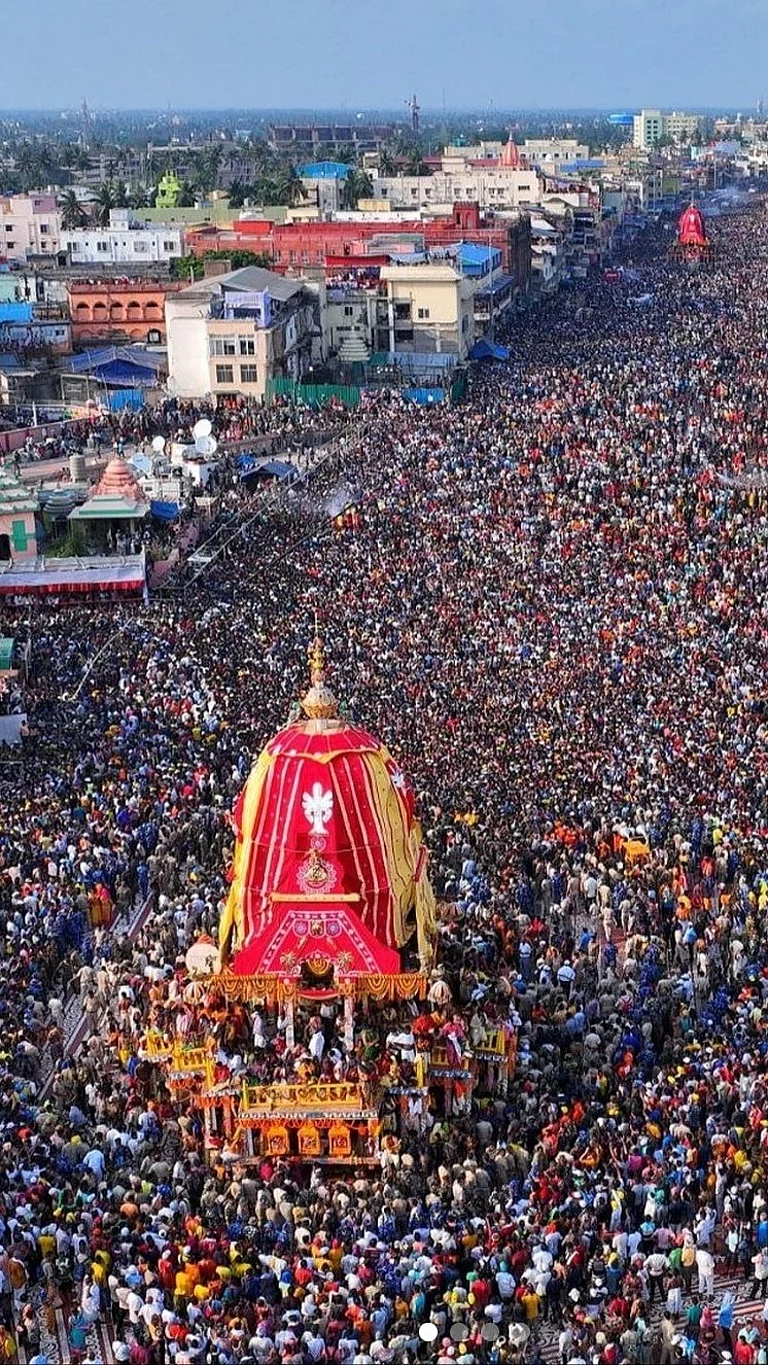
Around 13,000 police personnel, supported by 15 companies of Central Armed Police Forces, National Security Guard (NSG) commandos, RAF, CRPF and BSF personnel have been deployed across Puri, as per news agency PTI.
Security arrangements also include Indian Navy, Coast Guard and Odisha Police maritime patrols.
The state has also invested in technology-driven surveillance. About 473 AI-enabled CCTV cameras, drone-jamming systems, drones, anti-drone devices, bomb squads, dog squads and integrated command centres are monitoring the city throughout the festival.
Authorities have additionally installed around 1,700 bio-toilets, created multiple emergency evacuation corridors, established eight temporary hospitals, deployed 65 LED information screens, and installed temporary mobile towers to improve communication during the festival, as per a report by The Indian Express.
Advertisement
Transport, Infra: A Major Public Investment
Managing the movement of millions of devotees also requires extensive logistical spending.
Indian Railways is operating more than 300 special trains for the festival, while the Odisha government has arranged around 800 buses to transport pilgrims from different districts, as per PTI.
Authorities have also undertaken extensive drainage preparations after the India Meteorological Department (IMD) forecast heavy rainfall. High-capacity pumps have been installed along the Grand Road to prevent waterlogging and reduce accident risks.
Long-Term Investment In Puri
The state's investment is not limited to the annual festival. During the 2026-27 Odisha Budget, Chief Minister Mohan Charan Majhi announced a ₹1,000-crore Shree Jagannath Interpretation Centre in Puri.
The Budget also provided funds for restoring Gundicha Mandir, Emar Math, Pramod Udyan and the historic Raghunandan Library.
The government allocated ₹5 crore for the inventory of Lord Jagannath Temple's ornaments and valuables, while also expanding the Digital Hundi-Samarpan platform to facilitate online donations.
The Budget highlighted the proposed Shamuka coastal tourism project, envisioned as a global tourism destination linked to the upcoming Puri International Airport, per The Indian Express.
Hotels, Transport, Local Biz See A Windfall
While the government spends heavily on managing the festival, local businesses experience one of their busiest periods of the year.

The festival typically attracts 10-20 lakh visitors, resulting in near-full occupancy across hotels, homestays and guest houses.
Nearly 95% of hotels and guest houses were booked months in advance, with some rooms reportedly costing over ₹50,000 per night, while premium properties overlooking the Rath Yatra route were charging as much as ₹1 lakh to ₹1.5 lakh, as per a report by ABP Live.
Transport operators, restaurants, sweet shops, handicraft sellers and street vendors also benefit from the surge in pilgrims. Around 3,000 families are directly or indirectly reportedly associated with preparing the temple's Mahaprasad.
Tourism Remains A Major Pillar
According to Odisha's Department of Tourism, tourism contributes around 13% of the state's economy.
Tourism revenue recovered to approximately ₹9,871 crore in 2023, compared with ₹3,735 crore in 2021 during the pandemic.
Odisha's Gross State Domestic Product (GSDP) for 2026-27 is estimated at around ₹11 lakh crore, making tourism an important contributor to state revenues.

Temple Donations Continue To Grow
The festival also boosts religious donations. According to data tabled in the Odisha Assembly, reported by The Times of India (TOI), the Jagannath Temple received ₹304.57 crore in donations between FY2011-12 and FY2024-25, along with nearly 58 kg of gold over the last 43 years.
During FY2024-25 alone, the temple collected ₹18.59 crore through its hundi, besides receiving 3.44 kg of gold and 33.65 kg of silver ornaments, as per the Assembly reply.