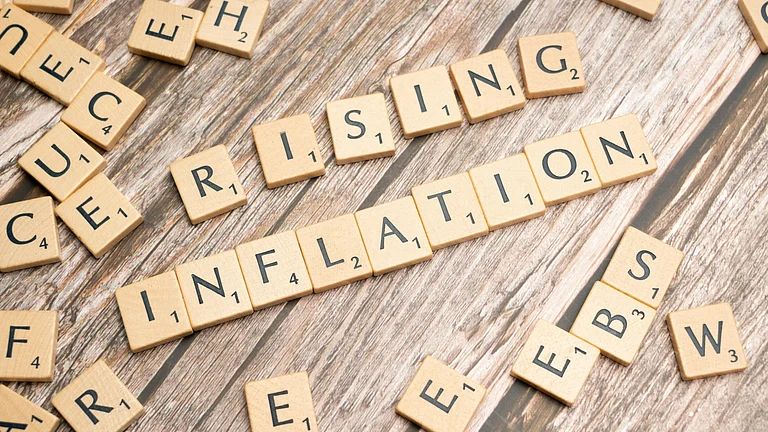
Wholesale price inflation rose to 9.87% in June, from 9.68% in May, led by a sharp spike in prices of non-food and food products.
The latest wholesale price index (WPI) inflation data is based on the 2022-23 base year.
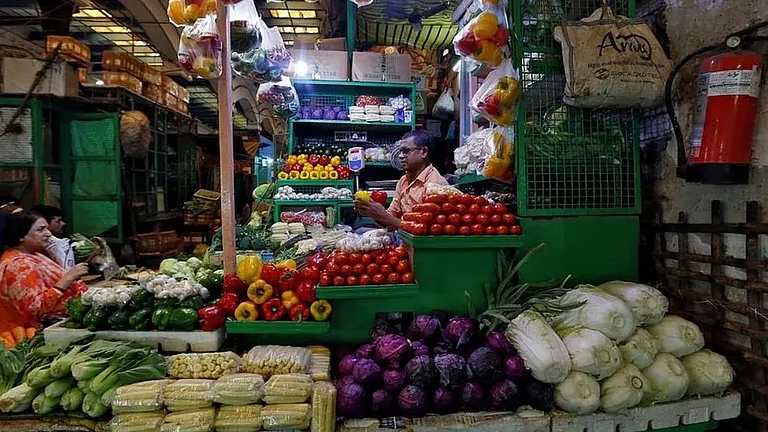
As per the data, food inflation rose to 5.49% in June, from 3.60% in May, as food prices rose during the month following a rainfall deficit due to the El Niño impact.

1 October 2026
Get the latest issue of Outlook Business

Non-food articles WPI inflation was also higher at 11.07%, while in minerals it was 9.45% in June.


"Mineral Oils (containing Petroleum Products), Food Articles, Manufacture of Basic Metals, and Manufacture of Chemicals and Chemical Products have been major drivers of WPI inflation in June 2026," the Commerce and Industry Ministry said.
WPI inflation in fuel and power was down to 27.41% in June, from a peak of 30.33% in May. In manufactured products, inflation was unchanged at 7.48% as in May.
Barclays, in a note, said global commodity prices and crude oil prices had taken a breather in June with the truce announcement between the US and Iran. This was reflected in lower fuel and power WPI inflation.
"But with the peace deal again coming under threat with the re-escalation of tensions in the Middle East, we are watchful of incoming WPI and PPI prints. In our view, these inflation prints are closer to peak, and we expect softening over the next few months," Barclays said.
Advertisement
India Ratings and Research Director, Megha Arora, said the headline WPI inflation was driven by primary articles, which offset the ease in fuel inflation in June.
"Ind-Ra believes the inflation in July 2026 is likely to rise to around 10%, due to a broad-base effect with prices across groups – primary articles, fuel and power and manufactured products likely to rise. This is expected due to El Nino impact on food prices, though some ease could be recorded in July. Resurgence in crude prices due to fresh escalation in the West Asia conflict would be another contributing factor," Arora said.
Advertisement
BofA Global Research, Head of India and ASEAN Economic Research, Rahul Bajoria said WPI is expected to cool off in the third quarter of 2026.
This is the second monthly reading for WPI and the output Producer Price Index (PPI) on the revised 2022-23 base. The government had last month said that it would simultaneously release WPI and PPI every month, and WPI would be fully replaced by PPI over a five-year period.
The output PPI - set to replace the WPI- moved in line with wholesale prices at 9.6% YoY, against 9.4% in May 2026. The rise was mainly driven by higher agricultural inflation.
Retail or consumer price index-based inflation too had surged to a 17-month high of 4.38% in June, as against 3.93% in the previous month, data released on Monday showed.
The Reserve Bank of India (RBI), which mainly factors in CPI when arriving at its monetary policy, has been mandated by the government to ensure that headline inflation remains at 4%, with a 2% margin on either side.
Last month, the RBI raised its inflation projection for the current fiscal year to 5.1% from 4.6%, largely due to mounting input costs, driven by the pass-through of higher global energy prices to retail petrol and diesel prices