




The government has approved a pilot to circulate one billion ₹10 and one billion ₹20 polymer notes.
The recommendation was made under Section 25 of the RBI Act, 1934, with procurement still in its early stages and no launch date fixed.
Retail inflation rose to 3.9% in Q1 FY27, but remains below the RBI's 4% target amid energy, food and geopolitical pressures.
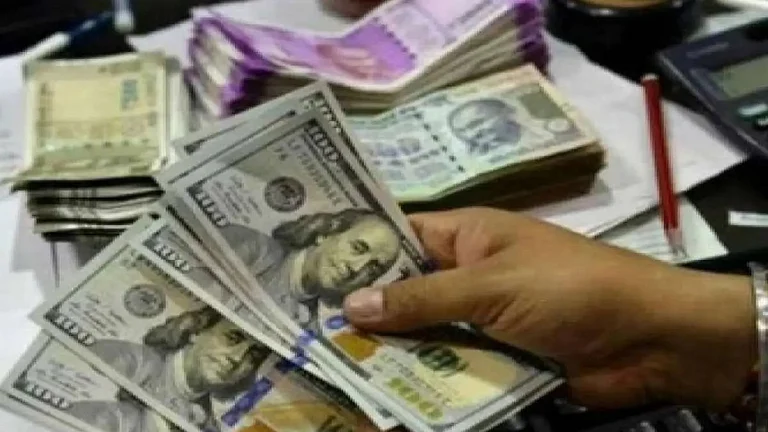
The government has greenlit a pilot program to circulate one billion polymer currency notes each in Rs 10 and Rs 20 denominations. Under Section 25 of the RBI Act of 1934, the central bank submitted this recommendation, PTI reported.
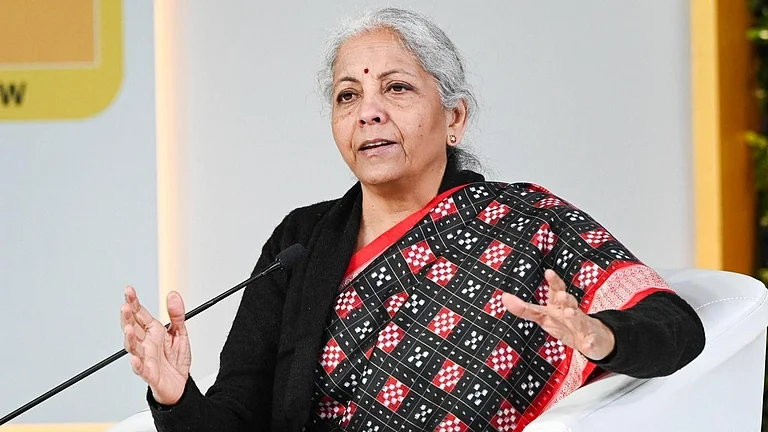
Finance Minister Nirmala Sitharaman confirmed the development in a written reply to the Rajya Sabha on Tuesday.

1 September 2026
Get the latest issue of Outlook Business

Sitharaman said to PTI, "The proposal has been approved by the government. As per the RBI, these polymer banknotes are proposed to be issued along with paper substrate-based banknotes."

Trial Details and Timeline
Procurement for the new polymer currency remains in its early phases, the central bank stated. As a result, a precise launch schedule and the projected financial outlay cannot be practically estimated at this time.
Inflation and Tax Reforms
Addressing macroeconomic indicators, the finance minister outlined the retail inflation trajectory.
Consumer Price Index data showed average retail inflation dropping to 4.6 per cent in 2024-25 from 5.4 per cent the previous year, before falling further to 2.1 per cent in 2025-26.
Advertisement
However, retail inflation rose to 3.9 per cent in the first quarter of 2026-27. This uptick stemmed from commodity price shocks, elevated global energy prices due to the West Asia crisis, seasonal vegetable price hikes and expected unfavourable El Niño conditions.
Despite this uptick, it remains below the RBI's 4 per cent target.
On the taxation front, Sitharaman told PTI, "The 56th meeting of the Goods and Services Tax (GST) Council has brought in a two-rate structure with a standard rate of 18 per cent, a merit rate of 5 per cent and a special de-merit rate of 40 per cent for a select few goods and services (but inclusive of earlier compensation cess rate, and hence with no increase in overall tax burden)."
Advertisement
This led to rate rationalisations across multiple tiers, including drops from 28 per cent to 18 per cent, 18 per cent to 12 or 5 per cent and 12 per cent to 5 per cent or nil.
To reduce input costs, boost domestic manufacturing, promote export competitiveness and support strategic sectors, the Union Budget 2026-27 rationalised the Basic Customs Duty (BCD) on various goods, effective February 2, 2026.
Additional measures to contain essential commodity prices included BCD cuts on crude palm, soybean and sunflower oils.
The government also reduced the agriculture infrastructure and development cess on masur and cut central excise duty on petrol and diesel by Rs 10 per litre in March 2026.
Boosting Household Consumption
Direct tax relief measures have further supported household disposable incomes. The government provided an income tax exemption for annual incomes up to Rs 12 lakh, which stands at Rs 12.75 lakh for salaried individuals after standard deductions.
These policy adjustments have aided private consumption growth. Private final consumption expenditure has maintained a steady GDP share of 56.5-56.7 per cent for the 2022-23 base year.
Per capita private final consumption expenditure grew by a robust 6.8 per cent in 2025-26, up from 4.8 per cent in 2023-24.
This was reported in the latest GDP estimates from the Ministry of Statistics and Programme Implementation.
The government continues to monitor the price situation and implement fiscal, administrative and supply-side measures to protect the purchasing power of low- and middle-income households.









