Adani Enterprises and Abu Dhabi-based IRH plan a $11.5 billion greenfield aluminium complex in Odisha
They form a 50:50 joint venture that could be India’s largest integrated aluminium project and the state’s biggest FDI
With refinery, smelter, 4,000 MW captive power and downstream park, it targets booming demand and aims to create over 53,000 jobs
Adani Enterprises Ltd (AEL) and Abu Dhabi-based International Resources Holding (IRH), an IHC Group company, announced plans to jointly develop an integrated greenfield aluminium project in Odisha with a proposed investment of $11.5 billion (over ₹1 lakh crore).
The partners will establish a 50:50 joint venture to execute what is expected to become India's largest integrated aluminium investment and Odisha's biggest foreign direct investment (FDI) proposal.

1 October 2026
Get the latest issue of Outlook Business

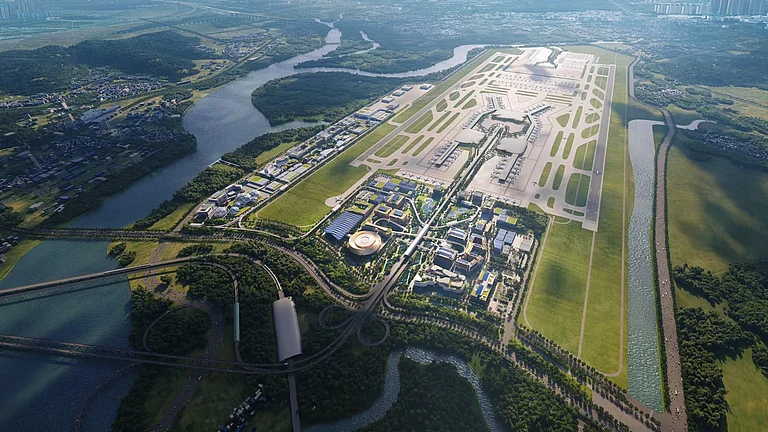
The project will include a four million tonnes per annum (MTPA) alumina refinery, a two MTPA aluminium smelter, a 4,000 MW captive power plant and a 1 MTPA downstream manufacturing park. Construction and operations are expected to generate around 53,500 jobs, Adani Enterprises said in a statement.


The investment reflects growing expectations of sustained aluminium demand in India and aligns with the country's ambition to strengthen its position in global metals supply chains.
Why Aluminium And Why Now?
The investment comes as India's aluminium demand is projected to grow steadily over the coming decades.
Advertisement
The government expects domestic aluminium consumption to increase from around 5.5 million tonnes in FY25 to 8.5 million tonnes by FY30, before rising to 18 million tonnes by FY40 and 28 million tonnes by FY47, as per a report by The Economic Times (ET).
India remains a net importer of aluminium despite being the world's second-largest producer, indicating room for additional domestic production as demand rises across manufacturing, infrastructure, renewable energy and transport.
"Even though there are large players, we still import aluminium. This means there is more demand. If done in a competitive way, India can also be a net exporter of aluminium. We are not looking to compete with anybody as there is room for everyone," Karan Adani, Managing Director of Adani Ports & Special Economic Zone Ltd (APSEZ), told reporters after the MoU signing of the deal.
Advertisement
Entering A Market Dominated By Two Players
India's aluminium industry has long been led by Hindalco Industries and Vedanta Aluminium, which together account for nearly 90% of domestic aluminium production.
Adani's planned smelter capacity of over two million tonnes annually could eventually add almost half of India's current aluminium production capacity, making the group one of the country's largest producers once the project becomes operational.

However, the investment is reportedly aimed more at serving future demand than directly challenging existing producers, with commercial production expected only after several years of construction.
Odisha's Strategic Importance
Adani Enterprises said Odisha was selected because of its abundant mineral resources and well-established metals ecosystem. The state holds some of India's largest bauxite reserves and is already a major producer of alumina and aluminium.
The refinery is expected to be located in Rayagada district, while the aluminium smelter is planned for Sundargarh.
Bauxite is likely to be sourced from the Ballada, Kutrumali and Sasubohumali mines, with logistics expected to benefit from the nearby Dhamra Port operated by APSEZ, as per ET.
The company said the project will be developed in two phases, with investments of around ₹66,000 crore in the first phase and ₹44,000 crore in the second.

Energy Integration Seen As Competitive Advantage
Power remains one of the largest cost components in aluminium production.
The proposed facility will include a 4 GW captive power plant alongside a 400 MW green energy component, allowing the venture to leverage Adani Group's wider energy portfolio.
Aluminium is a very energy-intensive business, and as one of the lowest-cost producers of energy, it will be one of the biggest competitive edge that we bring to the table, Karan Adani said while elaborating on this advantage, as per ET.
Beyond aluminium production, Adani Enterprises said the downstream manufacturing park is expected to attract industries serving transport, construction, power, packaging, renewable energy and advanced engineering sectors, while supporting the growth of micro, small and medium enterprises (MSMEs).